Kalash Accuses Lavrov of Presenting "Lies" About Ukraine Conflict During G20 Meeting
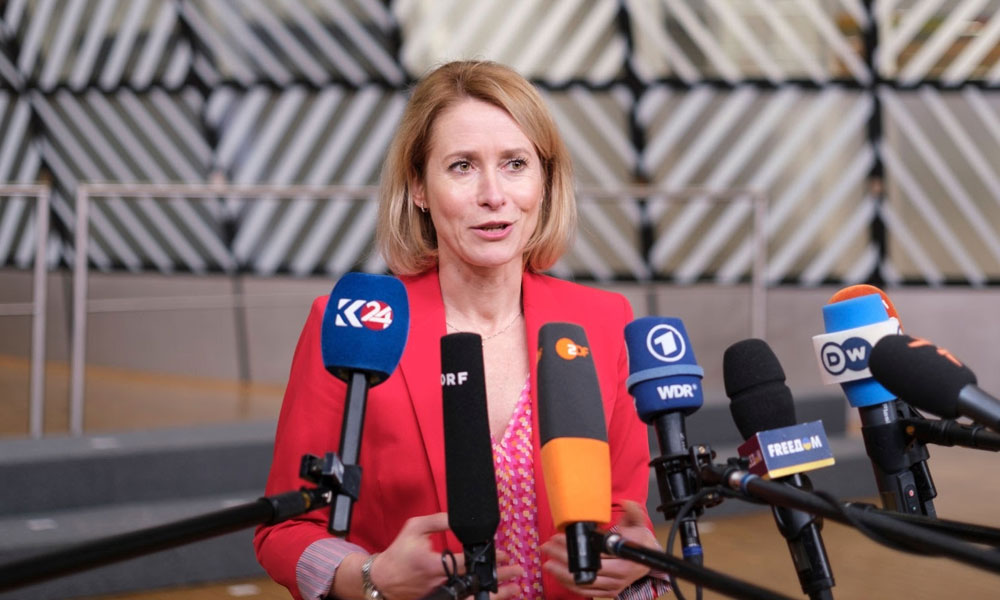
Kaja Kallas accused Sergey Lavrov of spreading lies about Ukraine during the G20 meeting.
Translated by Qiyas from كويت نيوز — Original source
European Union foreign policy chief Kaja Kallas accused Russian Foreign Minister Sergey Lavrov on Friday of promoting “lies” about Ukraine during Group of Twenty (G20) meetings, asserting that Moscow was undermining peace efforts.
Speaking to Agence France-Presse, Kallas said, “We were discussing major geopolitical crises, including Ukraine, and were able to confront Sergey Lavrov directly,” adding, “Of course, he spread many lies and misleading narratives, which we were also able to refute.” She made these remarks on the sidelines of the G20 foreign ministers’ meeting in Atlanta, Georgia.
Lavrov’s presence at the summit in Atlanta had drawn European reservations, but it also highlighted improving U.S.-Russian relations.
Kallas’s comments came ahead of a new round of negotiations between Moscow, Kyiv, and Washington scheduled for next month.
However, the European official maintained that Russia did not appear ready to advance the peace process. She stated, “Even if they say it in words, their actions say something different.”
She added, “July, August, and September were the bloodiest months for civilians in Ukraine.”
Kallas continued, “They need to prove through their actions that they are ready to negotiate, but they are not.”
She called for continued pressure on Moscow, particularly to achieve a ceasefire in the Black Sea.
Regarding the cancellation of the G20 foreign ministers’ group photo, Kallas said that European officials had agreed since the start of Russia’s war on Ukraine not to treat Russia’s presence in international forums as normal.
She added, “We have not changed our policies.”
In response, a U.S. official stated that the photo was canceled to avoid turning a “protocol photo opportunity into a source of diplomatic distraction.”
On the war in Ukraine, Kallas said, “It is clear to us that pressure must be exerted on the aggressor to end this war.”