Syria Reopens Border Crossing with Jordan After Bloody Strikes
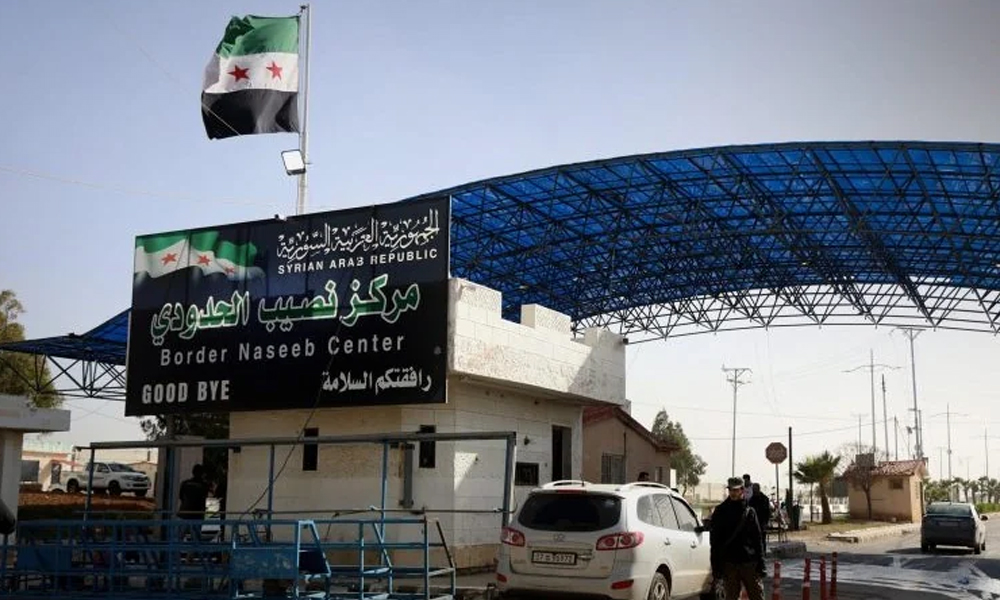
Reopening of the border crossing following Jordanian military escalation and diplomatic response.
Translated by Qiyas from كويت نيوز — Original source
Syrian authorities reopened the Nussayb border crossing with Jordan on Wednesday, following confirmation by both countries of their commitment to overcoming any issues that could strain bilateral relations, after deadly strikes carried out by Jordan resulted in the deaths of seven Syrians, including children.
On Tuesday, the Jordanian Air Force launched airstrikes in southern Syria. Jordan stated that the attacks killed more than 20 members of the Islamic State group, in response to an attack on a church in Karak, southern Jordan, which killed nine people and injured 25 others, according to Jordanian authorities. They said the three attackers, who were Jordanians, were linked to the groups targeted in Syria.
The strikes, which sparked widespread anger in Syria after five members of a single family were killed in a remote village in the Daraa governorate, marked one of the biggest crises in relations between the two countries since the new Syrian authorities came to power following the ouster of Bashar al-Assad in December 2024, after the two sides had frequently exchanged official visits.
Following a phone call on Tuesday night between Jordanian Foreign Minister Ayman Safadi and his Syrian counterpart Asaad Al-Shaybani, in which Safadi affirmed, according to a joint statement, “Jordan’s full respect for Syria’s sovereignty, territorial integrity, and security,” and expressed “deep regret and sorrow over the loss of innocent civilian lives,” Damascus announced the reopening of the Nussayb crossing, known as the Jaber crossing from the Jordanian side, starting Wednesday morning.
Syrian authorities had closed the main border crossing with Jordan on Tuesday following the Jordanian airstrikes, which, according to the Syrian Civil Defense, hit a village in the Suwayda governorate and three villages in the Daraa governorate, killing seven people, including a woman and three children, according to Damascus.
Damascus condemned the Jordanian airstrikes, calling them “an unacceptable violation and breach of Syrian airspace without any prior coordination,” and affirmed in a statement from the Foreign Ministry that “this field action is wholly and utterly rejected… as it constitutes a blatant violation of the principles of good neighborliness and Syrian national sovereignty.”
However, Jordan insisted on Tuesday that it had coordinated the strikes with Damascus.
Mohammed Al-Momani, the Minister of Government Communication and spokesperson for the Jordanian government, said on Tuesday that the bombing operations “targeted Islamic State positions, after Jordan’s patience ran out regarding the movements of this terrorist organization and its targeting of national security.”
During the phone call, Safadi and Al-Shaybani agreed, according to the joint statement, to “form a joint security committee to investigate all details and facts of the recent operations and monitor their repercussions, and to develop mechanisms for field and intelligence coordination to deal with terrorist threats.”
Amman played a role in establishing a roadmap regarding the predominantly Druze Suwayda governorate, which witnessed violence in July 2025. Jordan also hosted talks in August between Syria and Israel aimed at de-escalating tensions between the two countries.
Jordan had previously conducted airstrikes in southern Syria targeting drug and arms smuggling networks, as well as participated in airstrikes as part of the US-led international coalition against the Islamic State in Syria and Iraq.
