Alberta residents oppose referendum on secession from Canada
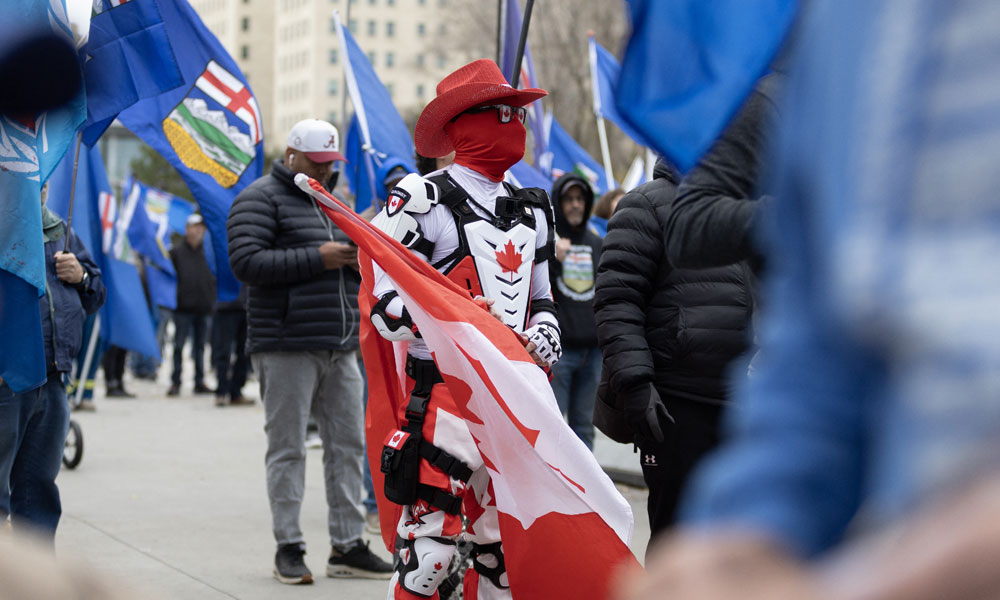
Alberta referendum results reflect rejection of secession and support for Canadian unity amid trade tensions with the US
Translated by Alqyas from Kuwait News — Original source
Residents of the oil-rich province of Alberta overwhelmingly rejected a future referendum on secession from Canada on Monday, in a result that constitutes a victory for Prime Minister Mark Carney, who praised the “clear choice” for “unity” amid a trade war with the United States.
According to preliminary figures released by the public network CBC and the private network CTV, supporters of remaining within Canada won by a wide margin, securing more than 76% of the vote, while proponents of the referendum promoted by the separatist movement received approximately 23%.
This result is seen as a victory for Carney, who hails from Alberta and conducted a tour of the province last week, urging unity supporters to participate in large numbers in the vote.
On Tuesday morning, Carney praised the “clear choice” for unity made by this province of five million people.
“Canada is a much greater country than the sum of its parts,” he said, adding that Alberta and Canada “will move forward together, with renewed determination and great ambition.”
The voting results aligned with opinion polls indicating that support for secession was below 25%.
Once marginal a few years ago, the separatist movement in Alberta has become a key player in Canada’s political discourse, attracting the attention of U.S. President Donald Trump’s administration and its allies.
Earlier this year, Treasury Minister Scott Bessent described Alberta as a “natural partner” for the United States, while separatists received a warm reception at the State Department.
Billionaire Elon Musk called for the province’s independence in early October.
At a restaurant in Edmonton where separatist supporters gathered to follow the results, a mood of disappointment prevailed.
“Frankly, if this situation continues and we remain within Canada, I will simply leave” for the United States, said 40-year-old Gaur Dan, speaking to Agence France-Presse.
Mitch Sylvester, one of the separatist movement’s leaders, affirmed that his movement “has awakened something in this province, and this feeling will not disappear soon,” adding, “We did not reach the finish line tonight.”
Thanks to its oil sands deposits, Alberta holds the world’s fourth-largest proven oil reserves.
These resources are at the heart of separatists’ demands, who argue that the federal government has shackled the oil industry with its environmental laws, particularly during the tenure of former Prime Minister Justin Trudeau.
In a move that diverges from Trudeau’s approach, Carney has strengthened relations with Alberta authorities and accelerated the pace of constructing a new oil pipeline to the Pacific coast.
This project, aimed at exporting Alberta’s oil to Asia, is a cornerstone of Carney’s strategy to reduce Canada’s dependence on the United States.
David Gallagher, 58, voted on Monday in favor of remaining within Canada. Speaking in Edmonton, he said, “There is no logic in the arguments of secession supporters.”
Despite opposing Alberta’s independence, 21-year-old student Hayden Chan supported holding a referendum “to give the people the choice.”
In May, the separatist movement succeeded in gathering enough signatures to launch a popular referendum on independence, before a local judge annulled it on constitutional grounds.
However, Danielle Smith, the leader of the province’s Conservative Party, who opposes independence but whose party includes separatists, decided to hold her own referendum.
After the initial results emerged, she said, “Thank you, Alberta!” welcoming the “broad support for the choice to remain within Canada.”
Analysts likened Smith’s decision to call on Albertans to vote as an attempt to calm the separatist wing within her party, comparing it to the gamble undertaken by the British government when it organized the 2016 referendum on the United Kingdom’s exit from the European Union (Brexit). Carney, who was then governor of the Bank of England, warned Alberta voters against “a dangerous gamble.” He said that in the years following Britain’s departure from the EU, “extreme uncertainty prevailed, and investment came to a complete halt.”
