G7 Agrees to Release 100 Million Barrels of Diesel and Crude Oil
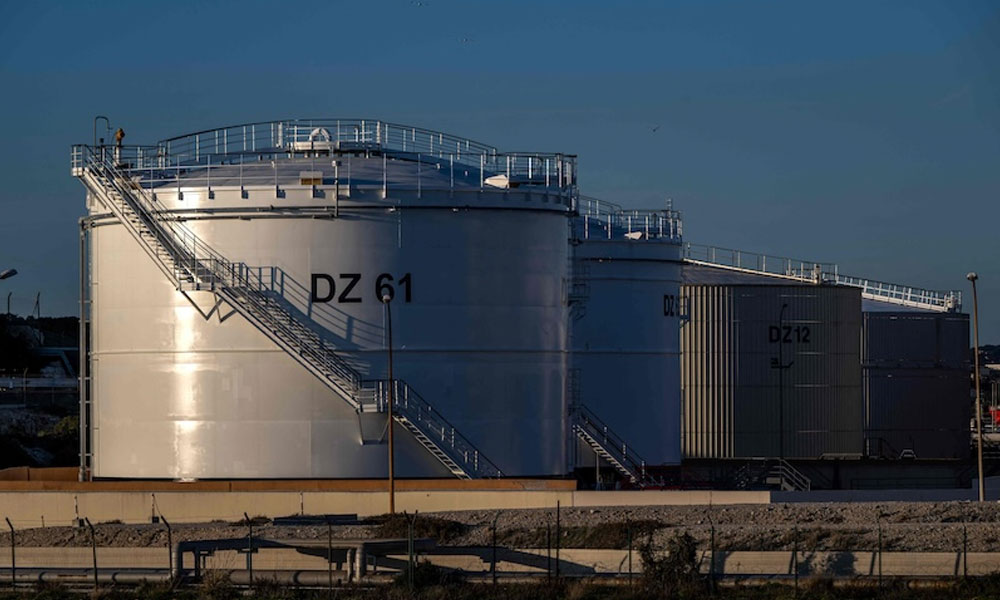
The leaders of the Group of Seven (G7) agreed on Friday to release up to 100 million barrels of diesel and crude oil from their reserves into the markets over the next four months, and to refrain from imposing any export restrictions among themselves, in an effort to ease pressure on fuel prices.
French President Emmanuel Macron said in a statement following talks he chaired to coordinate the move on fuel prices that the group’s countries had agreed to “a coordinated release, through the International Energy Agency (IEA), of a total of 100 million barrels, to be implemented immediately and over a four-month period.”
According to a G7 statement, “large” quantities of diesel will be released into the markets over the next 20 days, without ruling out “discussing the possibility” of releasing additional reserves.
Macron noted that an agreement had been reached not to impose any restrictions or bans on exports among G7 countries, pointing out that his American counterpart, Donald Trump, had also been “very clear on this point.”
At the same time, Trump wrote on his platform, Truth Social, “Europe has just agreed to release a huge amount of its large diesel reserves. The process will begin immediately.”
The French president believed that these decisions “would lead to a reduction in fuel prices” amid the sharp rise caused by the war in the Middle East.
Indeed, U.S. oil prices fell by about five percent, while Brent crude, the global benchmark, dropped below $100 per barrel.
In an attempt to ease pressure on the global market, the U.S. government urged Europe to withdraw quantities from its strategic diesel reserves to release into the markets, even hinting at banning its exports of this material to the European Union if it refused.
However, the European Commission warned that such a ban “would undermine our confidence in the partnership with the United States.”
A halt in U.S. supplies would be a catastrophic move for the European Union, as 50% of diesel imports for the 27 countries in the bloc come from the United States.
On the night of Thursday-Friday, Macron spoke with Trump, emphasizing that the G7, which includes Germany, Canada, the United States, France, Italy, Japan, and Britain, “has a shared interest in acting in a coordinated manner and without export restrictions,” according to the Élysée Palace.
For its part, the German government called for coordinated solutions to avoid causing further disruptions in the markets.
Last March, member countries of the International Energy Agency, including EU nations, pledged to gradually release 400 million barrels of oil from their strategic reserves, but these quantities have not yet been released into the markets.
Ukrainian attacks on Russian energy facilities and Iran’s closure of the Strait of Hormuz have significantly affected global diesel production, despite refineries in other parts of the world operating at full capacity to convert crude oil into fuel.
Inflation in the eurozone rose in September to a new three-year high of 3.8%, due to the sharp increase in energy prices resulting from the conflict in the Middle East.
Before the G7 leaders’ agreement, U.S. Treasury Secretary Scott Bessent stated that “American farmers, truck drivers, and businesses should not bear the burden of a global diesel shortage alone,” as the United States prepares for midterm elections in early November.
