AJFND Concludes Participation in Concordia Summit by Strengthening International Partnerships and Expanding Development Dialogue
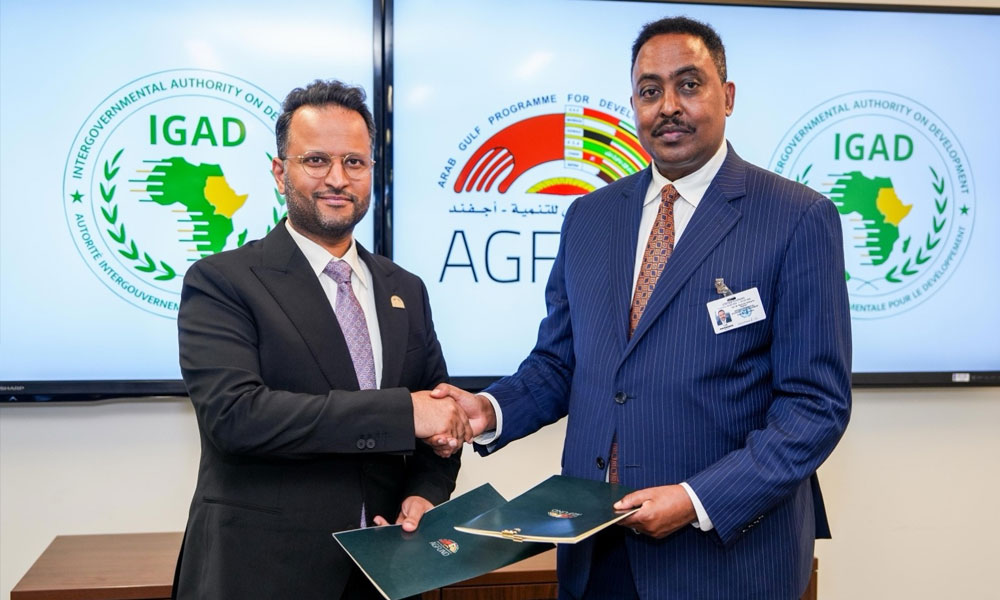
The Arab Gulf Programme for Development (AGFUND) concluded its participation in the 2026 Concordia Summit and its program of activities in New York, which included international dialogues and meetings, a roundtable on digital inclusion, and the signing of several agreements with international organizations to support projects in the fields of digital innovation, financial inclusion, artificial intelligence, climate action, and youth empowerment, as part of its efforts to strengthen partnerships and expand cooperation with institutions and organizations working in the field of human development.
The participation of AGFUND’s CEO, Hammam bin Nasser bin Jarid, on the main stage of the Concordia Summit, constituted one of the most prominent highlights of the program, through a session titled “New Capital, New Model: Accelerating the Next Phase of Development.” The session addressed the transformations underway in the development sector and the need for models that combine capital, partnerships, and institutional capacities. It also outlined AGFUND’s direction for the next phase, which is based on leveraging its development experience, maximizing the impact and sustainability of its interventions, strengthening partnerships, building institutions, and mobilizing resources to serve human development.
The annual Concordia Summit is an international platform that brings together leaders from the government, private, and non-profit sectors. The 2026 edition was held in New York in parallel with the sessions of the United Nations General Assembly.
During his participation in the Summit, AGFUND announced the opening of nominations for the 2026 Prince Talal International Award for Human Development. This year’s theme was dedicated to Sustainable Development Goal 3: “Good Health and Well-being,” calling on relevant stakeholders to submit their nominations by February 15, 2027.
The selection of the award’s theme aligns with its established mechanism to synchronize with the Sustainable Development Goals 2030. Each year, the Award Committee selects one goal to explore development experiences and projects that offer practical and innovative solutions in the field of sustainable development. The 2026 edition highlights projects and initiatives that contribute to ensuring healthy lives and promoting well-being for all ages.
The total value of the Prince Talal International Award for Human Development is one million US dollars, distributed across four categories. The award aims to honor outstanding development projects, disseminate their experiences, and utilize them to enhance development work. Since its launch in 1999 through the 2025 edition, the award has honored approximately 95 winning projects. AGFUND receives nominations electronically from various countries around the world in accordance with approved conditions and mechanisms.
As part of its New York program, AGFUND organized a roundtable titled “Digital Inclusion: Inclusive Innovation and Sustainable Impact,” with participation from representatives of international institutions and organizations, as well as relevant development and innovation entities. The discussion explored ways to leverage technology and innovation to expand the scope of digital inclusion and enhance communities’ access to opportunities and services. It also highlighted the role of artificial intelligence, data, innovative financing models, and international partnerships in developing scalable and sustainable development solutions.
Participants discussed the importance of building enabling environments that ensure digital transformations contribute to more inclusive development, particularly for underserved groups and communities with limited access to services and opportunities.
The AGFUND program in New York also saw the signing of four agreements to finance and support development projects with the United Nations Development Programme (UNDP), the Intergovernmental Authority on Development (IGAD), and the United Nations Convention to Combat Desertification (UNCCD).
Ajeend signed two agreements with the United Nations Development Programme (UNDP). The first concerns the project “Financial Technology Lab at the Central Bank of Yemen: A Pilot Platform for Digital Financial Services and Financial Inclusion,” implemented in Aden, Yemen, aiming to establish a fintech lab at the Central Bank of Yemen to enhance digital financial services and financial inclusion, build institutional capacity, and support the testing and development of innovative financial solutions.
The second agreement relates to the project “Harnessing Artificial Intelligence for Economic Growth in the Arab Region: Leveraging AI for Inclusive Development and Human Progress,” which seeks to capitalize on the potential of artificial intelligence to support economic growth, promote inclusive development, and advance human progress in the Arab region.
Ajeend also signed an agreement with the Intergovernmental Authority on Development (IGAD) to support a project aimed at activating early warning investments by strengthening microinsurance and climate risk financing capacities in the IGAD region. This will be achieved by enhancing policies, regulatory frameworks, and technical capacities necessary to develop microinsurance resilient to climate risks and financial services linked to early warning information, thereby improving risk management and strengthening the resilience of vulnerable communities. The project is being implemented in Ethiopia, Somalia, Kenya, and Djibouti.
Furthermore, Ajeend signed an agreement with the United Nations Convention to Combat Desertification (UNCCD) to support the project “Enhancing Youth Participation for Land Restoration and Drought Resilience under the UNCCD Youth Engagement Strategy.” This initiative aims to activate youth engagement through a sustainable, multi-year system that enables their effective contribution to land restoration, drought resilience, and participation in global land governance processes. The project is implemented in Mongolia.
These efforts align with Ajeend’s strategy to expand its international partnerships and support initiatives that combine innovation, institution-building, inclusion, and responses to developmental and climate challenges, thereby enhancing its contribution to human capital investment and sustainable development.
