GCC Secretary-General Warns of Threats Posed by Armed Groups to State Sovereignty and Stability
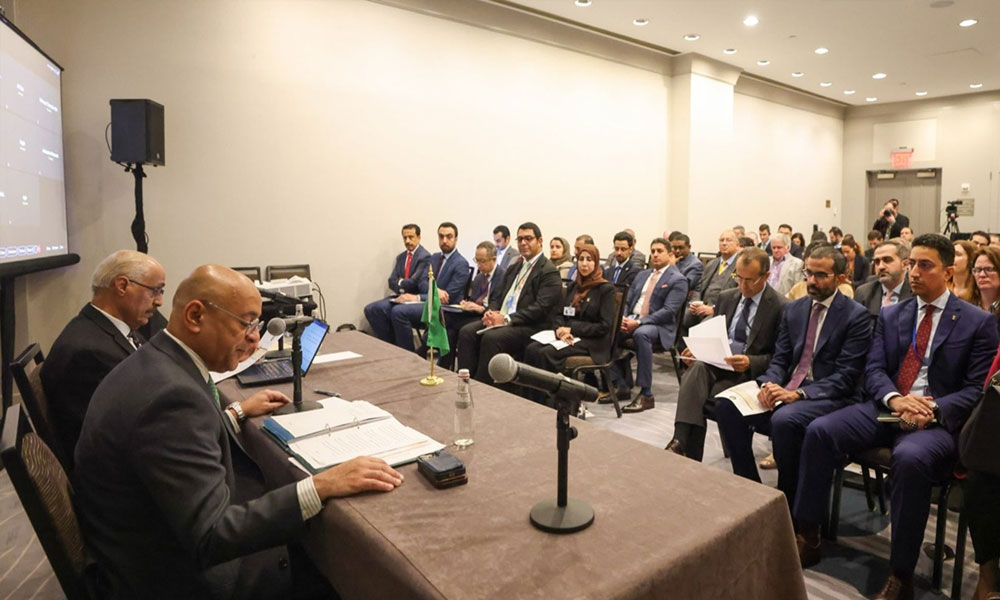
The Secretary-General of the Cooperation Council for the Arab States of the Gulf (GCC), Jasem Mohamed AlBudaiwi, warned on Monday of the existence of armed groups operating outside the framework of state institutions, highlighting the challenge they pose to state sovereignty, national decision-making independence, the capacity to enforce the law, and the protection of borders and citizens.
AlBudaiwi made these remarks in a speech delivered at a seminar titled “Challenges Related to Armed Groups Outside the State Framework,” organized by the GCC General Secretariat in New York on the sidelines of the 81st session of the United Nations General Assembly. The event was attended by several ministers and senior officials from friendly countries.
AlBudaiwi affirmed that the GCC states’ position on this issue is clear and steadfast, emphasizing that “there is no sovereignty with dual weapons, and no stability with military decisions made outside state institutions.”
He explained that the danger of this phenomenon is compounded when armed groups independently possess weapons and resources, or when they are linked to external entities that provide them with funding, arms, and training. He noted that the region has witnessed armed groups using missiles and drones to threaten neighboring countries and international navigation.
AlBudaiwi added that the weakening of state institutions and their declining ability to extend their authority over their entire territory create security and political vacuums that armed groups may exploit to expand their influence and challenge the state’s competencies and national decision-making.
He pointed out that the GCC states base their position on the UN Charter and international legitimacy resolutions, which affirm the necessity of extending state authority and confining weapons to its legitimate institutions. He recalled the Gulf role in supporting political solutions and strengthening state institutions, citing the Taif Agreement of 1989 and the Gulf Initiative and its Executive Mechanism in Yemen in 2011.
AlBudaiwi continued by stating that the GCC states continue to support the efforts of regional countries, including Yemen, Lebanon, Iraq, and Syria, to extend the rule of law and confine weapons to the state, while simultaneously supporting recovery and development efforts and addressing the humanitarian impacts of conflicts.
He called on the international community to assume its responsibilities in stopping the flow of weapons, funding, training, and military technologies to armed groups, holding accountable the states and entities supporting them, and ensuring the strict implementation of arms embargoes. He also urged tightening oversight on the transfer of missiles, drones, and their components.
AlBudaiwi further called for supporting governments in strengthening their military, security, and judicial institutions, and linking disarmament, demobilization, and reintegration programs with development and reconstruction. He affirmed that the GCC states will remain a pillar for regional countries in restoring their full sovereignty and an active partner for the United Nations and the international community in safeguarding regional and international peace and security.
The Secretary-General considered the organization of the seminar a reflection of the GCC states’ commitment to addressing this challenge and enhancing regional and international security and stability. He emphasized that investing in peace does not merely involve ending conflicts after they erupt, but begins with building strong states with robust institutions capable of protecting their citizens, enforcing the law, and providing security, justice, and opportunities.
