Minister of Health: Breast cancer accounts for more than 40% of cancer cases among women
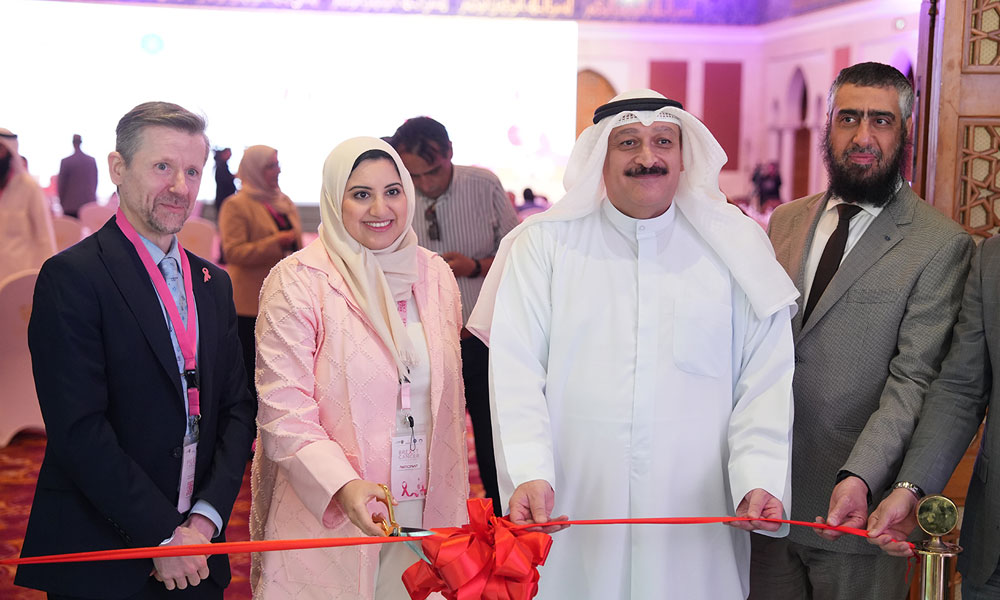
Minister of Health Dr. Ahmed Al-Awadi confirms that breast cancer accounts for more than 40% of cancer cases among women in Kuwait, with the number of patients living with it exceeding eight thousand.
Translated by Qiyas from كويت نيوز — Original source
Health Minister Dr. Ahmed Al-Awadi stated that breast cancer accounts for more than 40 percent of cancer cases registered among women in the State of Kuwait, and that the number of patients undergoing treatment and follow-up at Ministry of Health facilities exceeds 8,000.
This was stated in a speech delivered by Minister Al-Awadi today, Saturday, at the Third Kuwait Breast Cancer Conference 2026, where he emphasized that breast cancer is among the most prominent health challenges requiring a comprehensive approach.
He added that combating cancer requires a vision extending from awareness and early detection to diagnosis, treatment, rehabilitation, and follow-up. He noted that the State of Kuwait has built growing capacities to confront the disease over the past years since the launch of the National Early Detection Program for Breast Diseases in 2014, the establishment of the Rapid Diagnosis Clinic at the Kuwait Cancer Control Center in 2015, and the creation of the Genetics Laboratory in 2016.
He pointed out that the opening of the Oncology Department at Jabir Al-Ahmad Hospital in 2022 represented a step toward expanding specialized services, followed by the opening of breast cancer surgery and reconstruction services in the same year, which enhances integrated care and attention to functional and psychological aspects alongside disease treatment.
He said the Ministry has kept pace with the development of pharmacological treatments and worked to provide modern treatment options, including hormonal, targeted, immunological therapies, and antibody-drug conjugates, tailored to the nature and characteristics of the disease and the clinical condition of each patient.
He clarified that the Kuwait Cancer Control Center began implementing the "liquid biopsy" technique to support molecular tumor analysis and utilize its results in guiding treatment decisions in appropriate cases. Furthermore, during 2026, the Center began preparing and conducting a clinical study in the field of breast cancer to support the development of a research environment that contributes to local knowledge production, adheres to accepted scientific and ethical standards, and prioritizes the safety and rights of participants.
Minister Al-Awadi referred to the specialized training program in oncology under the auspices of the Kuwait Institute for Medical Specialties, supported by the Ministry of Health, to prepare national cadres and provide an environment that enables them to learn, conduct research, and practice science efficiently. Over the past five years, this program has contributed to graduating six specialized oncologists.
He mentioned that the Ministry is preparing to open the new Kuwait Cancer Control Center in the Al-Sabah Medical Area, representing an expansion in the capacity to provide specialized care. He noted that the scientific value of this project is determined by what it adds to the patient experience and treatment outcomes, including easier access to services and faster completion of procedures.
For his part, Conference Chairman Dr. Anwar Al-Nouri stated that the field of breast cancer has witnessed rapid development, whether in diagnostic and early detection methods, understanding the molecular biology of the disease, or in successive advances in targeted, immunological, and hormonal treatments, as well as significant progress in antibody-based therapies and antibody-drug conjugates.
He emphasized that breast cancer statistics represent not only a medical challenge but also a health priority that necessitates continued investment in early detection, accurate diagnosis, integrated multidisciplinary care, and access to the latest evidence-based treatments.
He clarified that the Third Kuwait Breast Cancer Conference reaffirms the Ministry of Health’s commitment to supporting evidence-based medical practice, enhancing continuing medical education, and providing a specialized scientific platform that brings together local, regional, and international expertise to discuss the latest developments in the field of breast cancer.
He added that the conference addressed the latest developments across various stages of the disease, from early detection and diagnosis, through surgical, radiotherapy, and systemic treatments, to the most recent advances in hormonal, targeted, and immunotherapies, antibody-related interventions, and genetic marker-based treatments.
He noted that the conference provides an opportunity to review and discuss the key studies and clinical trials presented at international scientific forums during 2025 and 2026, and to examine the potential implications of these findings for current and future clinical practice.
