Kuwait Showcases Its Digital Experience in the Judicial Inspection System at an Arab Meeting in Oman
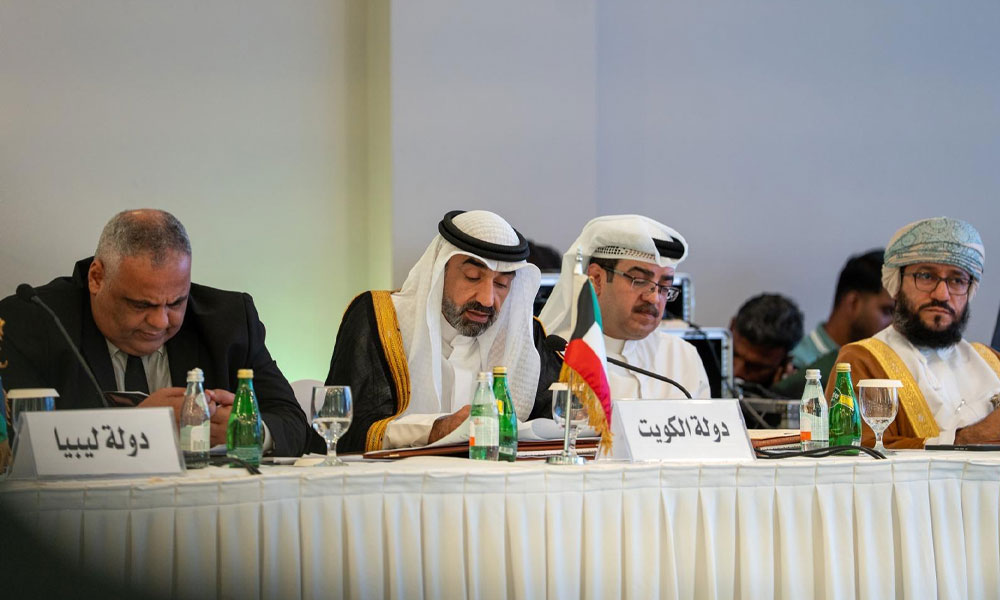
A Kuwaiti judicial delegation, participating in the 30th Arab Meeting of Heads of Judicial Inspection and Oversight Bodies held in the Sultanate of Oman, presented the State of Kuwait’s experience in automating judicial inspection and technical oversight amid the rapid digital transformation underway in the judicial system.
Khalid Bishir, First Counselor at the Court of Cassation and head of the delegation, told the Kuwait News Agency (KUNA) on Wednesday that the two-day meeting, hosted in the city of Salalah with the participation of judicial delegations from 14 Arab countries, focused on the importance of developing oversight and evaluation tools and leveraging modern technologies to enhance efficiency while safeguarding judicial independence.
He added that the meeting aimed to build a shared vision for developing the judicial inspection system and exchanging expertise through working papers that generally addressed the transition from traditional oversight to preventive oversight, the evaluation of court performance, and the prospects for deploying smart technologies in legal research and data processing. The discussions also covered challenges related to algorithmic bias and the protection and confidentiality of judicial files.
Regarding the Kuwaiti working paper, Bishir said it was titled “The Digital Judicial Inspection System and the Application of Modern Performance Indicators to Ensure Prompt Justice.” The paper highlighted the judicial system in the State of Kuwait in the context of digital transformation, particularly the experience of judicial inspection in developing its supervisory and oversight tools to entrench standards of governance and transparency.
Counselor Bishir noted that the working paper aimed to establish unified Arab standard benchmarks for assessing judicial competence based on digital performance indicators. It also sought to support Arab coordination mechanisms for developing methods of investigation and administrative and technical auditing within the judicial apparatus.
In this regard, he pointed to the presentation of Kuwait’s experience in digital transformation and electronic inspection, following the approval of scanning and converting all paper documents, records, affidavits, and judgments into organized, archived digital formats across all levels of litigation.
He explained that the Kuwaiti delegation outlined how this was achieved through the secure storage and archiving of case files in protected databases with access restricted to specific individuals involved in judicial work. This enabled judicial inspectors to review the full contents of the case files under inspection and contributed to the speed of completing judicial inspection reports.
Counselor Bishir stated that the working paper also addressed how digital transformation has enabled judicial inspectors to shift from traditional evaluation to comprehensive evaluation based on precise information, facilitated by networked connectivity between courts and the inspection body.
He emphasized the legislative progress achieved in the State of Kuwait following the recent enactment of the Law Organizing the Judiciary, which regulated judicial inspection and digital transformation by introducing new evaluation methods concerning judges’ adherence to electronic litigation and trials, as well as the effective management of digital hearings.
Regarding the delegation’s key recommendations, he said it recommended the importance of unifying procedural inspection standards among Arab countries and establishing digital reference guides for measuring judicial performance to meet shared aspirations for an advanced judiciary.
It also recommended that the Arab Award for Judicial Inspection Work be dedicated to electronic applications that demonstrate success in judicial inspection.
On the importance of participating in the meeting, he affirmed that it stems from a steadfast commitment to enhancing shared Arab judicial cooperation and exchanging expertise and perspectives on developing judicial inspection bodies, which serve as a safety valve for ensuring the proper administration of justice, safeguarding judicial independence, and entrenching the rule of law.
The Kuwaiti judicial delegation comprised First Counselor Khaled Bishir of the Court of Cassation, First Counselor Raed Al-Daili of the Court of Appeal, and Khaled Al-Na’mani from the Judicial Inspection Affairs Department at the Kuwaiti Ministry of Justice.
Concluding its work on Tuesday, the 30th meeting of the heads of judicial inspection bodies and agencies in Arab countries adopted a series of recommendations, most notably the approval of the draft for the Arab Award for Judicial Inspection Work and the harmonization of procedural inspection standards among Arab states.
The meeting also recommended adopting a balanced system for evaluating judicial performance, developing objective and measurable criteria, and linking evaluation results to continuous training and capacity-building plans. It further called for adopting artificial intelligence as an auxiliary tool in analyzing the quality of judicial rulings and inspection activities, while establishing legislative and ethical frameworks to regulate its use.
Participants also approved several academic themes for the 31st meeting in 2027, including total quality management in judicial institutions, balancing judicial independence with performance evaluation, smart justice, and preparing a unified Arab framework for indicators of ruling quality and judicial inspection.
