Gold Falls to $4,430 an Ounce Following Release of Encouraging U.S. Economic Data
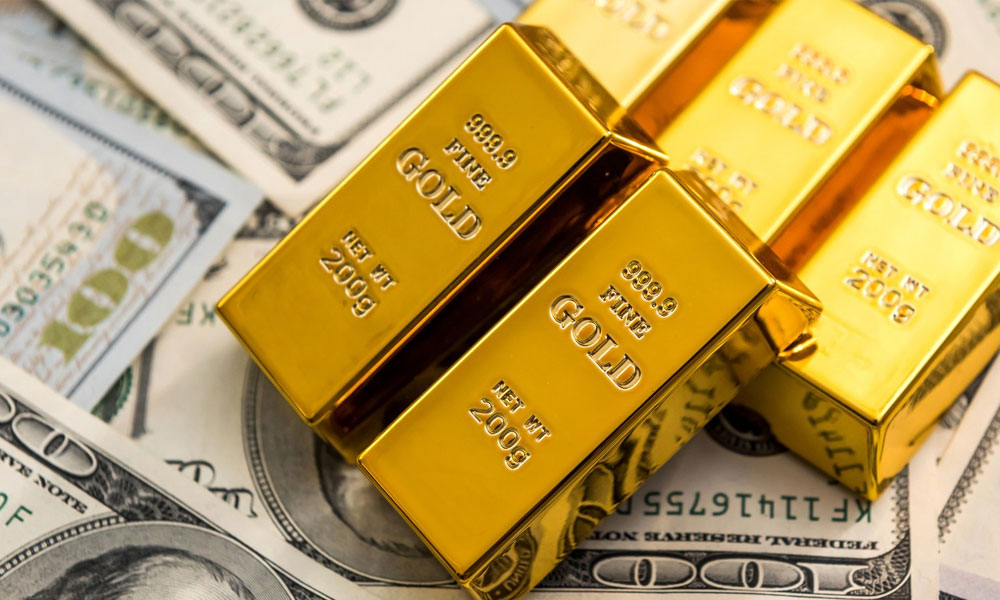
Gold prices ended last week’s trading session lower, marking its second consecutive weekly loss, and closed at $4,430 per ounce. The decline was driven by stronger-than-expected U.S. jobs data, which reinforced expectations for a tighter U.S. monetary policy stance.
According to a report issued by Kuwait Mint Company on Sunday, U.S. non-farm payroll figures were the primary driver of gold’s movement last week. The data showed the U.S. economy added 162,000 jobs in August, significantly surpassing market expectations of around 56,000. Additionally, July’s data was revised upward to reflect an increase of 21,000 jobs.
The report added that the unemployment rate remained steady at 4.1%, while annual wage growth slowed to 3.1%, though the decline was less than market forecasts.
It clarified that the strength of the U.S. labor market bolstered the belief that the Federal Reserve (the U.S. central bank) has greater room to keep interest rates elevated or raise them if inflationary pressures persist, particularly since a robust labor market reduces the risk of significant economic damage resulting from tighter monetary policy.
Consequently, market bets on a rate hike at the September meeting rose to between 58% and 61%, according to market pricing indicators, compared to lower levels prior to the release of the jobs report.
The report noted that U.S. Treasury yields rose following the jobs data, with the 10-year yield touching 4.81% before retreating later to around 4.77%.
It highlighted that gold faced strong pressure last week after failing to maintain levels above $4,500 per ounce. However, the sharp price decline found some support as yields fell from their intraday highs.
Despite current pressures, the report stated that supportive factors for gold remain in place over the medium and long term, including geopolitical risks, concerns regarding U.S. debt and fiscal deficit levels, and continued investment demand for gold as a key safe-haven asset during times of uncertainty.
The Kuwait Mint report said that developments in the Middle East, Iran, and the Strait of Hormuz will remain under investors’ scrutiny, particularly amid ongoing concerns about oil tanker movements and energy supplies.
It explained that sustained high oil prices could exacerbate inflationary pressures, which in turn could impact U.S. monetary policy expectations. Meanwhile, escalating geopolitical risks may boost demand for gold as a safe haven.
From a technical perspective, the report noted that gold ended last week near $4,430 per ounce, keeping $4,400 as the key pivot level for the current phase. It suggested that if gold manages to hold this level and reclaim $4,450, attention may shift toward $4,500, followed by the $4,520–$4,534 zone, which represents significant technical resistance.
It added that if the $4,400 level breaks and holds below, the risk of further correction toward $4,354 and then $4,322 would increase. Meanwhile, $4,282 would serve as a major technical support level in the event of a deeper market downturn.
On the local front, the Kuwait Mint report stated that gold prices in the Kuwaiti market continue to be directly influenced by global ounce movements, alongside fluctuations in the U.S. dollar and changing expectations regarding U.S. monetary policy.
He noted that the price of a gram of 24-karat gold reached approximately 44 Kuwaiti dinars (about $143 US), while 22-karat gold stood at around 40.370 dinars (about $131), and 21-karat gold was priced at roughly 38.530 dinars (about $125). Meanwhile, the price of a kilogram of silver reached approximately 715 dinars (about $2,328).
He predicted that global gold movements during the current week would directly impact local prices, particularly amid anticipation of US inflation data and the potential resulting shifts in interest rate expectations, the dollar, and bond yields.
