State of Kuwait: Iran's reprehensible attacks on Gulf states pose a threat to security and stability
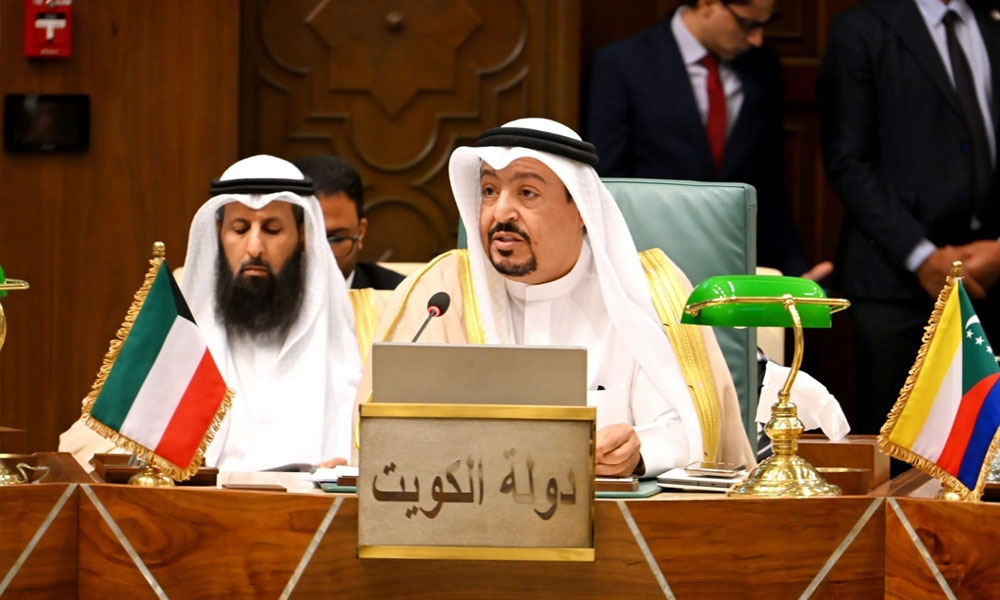
Deputy Undersecretary for Technical Services at the Ministry of Finance, Saad Al-Alawi, affirmed on Thursday that Iran’s culpable attacks on Kuwait and the Arab Gulf states constitute a threat to security and stability, necessitating joint Arab efforts to enhance solidarity, unify positions and efforts, and confront current and future challenges.
This statement was made in Kuwait’s address delivered by Al-Alawi at the 118th Ministerial Session of the Economic and Social Council of the Arab League, which commenced under the chairmanship of the Kingdom of Saudi Arabia at the League’s headquarters in Cairo.
Al-Alawi stated that “rapid developments have shown that the concept of security is no longer confined to its traditional dimensions, but has expanded into a comprehensive notion linked to economic and food security, energy security, the sustainability of supply chains and trade routes, and the stability of financial markets.”
He added that a country’s ability to continue its development paths and preserve its gains has become contingent on its capacity to consolidate economic resilience, institutional stability, and preparedness to face crises and rapid changes.
In this context, he called for accelerating steps toward Arab economic integration, strengthening linkages between national economies, developing more resilient and efficient Arab supply chains, supporting food and energy security, and encouraging Arab joint investments and projects.
He emphasized the importance of the role of the Economic and Social Council as a key platform for shaping Arab economic and social policies, enhancing coordination among member states, and translating decisions and recommendations into practical programs and initiatives with tangible impacts on development and stability in Arab countries.
Al-Alawi expressed Kuwait’s appreciation for the vision put forward by Arab League Secretary-General Nabil Fahmy for the upcoming phase, which is based on several key pathways: adopting a more proactive Arab diplomacy, consolidating a culture of follow-up and implementation, restructuring the General Secretariat, investing in human capital and technology, and linking policy with development.
He viewed this vision as representing an important strategic dimension for developing the system of joint Arab action and enhancing its capacity to keep pace with rapid transformations and translate decisions and recommendations into tangible results.
Al-Alawi renewed Kuwait’s commitment to supporting the course of joint Arab action and strengthening its institutions, based on the belief that the strength of Arab cooperation rests on a unified vision, complementary capabilities, institutional efficiency, and the ability to transform decisions and recommendations into programs and projects that yield tangible developmental and economic impacts.
He expressed Kuwait’s hope that the session’s proceedings would yield practical decisions and initiatives that contribute to enhancing Arab economic and social integration, boost the capacity of Arab countries to confront challenges and rapid changes, and support sustainable development pathways, thereby fulfilling the aspirations of Arab peoples for greater security, stability, and prosperity.
Al-Alawi highlighted the importance of the Economic and Social Council as one of the fundamental pillars of the joint Arab action system and an important platform for enhancing economic and social cooperation and integration among Arab countries.
He stressed the importance of continuing joint Arab efforts and strengthening economic and social integration to support stability and development and address the challenges facing the region.
He extended his thanks to Algeria for its efforts during its previous chairmanship and congratulated the Kingdom of Saudi Arabia on assuming the current chairmanship, wishing it success and guidance in leading the Council’s work.
Ambassador Nabil Fahmy, Secretary-General of the Arab League, was also congratulated on assuming his duties, with expressions of hope for collaboration with him in the coming period within the framework of a shared vision aimed at developing the Arab cooperation system, enhancing the effectiveness of its institutions, and translating aspirations into concrete initiatives and tangible results.
Kuwait also expressed its appreciation for the former Arab League Secretary-General, Ahmed Aboul Gheit, for the efforts and contributions he made during his tenure in supporting Arab issues and strengthening the League’s role in addressing regional and international challenges.
