Kuwait’s Representative in Geneva: Iran’s Aggression Against Kuwait Is a Flagrant Violation of International Law
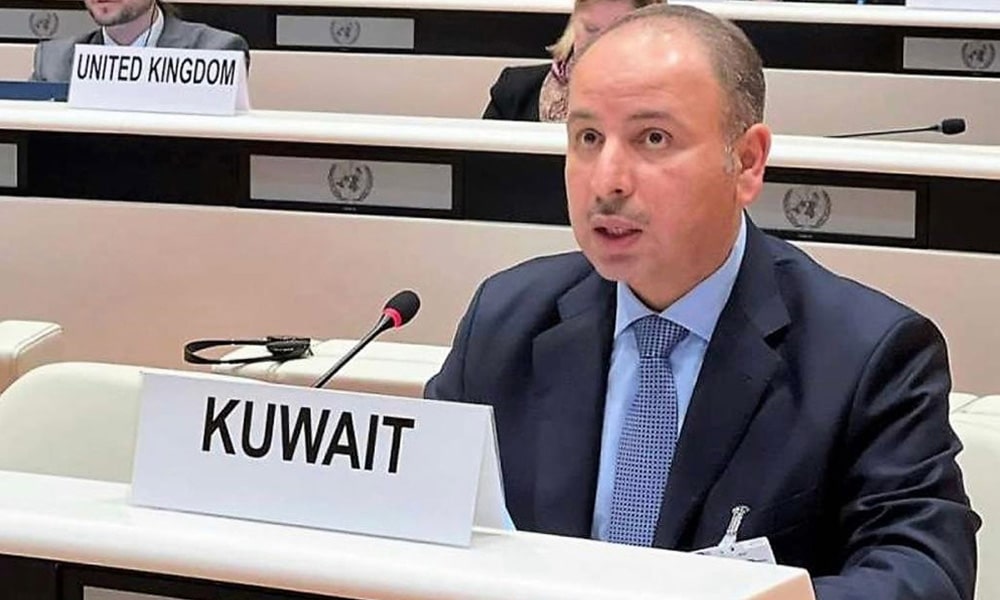
The Permanent Representative of the State of Kuwait to the United Nations and other international organizations in Geneva, Ambassador Nasser Al-Hin, stressed on Wednesday that Iranian attacks targeting Kuwaiti territory constitute a “blatant and overt violation” of international law and a test of the credibility of the international system.
In a statement to the Kuwait News Agency (KUNA) on the sidelines of preparations for the opening of the 63rd session of the Human Rights Council, scheduled to begin in Geneva on September 7, Ambassador Al-Hin called for the “immediate” adoption of deterrent measures and effective accountability actions to halt these aggressions.
He stated that the current session of the Council convenes at a “critical juncture,” during which international efforts should be intensified to protect human dignity and establish principles aimed at reducing conflicts, while Iran continues its “sinful aggressive approach” through criminal attacks targeting Kuwaiti territory and several countries in the region.
He clarified that this systematic targeting “does not merely represent a transient breach of regional balances,” but rather constitutes a clear violation of Article 2, paragraph 4, of the UN Charter, which prohibits the threat or use of force against the territorial integrity or political independence of any state.
He added that the timing of the attacks, coinciding with the upcoming UN milestones, reflects a “blatant disregard for international will and a serious violation of the rules of international humanitarian law,” particularly the Geneva Conventions of 1949 and the First Additional Protocol of 1977, which enshrine the principles of distinction and proportionality and prohibit exposing civilian objects and the lives of the population to danger.
He emphasized that targeting vital areas constitutes a direct assault on the inherent right to life and personal security, which are fundamental rights guaranteed under Article 3 of the Universal Declaration of Human Rights and Article 6 of the International Covenant on Civil and Political Rights.
Ambassador Al-Hin expressed his “strongest condemnation” of the aggression, affirming that the international community’s commitment “can no longer be content with merely managing crises or limiting itself to political disputes and formalistic stances.”
He warned that betting on containing behavior based on organized aggression would undermine the foundations of the international system and strip the mechanisms for protecting international security and human rights of their deterrent value and legal and ethical substance.
In the same context, Ambassador Al-Hin held the UN Security Council directly and primarily responsible for maintaining international peace and security under the UN Charter, emphasizing the necessity for the international community to fulfill its responsibilities regarding these attacks.
He noted that the proximity of the UN General Assembly session places “the entire international system before a true test of the credibility of its peremptory norms and the political will to enforce international law without equivocation.”
He reaffirmed Kuwait’s “firm and unconditional” commitment to its inherent right to self-defense, individually and collectively, as guaranteed under Article 51 of the UN Charter, stressing Kuwait’s determination to take all necessary political, legal, and security measures to protect its sovereignty, safeguard its territory, and ensure the safety of citizens and residents within its borders.
He called on the UN Security Council and relevant UN bodies to document these attacks and prosecute those responsible, in order to uphold the principle of justice and affirm the rule of law at the international level.
The 63rd session of the United Nations Human Rights Council is scheduled to begin next Monday and will run until October 7, 2026, to consider a number of current issues, foremost among them the situation in the occupied Palestinian territories and the ongoing war in the Middle East, along with the resulting human rights violations and humanitarian and human rights challenges. The session will also examine human rights conditions in several countries and discuss reports and mechanisms related to the protection of fundamental rights and freedoms.
