Gold ends the week’s trading with a strong rise at $4,603 per ounce
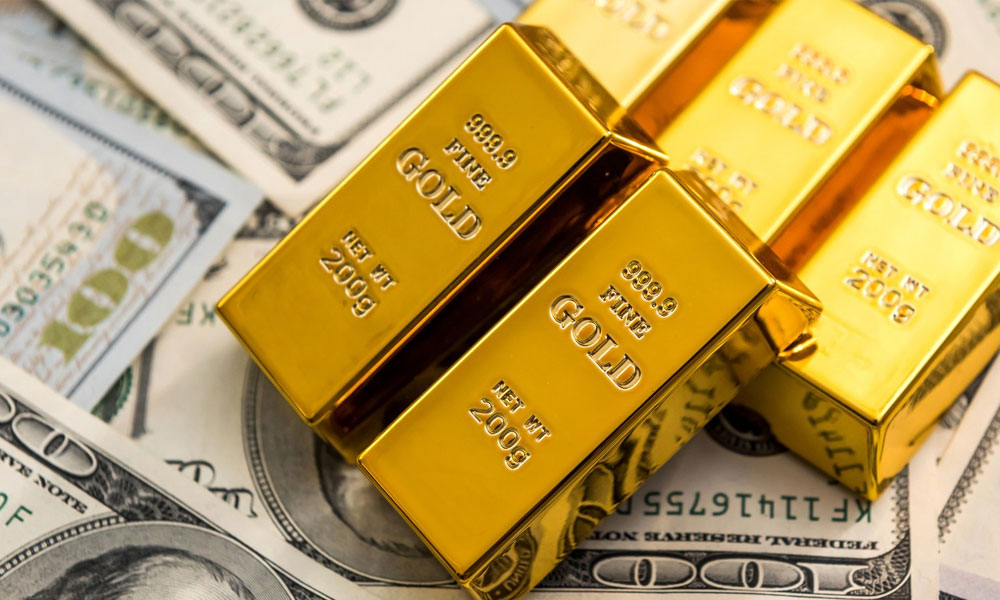
Gold prices ended last week’s trading higher at $4,603 per ounce, marking gains for the third consecutive week with a weekly increase of approximately 5 percent compared to the previous week’s close at $4,377. This rise
Translated by Qiyas from كويت نيوز — Original source
Gold prices ended last week’s trading higher at $4,603 per ounce, marking gains for the third consecutive week with a weekly increase of approximately 5 percent compared to the previous week’s close at $4,377. This rise was driven by continued weakness in the US dollar and increased demand for the precious metal as a hedge against economic, financial, and geopolitical risks.
A report issued today by Kuwait Mint Company stated that gold’s strong gains followed notable movements in US bond markets after the US Treasury Department announced an expansion of its long-term government debt buyback operations, raising the value of each operation to at least $4 billion. The move aims to support liquidity in the long-term bond market and mitigate disruptions caused by rising borrowing costs.
The report clarified that the announcement initially led to a sharp decline in bond yields alongside a drop in the dollar, which provided a strong boost to gold and contributed to its gains during the week.
It added that these developments come amid growing concerns over rising US public debt, fiscal deficits, and debt servicing costs, particularly after the total US public debt surpassed the $40 trillion mark for the first time. This has heightened worries about the sustainability of US public finances and prompted investors to increase their demand for gold as an alternative asset to hedge against risks of a decline in the dollar’s purchasing power.
The report noted that gold also benefited from a decrease in market bets on near-term US interest rate hikes, although the minutes of the Federal Open Market Committee meeting revealed ongoing divisions among monetary policymakers regarding the interest rate path, with some members advocating for a more stringent policy if inflationary pressures persist.
It pointed out that interest rate expectations remain one of the most influential factors affecting gold prices, as higher rates increase the opportunity cost of holding the non-yielding metal.
Furthermore, the US dollar fell in the foreign exchange market to levels close to several-month lows, providing additional support for dollar-denominated gold.
The report highlighted that gold rose last week to its highest level in over three months, with spot prices peaking near $4,632 per ounce before retreating slightly to close the week at $4,603.
It stated that US bond yields recovered part of the losses recorded after the Treasury announcement, but this did not prevent gold from continuing its upward trajectory, indicating that demand for the metal relies not only on interest rate and yield movements but also on concerns regarding US debt, fiscal policy, and dollar weakness.
On the geopolitical front, the Kuwait Mint report stated that developments in the Middle East and tensions related to Iran and the Strait of Hormuz remained among the most significant factors influencing markets, while rising oil prices kept inflation risks alive.
It said that rising oil prices have a dual impact on gold: they support demand for safe-haven assets and hedging against risks, but they may also prompt the Federal Reserve to keep interest rates higher for longer if inflationary pressures persist.
It added that demand from central banks and gold exchange-traded funds (ETFs) remains a key factor supporting prices, as investors continue to increase hedging against global economic and financial risks.
The report noted that markets showed an increase in demand for gold call options, coinciding with a decline in the US dollar and growing concerns about US fiscal policy, which bolstered the bullish momentum of the precious metal.
It observed that gold’s movements during the current week would remain primarily linked to the trajectory of the US dollar, Treasury yields, interest rate expectations, and statements by Federal Reserve officials.
It added that investors’ attention is particularly focused on the Jackson Hole symposium, where central bank officials may provide new signals regarding the future of monetary policy and interest rates.
It pointed out that markets are awaiting a series of important US economic data releases this week, including personal income and spending figures, the Personal Consumption Expenditures (PCE) price index, and durable goods orders, alongside the annual revisions to non-farm payrolls data.
It noted that inflation data, particularly the PCE price index, would attract significant market attention due to its importance in determining the path of US monetary policy.
It forecast that if the US dollar continues to weaken, bond yields decline, and expectations of interest rate hikes recede, gold may attempt to sustain its upward wave and test the $4,650 level, followed by $4,700, with a potential reach of $4,750 if positive momentum persists.
The Dar Al Ansab report indicated that the $4,700 level represents a prominent technical target, following gold’s successful breakout above its 200-day moving average and the continuation of bullish momentum.
It clarified that, conversely, a rise in the dollar or bond yields, along with renewed inflation concerns, could prompt investors to take profits after gold’s strong gains in recent weeks, potentially pushing prices toward key support levels.
It noted that the $4,600 zone would remain pivotal in determining gold’s direction in the coming period, as maintaining trading above this level would keep the uptrend intact and support an attempt to break the recent peak, whereas a breach could trigger a correction toward $4,550 and then the $4,513 zone, which represents significant technical support near the 200-day moving average.
It highlighted that gold’s ability to hold the $4,600 level and surpass the recent peak would be a crucial technical factor in determining its capacity to continue rising, while US economic data, statements by Federal Reserve officials, and geopolitical developments would remain the main drivers of prices.
It added that the weakness of the dollar, rising concerns about US debt and deficits, the Treasury Department’s expansion of debt buyback operations, and sustained investment demand for gold were the most prominent supporting factors during the past week.
The Dar Al Ansab report explained that a breakout above the $4,650 and then $4,700 levels would constitute a new positive signal that could pave the way for higher levels, whereas a break below $4,550 would be the first sign of a decline in short-term bullish momentum.
On the local front, it noted that the gains achieved by precious metals in global markets were reflected in prices in the Kuwaiti market. The price of a gram of 24-karat gold reached approximately 45.380 Kuwaiti dinars (about $147), while a gram of 22-karat gold recorded around 41.600 dinars (about $135). The price of a gram of 21-karat gold stood at approximately 39.710 dinars (about $129), and the price of a kilogram of silver reached about 747 dinars (approximately $2,435).
