Foreign Ministers of Saudi Arabia, Jordan, UAE, Indonesia, Pakistan, Turkey, and Qatar Express Deep Concern Over Deteriorating Humanitarian Situation in Gaza
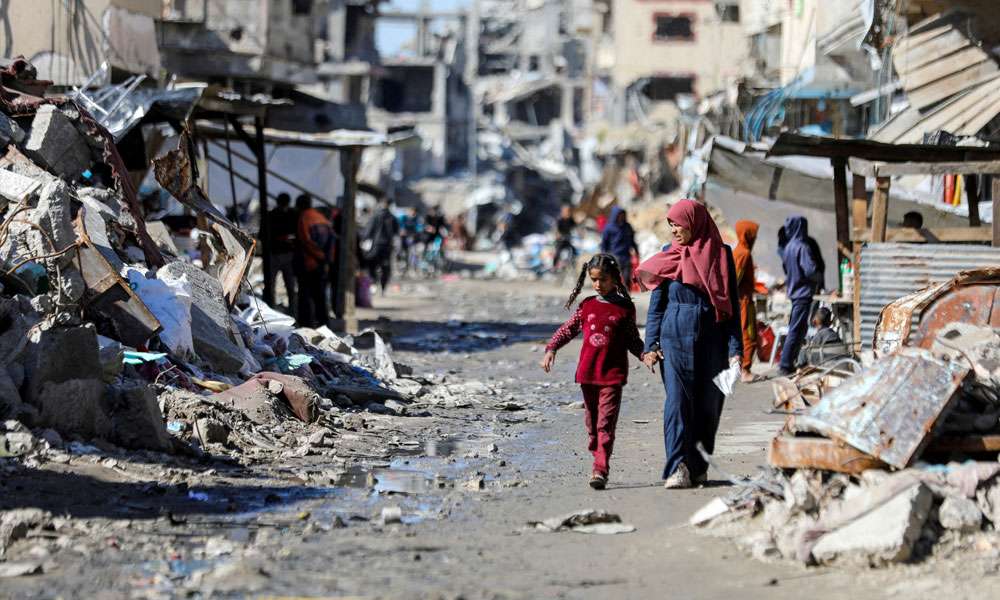
The foreign ministers of Saudi Arabia, Jordan, the UAE, Pakistan, Turkey, Qatar, and Egypt expressed concern over the worsening humanitarian situation in Gaza due to rain and lack of aid, calling for the opening of the Rafah crossing and lifting restrictions on supplies.
Translated by Alqyas from Kuwait News — Original source
The foreign ministers of the Kingdom of Saudi Arabia, the Hashemite Kingdom of Jordan, the United Arab Emirates, the Republic of Indonesia, the Islamic Republic of Pakistan, the Republic of Turkey, the State of Qatar, and the Arab Republic of Egypt expressed deep concern over the deterioration of the humanitarian situation in the Gaza Strip, exacerbated by harsh, severe, and unstable weather conditions, including heavy rains and storms, compounded by the continued lack of adequate humanitarian aid access and a critical shortage of life-saving essential supplies, as well as the slow pace of introducing materials necessary to rehabilitate basic services and establish temporary housing.
The ministers emphasized that the harsh weather conditions have exposed the fragility of the existing humanitarian situation, particularly for the nearly 1.9 million displaced persons and families living in inadequate shelters. Waterlogged camps, damaged tents, collapsed damaged buildings, and exposure to low temperatures combined with malnutrition have significantly increased risks to civilian lives, including the risk of disease outbreaks, especially among children, women, the elderly, and individuals with complex medical conditions.
They commended the tireless efforts of all United Nations organizations and agencies, particularly UNRWA, as well as international non-governmental organizations operating in the humanitarian field, for continuing to assist Palestinians and deliver humanitarian aid under extremely difficult and complex circumstances. They called on Israel to ensure that the UN and international non-governmental organizations can operate sustainably, predictably, and without restrictions in Gaza and the West Bank, given the pivotal role of the UN and international NGOs in the humanitarian response in the Strip. They affirmed that any attempt to hinder their operations is unacceptable.
They also reaffirmed their full support for United Nations Security Council Resolution 2803 and the comprehensive plan presented by US President Donald Trump, and their determination to contribute to their successful implementation, ensuring the sustainability of the ceasefire, ending the war in Gaza, and securing a dignified life for the Palestinian people, who have long suffered from severe humanitarian devastation, thereby paving a reliable path toward Palestinian self-determination and statehood.
In this context, they stressed the urgent need to immediately initiate and scale up early recovery efforts, including providing permanent and dignified shelter to protect the population from harsh winter conditions.
The ministers called on the international community to fulfill its legal and ethical responsibilities and to pressure Israel, as the occupying power, to immediately lift restrictions on the entry and distribution of essential supplies, including tents, shelter materials, medical aid, clean water, fuel, and support for sanitation services.
They also called for the immediate, full, and unrestricted entry of humanitarian aid into the Gaza Strip through the UN and its agencies, without interference from any party, the rehabilitation of infrastructure and hospitals, and the opening of the Rafah crossing in both directions, as stipulated in President Trump’s comprehensive plan.
