Lebanese Finance Minister Emphasizes Importance of Cooperation with IMF to Develop Customs and Tax Administration
صورة: وكالة الأنباء الكويتية (كونا)
Lebanese Finance Minister Confirms Revenue Improvement and Agrees to Comprehensive Customs Assessment with Technical Support from IMF and World Bank to Update Tax and Financial Systems
Translated by Alqyas from KUNA — Original source
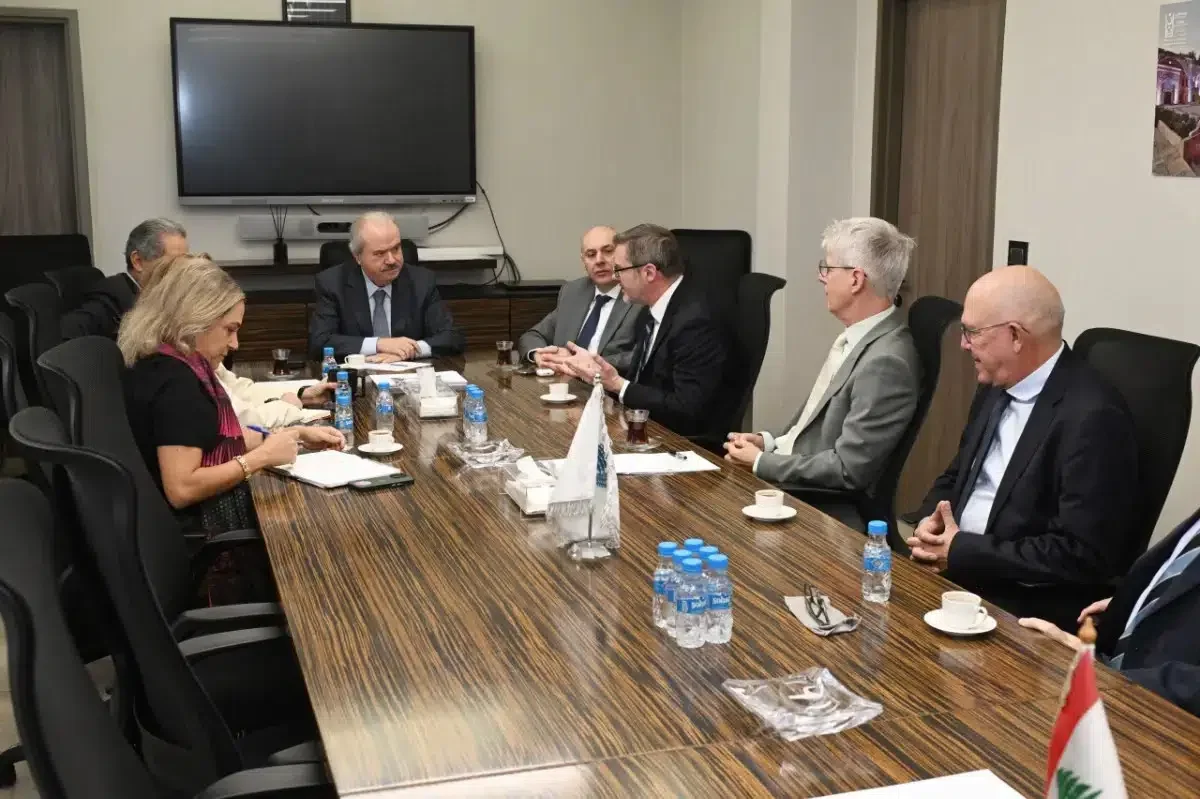
Beirut -- Lebanese Finance Minister Yassin Jaber confirmed on Tuesday that public revenues continue to improve “despite the current circumstances,” emphasizing the importance of strengthening cooperation with the International Monetary Fund (IMF) and directing its technical assistance toward actionable steps, given the available resources, data, and systems. The Ministry of Finance conveyed in a statement Jaber’s remarks during his meeting with an IMF mission conducting a three-day technical assignment in Lebanon, stressing the need to couple the digitization of services with faster processing of citizens’ transactions and the development of staff capacities, as new employees will be recruited and require training.
The statement clarified that Jaber agreed, in the customs file, to conduct a comprehensive assessment covering infrastructure, information systems, and staff needs, noting that this step coincides with the assumption of duties by a new Supreme Customs Council and a new Director General.
It added that the IMF mission expressed its support for the tax administration modernization strategy for the years 2027–2030 and its implementation plan, which is based on the Tax Administration Diagnostic Assessment Tool (TADAT), calling for the establishment of a project management office to begin operations in January next year.
The statement noted that Jaber also chaired the closing meeting of the World Bank mission supporting Lebanon’s public financial management project, attended by Enrique Blanco Armás, Director of the World Bank Group’s Beirut Office, following a week of work with directors of the Customs Administration and the Tax Administration to integrate the ministry’s systems and unify its data.
The mission reported progress in the contracting procedures for consultancy and supervision services to update the Integrated Tax Administration System (ITAS) and the Integrated Financial Management Information System (IFMIS), with expectations that the contracts will be signed in early March. A technical team will be formed to oversee implementation.
The statement reaffirmed the ministry’s commitment to building an integrated financial and tax system that enhances transparency, tax compliance, and the efficiency of public financial management, stressing the need to accelerate the execution of activities and disburse payments before the end of March. (End) F.Z. / F.S.
