Central Bank Governor: Implemented Several Initiatives to Develop Payment Systems and Banking Services Last Fiscal Year
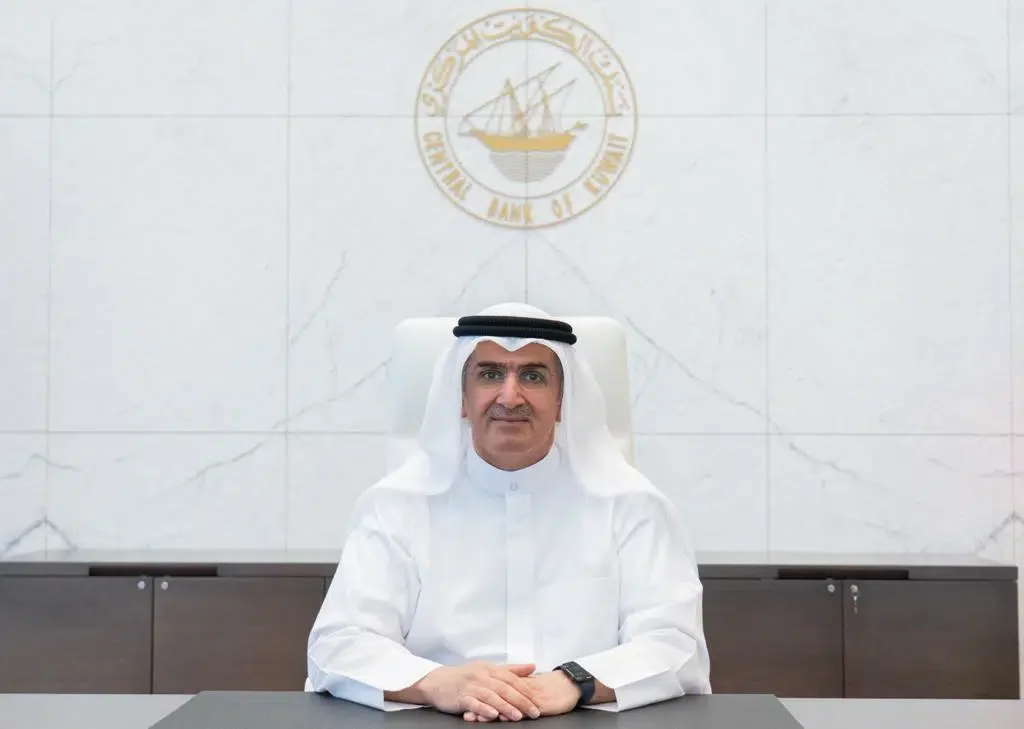
صورة: وكالة الأنباء الكويتية (كونا)
Central Bank of Kuwait Governor Bassel Al-Haroun announces intensifying efforts to develop financial infrastructure and digital transformation during the past fiscal year
Translated by Alqyas from KUNA — Original source
Kuwait – Governor of the Central Bank of Kuwait, Bassel Al-Haroun, stated that the fiscal year 2025–2026 witnessed intensified efforts in developing financial infrastructure and digital transformation, as the bank continued to implement numerous initiatives aimed at enhancing payment systems and digital banking services. In his remarks within the Central Bank’s 54th Annual Report for the fiscal year 2025/2026, published today on the bank’s website, Al-Haroun added that the aforementioned year supported financial innovation and modern fintech technologies, contributing to improved efficiency of financial services and enhanced competitiveness of the local banking sector.
He noted that the Central Bank of Kuwait continued to strengthen cybersecurity levels and operational readiness in line with the rapid developments in the financial and banking industry. The 54th Annual Report reviews the bank’s activities during the said fiscal year through three main sections: monetary and financial stability, development of the payment system, and the external auditors’ report on the bank’s financial statements as of March 31, 2026.
He explained that, in light of continuous monitoring of global and local economic, financial, and monetary developments, the Central Bank continued to employ its available monetary policy tools and macroprudential instruments in a gradual, balanced, and flexible approach, aiming to enhance monetary and financial stability in the country.
He reported that during the fiscal year 2025–2026, the bank took several decisions and measures aimed at supporting monetary and financial stability, including reducing the discount rate by 50 basis points through two gradual cuts, bringing it to 3.50 percent. Additionally, the bank eased certain regulatory requirements related to liquidity and capital, thereby enhancing the flexibility and stability of the banking sector.
Regarding the banking sector, Al-Haroun said that the local banking sector continued its pivotal role in supporting economic activity, maintaining the solidity of its financial position and stability, supported by improved solvency and liquidity levels and sustained asset quality, which enhanced the sector’s capacity to face various challenges.
He noted that the bank continued its efforts to strengthen customer protection, raise financial awareness and literacy, and support the development and training of national cadres working in the banking and financial sectors, in line with the rapid developments in the banking industry and contributing to enhancing the efficiency of national human capital.
He pointed out that the past fiscal year coincided with escalating geopolitical tensions and the associated challenges and changes that affected the global economic and financial environment. During this period, the Central Bank continued to carry out its duties and responsibilities aimed at preserving monetary and financial stability and strengthening the resilience of the country’s financial sector. (End) F.N.K / A.M.H
