Ministry of Justice launches (Tawtheeq) system for electronic powers of attorney, covering 9 categories in new digital system
Press coverage 2 newspapers covered this event: Al-Jarida · KUNA →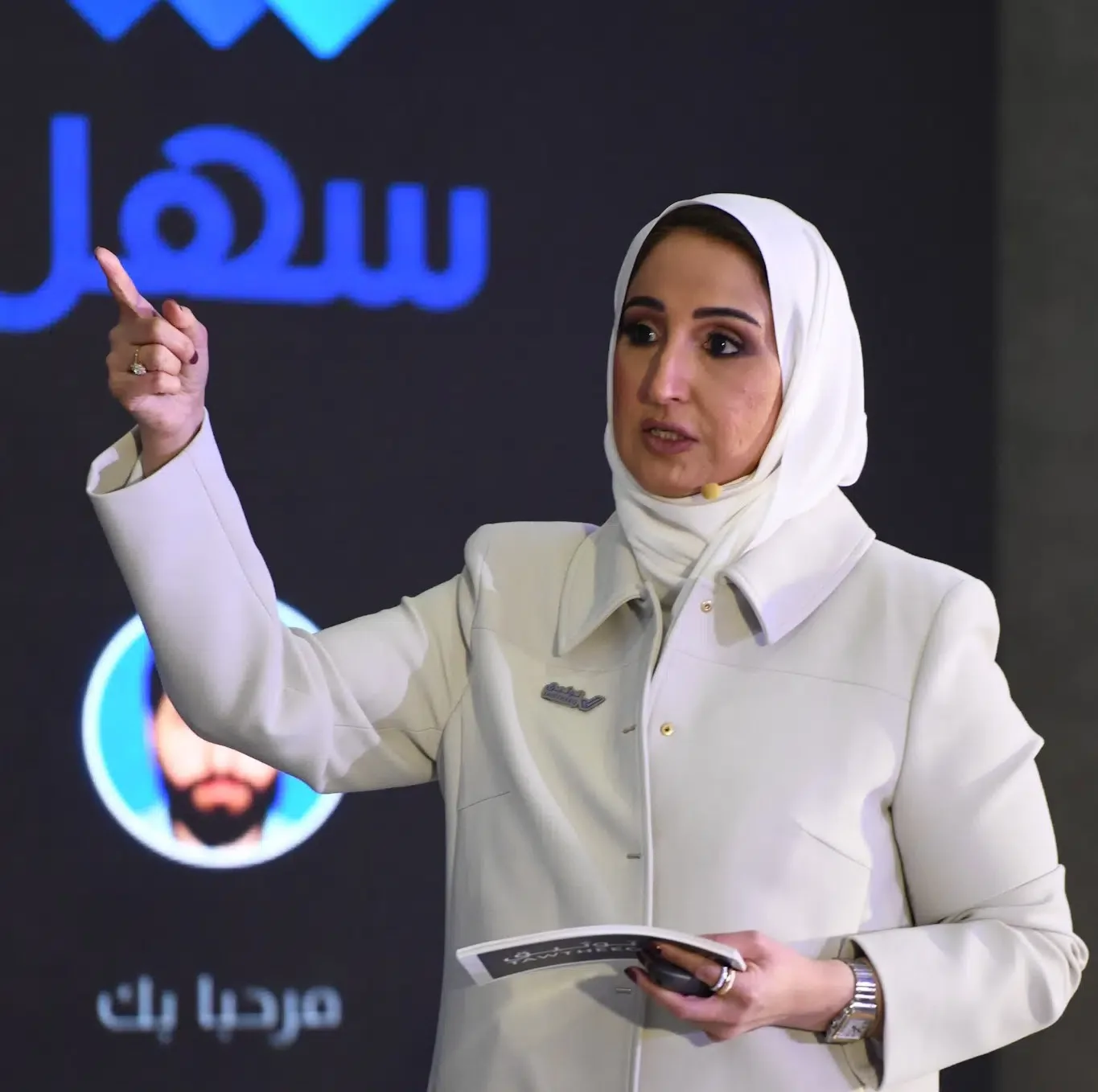
صورة: وكالة الأنباء الكويتية (كونا)
Launch of electronic notarization system covering 9 categories of powers of attorney with color-coded identification
Translated by Alqyas from KUNA — Original source
Kuwait – The Ministry of Justice launched the “Tawtheeq” system for electronic powers of attorney on Sunday. The system covers nine categories of powers of attorney, each containing several templates, with a distinct color assigned to each category. The validity of a power of attorney can be verified by scanning its QR code by any party to confirm its authenticity and validity.
Speaking to the Kuwait News Agency (KUNA) on this occasion, Hanin Al-Fudari, Project Director of the “Tawtheeq” platform, explained that the color serves as a supplementary visual identifier. She noted that scanning the QR code allows verification of the power of attorney’s validity, while the platform’s website (poa.moj.gov.kw) enables the issuance of powers of attorney and access to the registry of powers of attorney.
Al-Fudari added that the foundation for the platform was laid in September 2025, with direct support from Minister of Justice Advisor Nasser Al-Samait and supervision from Undersecretary of the Ministry of Justice Awatef Al-Sand. A young national team of legal professionals is working on the project, which she described as a qualitative and digital leap forward for the Ministry’s power of attorney services, without compromising the dignity and authority of the law.
She stated that powers of attorney are divided into nine categories: one category for general powers of attorney, with templates varying according to the authorities stipulated in the document, and eight categories for specific powers of attorney, each containing multiple templates.
She detailed the color coding for each category: general powers are blue, symbolizing trust and reference; vehicles, bicycles, and ships are orange, symbolizing clarity; shares are purple, symbolizing formality and weight; real estate is turquoise, symbolizing care and stability; animals are brown, symbolizing the earth and heritage; litigation is navy blue, symbolizing prestige; transaction completion is green, symbolizing progress; banks are gold, symbolizing value; and companies are bluish-gray, symbolizing neutrality.
Some powers of attorney are fully electronic without human intervention, while others are processed electronically provided there is a visual connection with the notary. Personal attendance remains available for those who prefer it.
The services of the “Tawtheeq” platform include electronic notarization, visual connection, external transfer, and personal attendance. Upon issuance and payment of fees, each power of attorney is assigned a unique QR code that any party can scan to instantly verify its authenticity and details.
She noted that a power of attorney can be canceled in two ways: automated electronic cancellation or in-person cancellation at the Ministry. Translation is also available electronically as part of the transaction process, with fees paid, without the need to visit a branch.
Regarding the visual connection service, Al-Fudari explained that the applicant’s identity is verified electronically before the call begins to ensure they are the actual party to the transaction. Appointments are automatically and evenly distributed among branch and department staff to balance workloads and reduce waiting times. Applicants receive reminders via the unified government electronic services application (“Sahel”), while notaries receive a pop-up alert in the system before the call.
The call supports screen sharing to display the transaction text and details, attach and review documents, eliminating the need for paper copies. Other parties, such as witnesses, translators, or assistants, can join the call, and department heads may join when necessary to supervise service quality and resolve any issues. The service is not location-bound; remote work for notaries can be activated in emergency circumstances to ensure service continuity.
She pointed out that visual connection calls are recorded and retained for 15 years, or permanently if the “under dispute” feature is activated in case of a dispute over the transaction, ensuring the recording remains a reliable reference when needed.
Regarding the external visit service, she explained that the client schedules an appointment by selecting the reason for the visit, entering their address, and pinpointing their location on a map, then choosing a date and time. The notary then begins the journey from the “Track Visit” page, which displays the client’s location, the route to reach them, and adherence to the scheduled time. Upon arrival, the notary concludes the visit and completes the transaction through the employee portal, while the client receives a notification via the “Sahl” app indicating that the notary is on the way. The client can monitor the visit from the “My Appointments” page, which shows the estimated arrival time, distance, and stages of the visit until the service is completed.
She highlighted that the platform is designed with a high level of security, processing personal data in accordance with the laws of the State of Kuwait and the regulations of the Ministry of Justice. Data is used solely for the purpose of notarizing agency documents and is kept confidential from the submission of the transaction, through identity verification via the “Hawiyati” app and electronic signing using the “Notarization Key,” up to electronic payment.
She noted that the framework for agency forms features Arabic geometric patterns inspired by the architecture of the Justice Palace building. The lines are fine and closely spaced, similar to those on currency, making the forms difficult to counterfeit or forge. The layout remains consistent across all agency documents, with colors varying according to the document category.
She added that the “Tawtheeq” platform has been integrated with several entities to complete transactions without requiring the client to move between them. The General Authority for Civil Information is responsible for verifying the identity and details of the parties involved, including spouses, children, their ages, nationalities, and residential addresses. The “Hawiyati” app is used for authentication, electronic signing, and verifying its activation.
The Ministry of Justice handles data related to property ownership documents and case records, including guardianship rulings and legal aid. The “Sahl” app sends notifications and payment links to the parties involved in the agency.
The Ministry of Interior is responsible for data on vehicles, vessels, and the status of any restrictions on the freedom of the parties. The Ministry of Health deals with death records, while the Public Authority for Persons with Disabilities determines the type and degree of disability and establishes eligibility for fee exemptions. The Kuwait Bar Association verifies the lawyer’s registration.
Al-Fudairi emphasized the necessity of activating electronic signatures to use the platform, which can be done in two ways: through self-service kiosks operated by the General Authority for Civil Information, or via the “Hawiyati” app for citizens using their passport and civil ID. (End) N Sh / A M H
