GCC Secretary General: Partnership and dialogue are strategic foundations for the Council states' relations with their surroundings
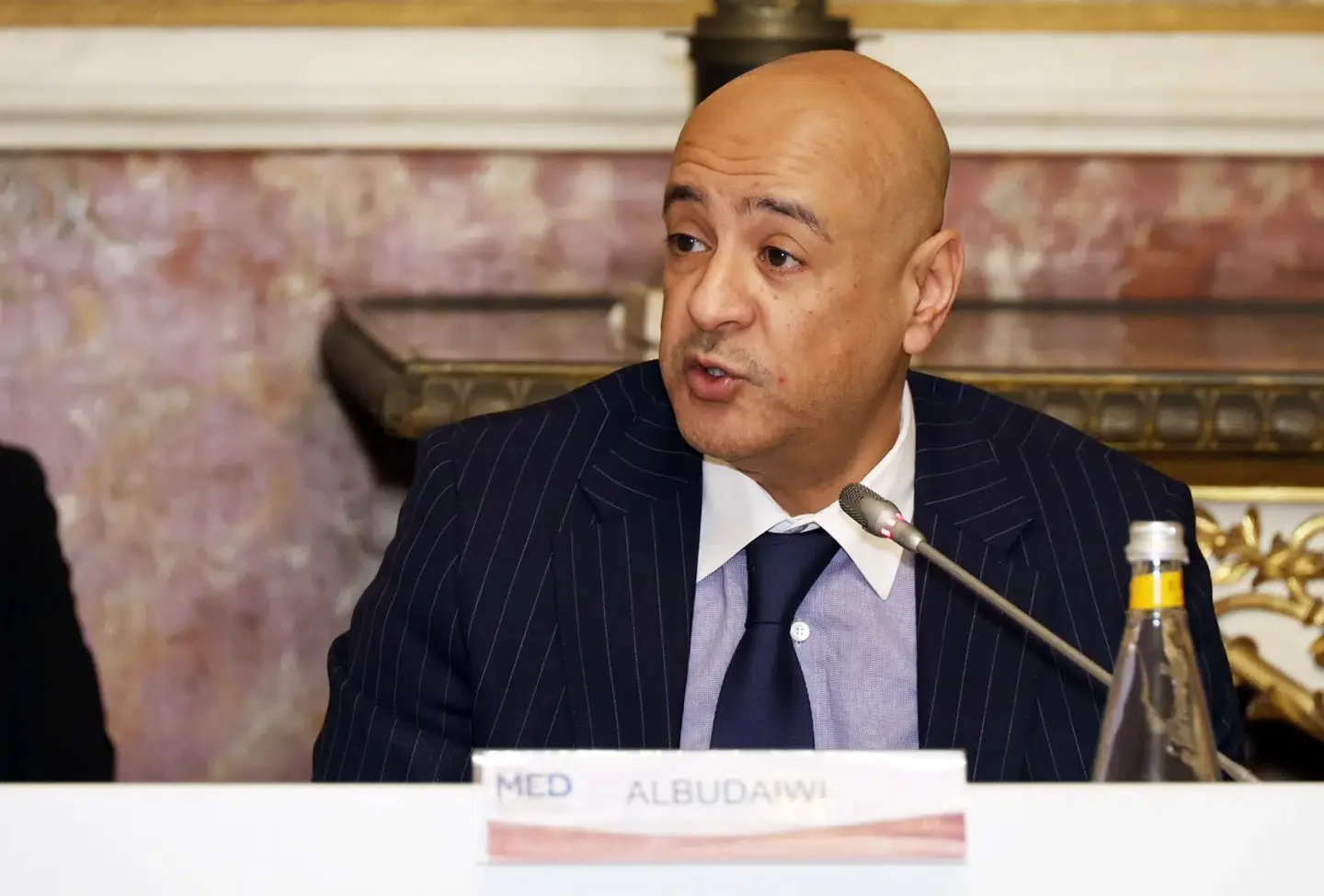
صورة: وكالة الأنباء الكويتية (كونا)
The GCC Secretary General affirmed that partnership and dialogue are strategic foundations, praising the support of Mediterranean parliaments for Saudi Arabia.
Translated by Alqyas from KUNA — Original source
Riyadh -- Secretary-General of the Gulf Cooperation Council (GCC) Jassem Al-Bedaiwi said that GCC member states have made partnership and dialogue a strategic foundation in their relations with their neighborhood and partners, and have sought to build relationships that support security and stability and open wider horizons for development.
The GCC Secretariat General stated in a statement on Saturday that this was said in a speech delivered by Al-Bedaiwi during a parliamentary event titled "Confronting Common Challenges through Dialogue and Cooperation," held as part of the "Mediterranean Dialogues Forum 2026," which took place yesterday at the Royal Palace in Naples, Italy. The forum was attended by speakers and members of foreign affairs committees from several parliaments.
Al-Bedaiwi emphasized the importance of the parliamentary dimension in building partnerships and enhancing understanding, expressing his appreciation for the positions of Mediterranean parliaments in solidarity with GCC states regarding Iranian aggression, and their support for the Kingdom of Saudi Arabia in confronting Houthi militia attacks.
He clarified that "developments witnessed in the region this year and their repercussions on energy and food prices and shipping movements have confirmed the close link between Gulf security and global economic stability," pointing to the GCC states' commitment to a de-escalation and dialogue approach, respect for state sovereignty, and their desire to ensure the continuity of their economic activity and the flow of energy supplies to global markets, including European markets.
Al-Bedaiwi noted that "the GCC states' ability to cope with these circumstances is based on a 45-year journey of institutional building and joint Gulf action, which has proven the importance of integration and coordination in facing crises, safeguarding gains, and enhancing the Council's status as a reliable partner in supporting security and stability."
On the other hand, he reviewed the economic transformations witnessed by GCC states and the expansion of their non-oil sectors, including tourism, financial services, logistics, advanced industries, and renewable energy, highlighting the role of youth in leading these transformations and the contribution of Gulf investments in Mediterranean countries, particularly in the ports, energy, tourism, and infrastructure sectors, in providing employment opportunities and enhancing mutual interests.
He affirmed the continued support of GCC states for global energy security alongside investments in renewable energy sources and solar energy projects, pointing to their expertise in water desalination, enhancing food security, and adapting to climatic conditions, and noting that these areas offer opportunities for cooperation with Mediterranean partners.
He also touched upon the experience of "Gulf Integration" and its achievements in the "Customs Union," the "Common Market," and "electrical grid interconnection," alongside work on the "GCC Railway Project," emphasizing that this experience represents a practical model of the benefits of regional cooperation for citizens and economies.
He explained that this partnership is based on mutual commitments, including opening markets, clear rules, ensuring fair treatment for Gulf investments and trade, and facilitating the movement of citizens and the business sector, highlighting the pivotal role of parliaments in creating supportive frameworks for these goals.
Al-Bedaiwi also referred to the memorandum of understanding on strategic dialogue and economic cooperation signed by the Secretariat General with the Italian side last July, and the importance of supporting its implementation to achieve practical results.
He pointed to the convening of the second conference of the heads of the legislative councils of the Gulf Cooperation Council (GCC) countries and the European Parliament in Brussels on October 16, emphasizing the commitment to expanding parliamentary communication channels between the Gulf and the Mediterranean, as they provide opportunities for sustaining dialogue and bridging differences, particularly in difficult circumstances. (End) A.S./A.B.K.
