International consensus to prepare a treaty regulating lethal autonomous weapon systems within two years
صورة: وكالة الأنباء الكويتية (كونا)
States parties to the Convention on Certain Conventional Weapons reached a consensus to prepare an international treaty regulating lethal autonomous weapon systems within two years, amid divisions over its binding nature.
Translated by Alqyas from KUNA — Original source
Geneva, Nov 21 (KUNA) -- States parties to the United Nations Convention on Prohibitions or Restrictions on the Use of Certain Conventional Weapons which may be Deemed to be Excessively Injurious or to Have Indiscriminate Effects reached consensus today, Saturday, on launching a process to prepare an international instrument regulating lethal autonomous weapon systems and killer robots that independently target humans, with negotiations to continue for two years with the aim of establishing legal controls for these weapons.
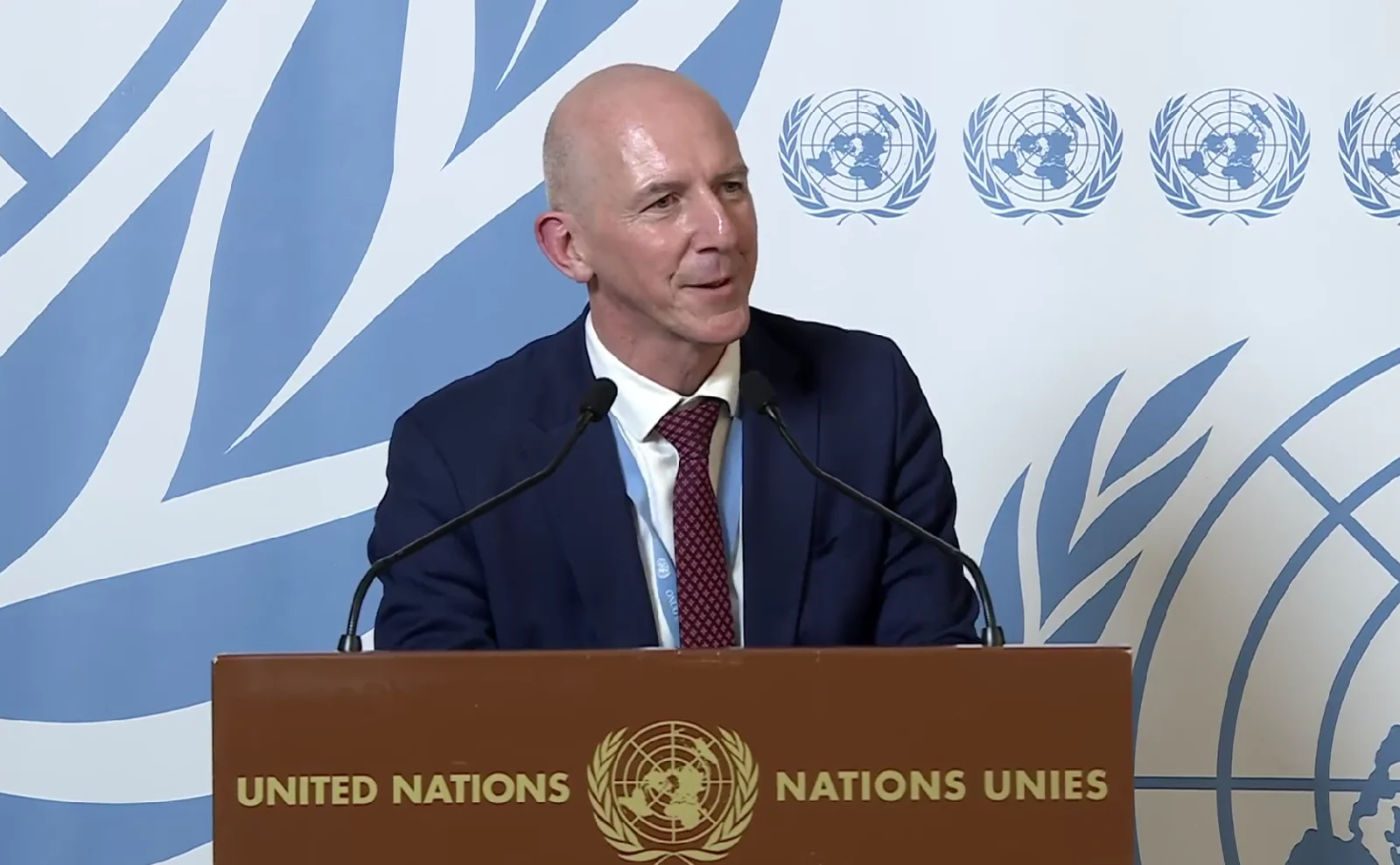
The president of the seventh Review Conference of the Convention, Swiss Ambassador Julian Tonini, announced at a press conference held at the United Nations Office in Geneva early this morning that the agreement constitutes a significant achievement realized after more than 10 years of discussions, emphasizing that multilateral diplomacy remains capable of delivering tangible results despite international divisions. Tonini stated that states agreed to launch the process of preparing an international instrument on lethal autonomous weapon systems over the next two years, noting that this consensus was reached in the final moments of negotiations that extended into the early hours of the morning.
He clarified that the text approved by the Group of Governmental Experts on September 4 was also included in the conference’s final document, thereby providing a common foundation for future work, and pointed out that states will convene in Geneva to begin work on drafting the international instrument. The Swiss ambassador further explained that determining the nature of the legal instrument—whether binding or non-binding—remains the prerogative of the states parties, with this matter to be resolved at the end of the negotiation process.
For her part, Under-Secretary-General of the United Nations and High Representative for Disarmament Affairs Izumi Nakamitsu, during the press conference, affirmed that the agreement marks the beginning of a new phase of international work, stressing that the possibility of reaching a legally binding instrument remains open and that the Group of Governmental Experts will work over the next two years to provide recommendations on the legal nature of this instrument. She called on states parties to invest in the coming period and work toward achieving the strongest possible international instrument to prohibit and regulate lethal autonomous weapon systems, warning of the potential consequences of the absence of effective international controls on the use of these weapons in armed conflicts.
Conversely, Nakamitsu expressed regret that the seventh Review Conference was unable to conduct a review of the implementation of the Convention due to procedural disagreements that states failed to overcome, particularly amid escalating armed conflicts and rising civilian casualties. She underscored the importance of the Convention as one of the main international frameworks for humanitarian disarmament, especially given the accelerating technological development of weapons used in conflicts.
Discussions over the past week witnessed sharp divergence in international positions regarding how to address autonomous weapons capable of selecting and engaging targets without direct human intervention, as states continue to differ on which systems should be banned and which could be subject to regulation through human oversight to ensure accountability and responsibility in cases of atrocities. Nearly 95 countries are pushing for new, legally binding international rules, while other states, including the United States and Russia, maintain more conservative positions regarding the imposition of additional legal obligations, arguing that existing rules of international humanitarian law provide the legal framework governing the use of such weapons.
Earlier, UN Secretary-General António Guterres, UN High Commissioner for Human Rights Volker Türk, the International Committee of the Red Cross, and other international organizations called for the adoption of a legally binding instrument for states on the use of autonomous weapons systems and the imposition of meaningful human control to ensure accountability for violations that may result. In a statement issued by the Campaign to Stop Killer Robots following the conclusion of the review conference, Nicole van Ruyven, executive director of the campaign, said that autonomous weapon technologies, including the use of artificial intelligence in the targeting cycle, are already being used on battlefields, emphasizing that delaying the adoption of a legally binding instrument puts civilians and humanity at risk. For her part, Verity Cooley, deputy director of the Weapons Division at Human Rights Watch’s Crises and Conflict Program, expressed disappointment with the outcome of the conference, stressing that it “fails to provide the urgent action needed to agree on new rules at a time when the pace of technological development is accelerating.” (End) A.M.K. / N.S.A.
