Kuwaiti charitable work.. balancing the equation between "relieving the moment" and "building the future"
صورة: وكالة الأنباء الكويتية (كونا)
Renewal of Kuwaiti humanitarian work in Palestine, Indonesia, Tunisia and Mauritania through projects combining emergency relief and sustainable development
Translated by Alqyas from KUNA — Original source
By Salman Al-Mutairi (News Report) Kuwait, Nov 21 (KUNA) -- In a humanitarian scene where the repercussions of crises and challenges intertwine, Kuwaiti humanitarian efforts have been renewed across four countries through initiatives and approaches that combine rapid relief intervention with sustainable development projects, transcending direct aid to revive hope, preserve human dignity, and create conditions that enable people to continue their lives. Amidst a child who has lost his provider, a family burdened by displacement, a student seeking an opportunity to learn, and a patient awaiting the restoration of his sight, the contours of a Kuwaiti charitable message emerge, with humanity as its title and alleviating suffering and building a more stable future as its goal.
Under the high directives of the "Kuwait is by Your Side" campaign, Kuwaiti charitable associations and institutions are expanding the scope of their projects, relying on the generosity of benefactors and their commitment to supporting the most vulnerable groups. They are providing diverse humanitarian responses that combine emergency relief, healthcare, education, and community development, thereby enhancing Kuwait’s humanitarian presence and embodying the values of solidarity and compassion.
Initiatives implemented recently highlight the diversity of Kuwait’s charitable pathways, ranging from Palestine to Indonesia, Tunisia, and Mauritania. These efforts include sponsoring orphans, securing food and winter supplies, establishing educational and health facilities, conducting medical operations, and caring for sick children. This reflects a shift in charitable work from meeting immediate needs to providing the foundations for a safer and more stable life.
In line with its focus on caring for children who have lost their providers due to the war in the Gaza Strip, the Kuwait Red Crescent Society (KRCS) announced the funding for the sponsorship of 540 orphans as part of the first batch of the "Support for Orphan Sponsorship" project. This was announced during an informational event held in Gaza City, attended by hundreds of orphaned children and their families. The initiative aims to support this vulnerable group and alleviate the living burdens on their families amid the difficult humanitarian conditions in the Strip.
Khalid Al-Mughamsis, Chairman of the Board of Directors of the KRCS, told the Kuwait News Agency (KUNA) that the project stems from the Society’s commitment to supporting children who have lost their providers and assisting their families in securing their basic needs. He explained that the sponsorships provide monthly support to beneficiary families for a period of four months, helping to alleviate living burdens and enabling them to provide for their children’s daily necessities.
Al-Mughamsis added that orphan care is a priority in the Society’s humanitarian programs, given the challenges faced by families who have lost their providers in securing food and basic necessities for their children. He emphasized that sponsorship programs help provide regular support to these families and offer children a degree of stability and care amid the exceptional circumstances in the Strip.
He praised the high leadership of the State of Kuwait for its humanitarian and relief efforts directed toward the Palestinian people, as well as the continuous contributions of Kuwaitis in supporting their brothers in the Gaza Strip. At the same time, he expressed his appreciation for the efforts of the Wafa Foundation for Development and Capacity Building in implementing the project on the ground and delivering the first batch of sponsorships to beneficiary families, thereby strengthening humanitarian partnerships and ensuring that aid reaches its intended recipients.
In a path that combines human capacity building with emergency response, the International Islamic Charity Organization (IICO) continued implementing its educational and relief projects in several countries. This included the opening of the Ibrahim Al-Asfour and his wife Mariam Al-Asfour Charity Village in West Java, Indonesia, coinciding with humanitarian interventions in Palestine that provided bread, clothing, and blankets to affected and displaced families, reflecting the diversity of its programs between sustainable projects and urgent aid.
General Manager of the organization, Engineer Bader Al-Samit, stated in a statement to KUNA during the village’s opening at the Bayt Al-Quran Institute in the Citeureup area, that the project represents an important addition to efforts to support education and care for students, providing a comprehensive environment for learning, accommodation, and healthcare. He noted that the village was built on an area of approximately 2,100 square meters, serves 1,338 students, and includes a two-story mosque, a school with four classrooms, orphan housing, a teacher’s house, a central kitchen, a dining hall, a health clinic, a water well, and a waqf shop.
Al-Samit emphasized that the organization views investment in education as one of the most important paths for sustainable development and empowering generations with knowledge and science. He pointed out that between 2023 and September 2026, the organization implemented approximately 475 educational projects in 34 countries with a total cost of about $35.6 million, benefiting over 125,000 students in cooperation with 82 local and international entities.
Al-Samit expressed his appreciation to the generous Al-Asfour family for their support and contribution to completing this educational and humanitarian landmark, praising the role of the Bayt Al-Quran Institute and the Kuwaiti-Indonesian Charity Association in cooperation and coordination for its implementation, thereby enhancing partnerships between charitable institutions and donors and transforming initiatives into projects that serve generations and provide them with better opportunities for learning and stability.
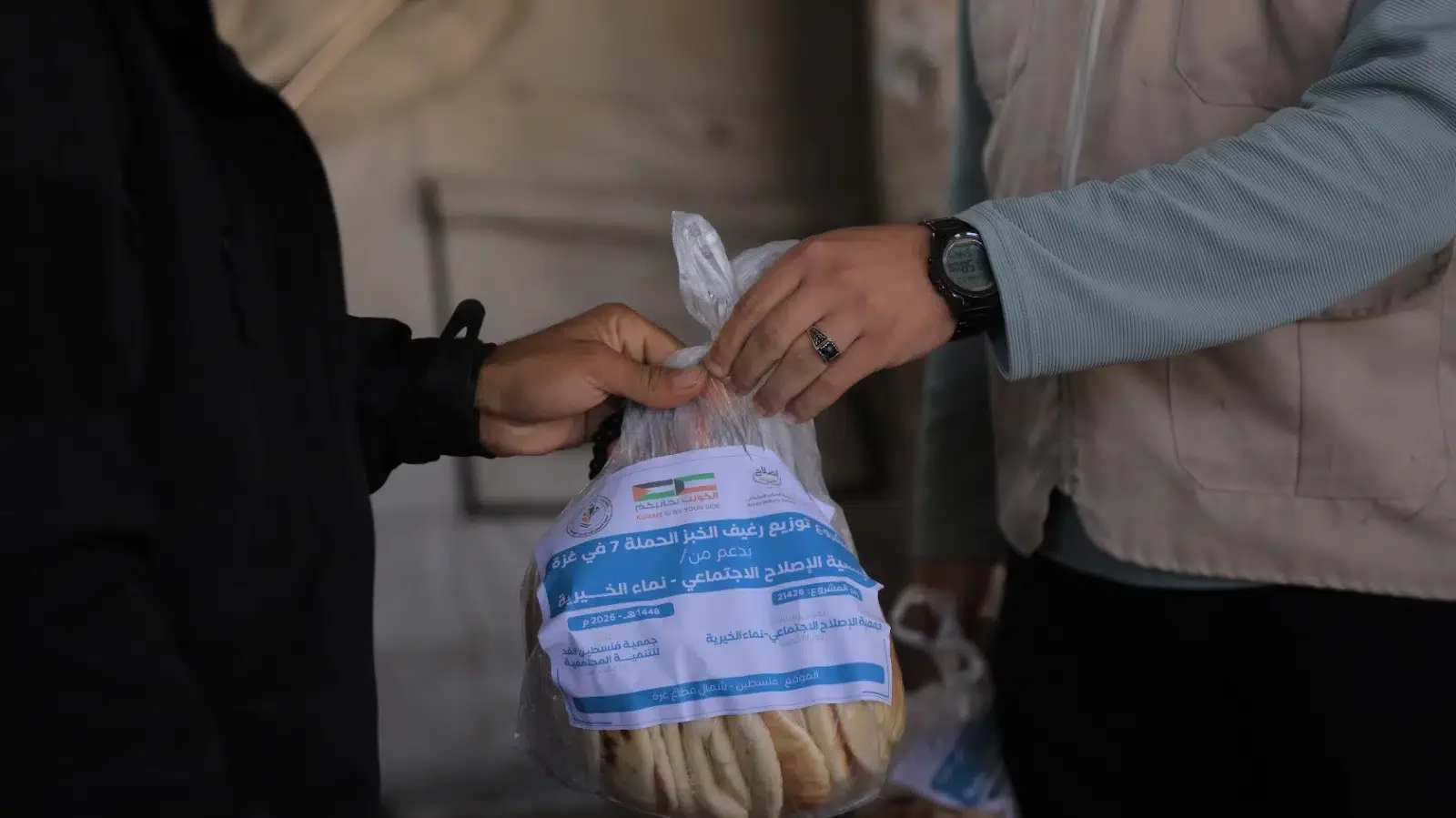
On the relief side, the IICO implemented projects to provide winter clothing, blankets, and essential supplies in the Gaza Strip, the West Bank, and Jerusalem, with costs exceeding $118,000, benefiting approximately 6,000 people. Additionally, it supported a project to prepare and distribute local bread in northern Gaza, targeting over 13,000 displaced families for a month, contributing to securing food needs and alleviating the burdens of affected families as winter approaches.
For its part, the Al-Najah Charity Association implemented an emergency response project in the Gaza Strip, targeting 2,500 affected and displaced families as part of its relief efforts aimed at providing basic needs and supporting families whose homes and camps were damaged by harsh weather conditions, including rains and winds that exacerbated their humanitarian suffering.
Talal Fakher, Assistant General Manager of Resources at the association, told KUNA that the project came in response to urgent humanitarian appeals launched by affected people in the sector following exposure to a weather low that damaged tents and displacement camps, directly impacting the lives of families, especially the sick, the elderly, women, children, and infants.
Fakher clarified that the aid included the distribution of tents and covers designed to protect against rain and wind, along with bedding, blankets, and food baskets, aiming to provide the minimum living standards for affected families and help them cope with difficult weather conditions. He noted that distribution operations began in Al-Najah camps, which were established in three stages under the names Al-Najah 1, Al-Najah 2, and Al-Najah 3, and then extended to more needy areas based on humanitarian priorities and field needs.
He noted that the project contributed to alleviating part of the suffering of displaced persons and providing them with urgent needs, but emphasized that the volume of needs still exceeds the aid provided, given the expanding scope of damage and the continuation of harsh living conditions. He explained that the Kuwait Association for Social Reform is working to provide more tents, blankets, food baskets, infant formula, medicines, treatments, and winter clothing to support the most vulnerable groups.
Fakher renewed his call for people of goodwill and benefactors in the country to continue supporting their brothers in Gaza. He stressed that humanitarian contributions, regardless of their value, represent new hope for affected families and help meet their essential needs, expressing his gratitude to the supporters who contributed to implementing the project and assisting displaced families under these exceptional circumstances.
In a model that combines relief, healthcare, and community development, the Kuwait Association for Social Reform, represented by Namaa Charity, continues to implement humanitarian projects in Palestine, Tunisia, and Mauritania. These projects have targeted thousands of beneficiaries and included providing food for displaced persons and impoverished families, performing medical surgeries, caring for orphans and sick children, and supporting health services through the opening of a new medical center serving tens of thousands of residents.
Khaled Al-Shammari, head of the Programs and Initiatives Sector at Namaa Charity, told KUNA that the association’s projects in Palestine included distributing bread to more than 15,000 displaced persons in camps, in addition to providing 240 food baskets benefiting approximately 1,200 people, in partnership with the Palestine Tomorrow Association, chaired by Dr. Manal Sayyam. He noted that these initiatives helped meet the basic food needs of more than 16,000 beneficiaries and supported affected families in facing living burdens.
Al-Shammari clarified that the association implemented a package of health, relief, and social projects in Tunisia, including performing 300 eye surgeries, distributing 250 food baskets, and providing clothing for 150 orphans, in cooperation with the Olive Branch Network for Development Associations. He pointed out that these initiatives aim to meet the needs of various segments and enhance their access to healthcare and essential assistance.
He added that attention to the humanitarian and psychological aspects formed part of the projects implemented in Tunisia, as the association organized a visit for children with cancer at the Hedi Chaker University Hospital and presented gifts and clothing to 20 children. He emphasized that the message of charitable work is not limited to providing material needs but extends to supporting patients and children and bringing joy to their hearts during their treatment journey.
He noted that the association’s projects also extended to Mauritania through the opening of a health center targeting the service of approximately 39,000 people, a step reflecting Namaa Charity’s orientation toward supporting health facilities and expanding the scope of access to medical services. He explained that such projects represent a long-term investment in human health and contribute to improving the quality of life in beneficiary communities.
Namaa Charity affirmed its commitment to diversifying its projects and monitoring their implementation on the ground in cooperation with local partners, ensuring that aid reaches its rightful recipients and achieving the desired impact. He expressed his appreciation for the people of goodwill and benefactors in Kuwait for their continuous support, which contributed to implementing these initiatives and assisting thousands of beneficiaries in various humanitarian and developmental fields.
Collectively, these projects reflect the broad scope and diverse tools of Kuwaiti charitable work in addressing humanitarian needs, ranging from urgent relief that protects families from hunger and cold, to initiatives that care for orphans and sick children, and educational and health projects that open new horizons for beneficiary communities.
These efforts also underscore the importance of humanitarian partnerships with local institutions in beneficiary countries, which enhance the efficiency of project implementation and ensure that aid reaches the intended beneficiaries, while enabling the monitoring of its real-world impact. This ensures that the contributions of Kuwait’s philanthropists and benefactors remain a vital presence in the lives of thousands of families, students, and patients around the world. (End) SLM/MWW
