State of Kuwait: Ambiguity of Israeli Nuclear Capabilities and Iranian Program Undermine Regional Stability and Security
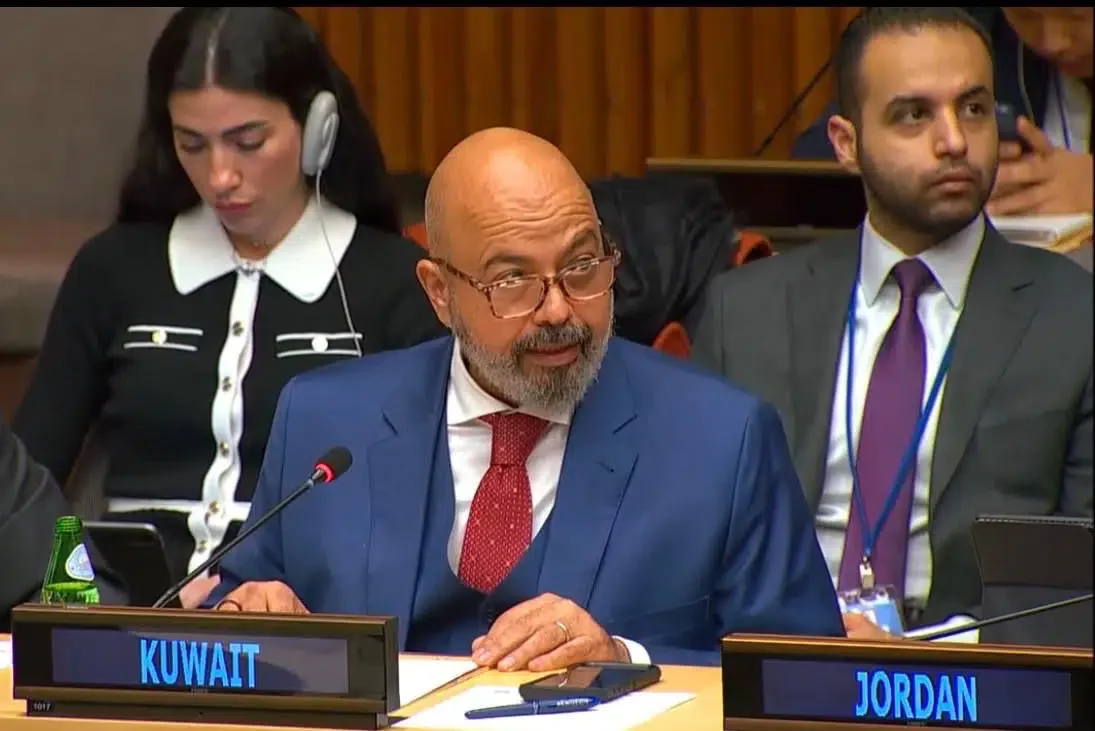
صورة: وكالة الأنباء الكويتية (كونا)
Ambassador Al-Bunai warns of the impact of Israeli and Iranian nuclear ambiguity on Middle East stability
Translated by Alqyas from KUNA — Original source
New York, November 17 (KUNA) -- Kuwait stated that the continued ambiguity surrounding Israel’s nuclear capabilities, coupled with growing concerns about Iran’s nuclear program, heighten the risks of miscalculation and escalation and undermine the trust necessary to achieve security and stability in the Middle East. This was stated in Kuwait’s address delivered by its Permanent Representative to the United Nations, Ambassador Tariq Al-Banna, on Monday evening, at the seventh session of the Conference on the Establishment of a Nuclear-Weapon-Free and Other Weapons of Mass Destruction-Free Zone in the Middle East, which is chaired by the Sultanate of Oman.
Ambassador Al-Banna said the region faces two main challenges, each fueling instability. The first is the ongoing ambiguity surrounding Israel’s nuclear capabilities, which remain outside the framework of the Treaty on the Non-Proliferation of Nuclear Weapons (NPT) and the Comprehensive Safeguards System. He added that the second challenge lies in the increasing concerns regarding Iran’s nuclear activities and programs, with questions about their nature and level of transparency remaining unresolved due to insufficient cooperation with international verification mechanisms.
He emphasized that the security of the region cannot be built on capabilities beyond verification or assurances not backed by concrete measures, stressing the need for clear commitments, full transparency, effective international oversight, and consistent application of non-proliferation rules to all parties without selectivity or exceptions.
Ambassador Al-Banna renewed Kuwait’s call for the occupying entity to join the Treaty on the Non-Proliferation of Nuclear Weapons and to subject all its nuclear facilities and activities to the International Atomic Energy Agency’s (IAEA) Comprehensive Safeguards System. He also called for resolving outstanding issues to enable verification of the peaceful nature of Iran’s nuclear program, in accordance with international law and IAEA frameworks.
He noted that the Middle East is experiencing highly dangerous security conditions, where armed conflicts intertwine with the risks of nuclear proliferation, amid declining confidence in the ability of international mechanisms to ensure compliance with existing commitments. This makes the establishment of a nuclear-weapon-free and other weapons of mass destruction-free zone in the Middle East more urgent than ever.
In this context, Ambassador Al-Banna strongly condemned Iran’s attacks on Kuwait, Gulf Arab states, and Jordan, which targeted their populations and vital infrastructure, affirming that most countries in the world had condemned those attacks. He clarified that these attacks, along with the tensions and confrontations witnessed in the region, are a direct result of leaving files unresolved. He warned that the expansion of confrontations, originally stemming from nuclear issues, to include direct attacks by Iran on Gulf Arab states unrelated to any ongoing escalation has contributed to destabilizing the global economy and using international waterways as a weapon.
He added that this has provided an excuse for militias and factions operating outside state frameworks in Iraq to carry out hostile actions against Kuwait and Gulf states, driven by their own beliefs and objectives, thereby expanding and exacerbating the conflict.
Ambassador Al-Banna affirmed that establishing a nuclear-weapon-free and other weapons of mass destruction-free zone in the Middle East is an urgent necessity to enhance regional security and stability, emphasizing the importance of reaching clear, transparent, and legally binding international commitments that ensure the non-proliferation of these weapons in the region.
Kuwait expressed its hope that the current session of the conference would contribute to broadening the area of consensus on the elements of the future treaty and building on the technical discussions held by the Working Committee during its past three meetings on commitments, prohibitions, declarations, and verification. Ambassador Al-Bunai reaffirmed Kuwait’s continued efforts to take practical steps toward establishing the zone, describing it as a necessity for Middle East security and a fundamental pillar for safeguarding international peace and security. (End) A.S.T./M.M.J
