Qatar confirms continuation of mediation efforts between US and Iran
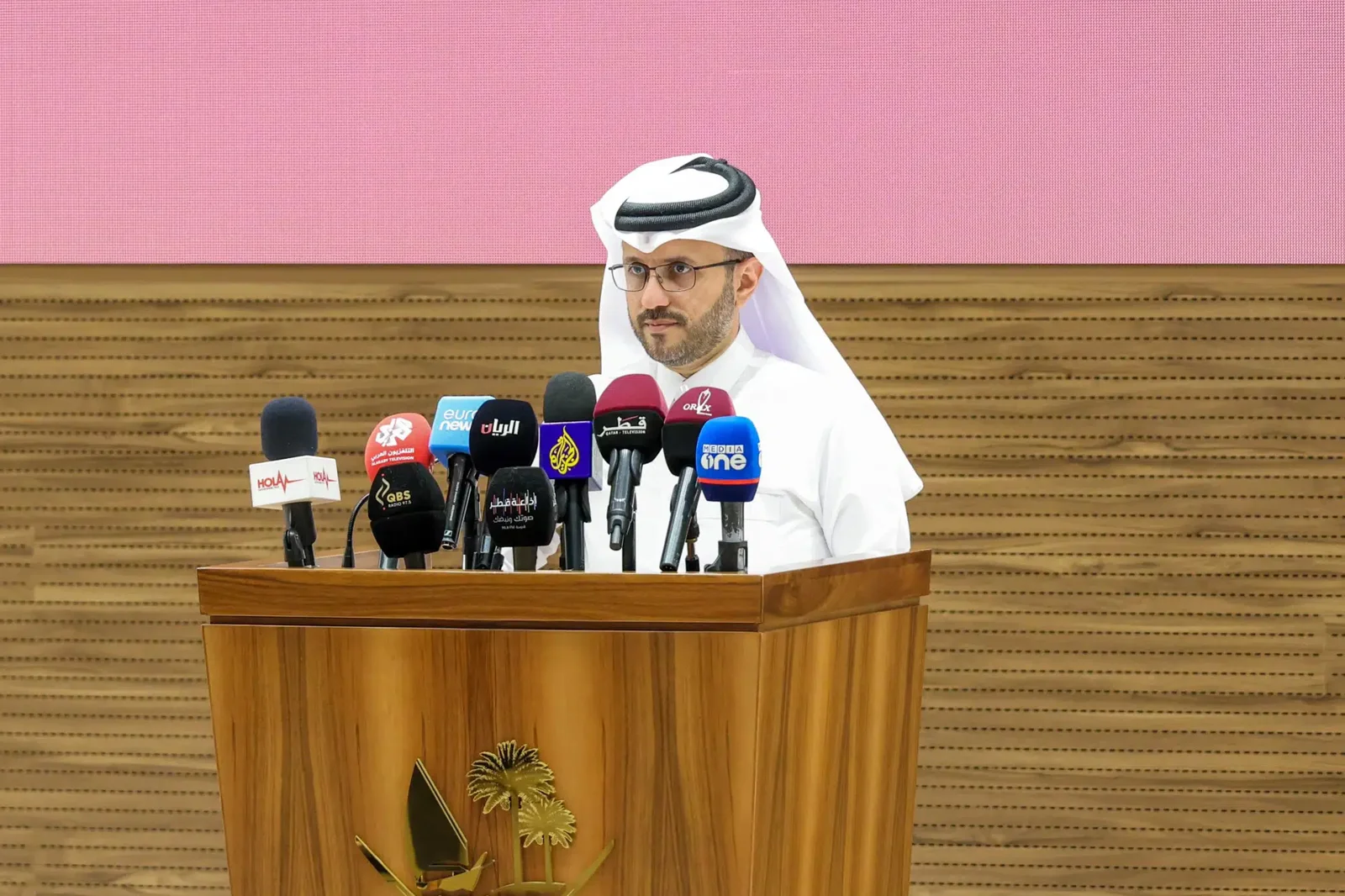
صورة: وكالة الأنباء الكويتية (كونا)
Qatar's Ministry of Foreign Affairs confirmed the continuation of mediation efforts between Washington and Tehran, emphasizing the danger of escalation in the Gulf on the global economy, and clarifying its position on the situation in Gaza and Lebanon.
Translated by Alqyas from KUNA — Original source
Doha -- The Qatari Ministry of Foreign Affairs reaffirmed Qatar’s continued mediation efforts aimed at bridging differences between the United States and Iran, noting that a meeting with the Iranian side is scheduled for later on Tuesday as part of exchanges of views on the proposals currently under discussion. Dr. Majid Al-Ansari, advisor to the Prime Minister and official spokesperson for the Qatari Ministry of Foreign Affairs, stated during the ministry’s weekly press briefing that “any escalation on the ground poses a challenge to mediation efforts in any conflict,” adding that “escalations witnessed in the Gulf region pose a grave threat to freedom of navigation and the global economy, as well as to the prospects of reaching an agreement that could spare the region further escalation.” He called on all parties to exercise restraint during this period and avoid any escalation that could undermine negotiation efforts or complicate the chances of reaching an agreement, saying, “Qatar continues to play its role, and maintaining hope in the possibility of reaching a diplomatic agreement is what motivates us to continue working within the framework of mediation efforts.”
Regarding the meeting scheduled later on Tuesday with the Iranian side, he clarified that it follows up on communications held in recent periods, which included extensive discussions aimed at bringing parties closer together and bridging gaps over the proposed proposals, noting that negotiating delegations and mediators from various sides meet periodically within this framework.
On the implications of the ongoing “neither war nor peace” situation, Al-Ansari stressed that no party benefits from the continuation of this state of affairs, which casts a shadow not only on the region’s economies and the security and peace in the Gulf, but also significantly affects the stability of global energy markets, global food security, and international peace and security directly.
Regarding the Gaza Strip, Al-Ansari said, “Qatar has sought since the first day of the war on the sector, and following the brutal targeting of Palestinian civilians witnessed in recent years, to act realistically and rationally, working within the feasible to achieve a ceasefire that would spare the brotherly Palestinian people and the peoples of the region further escalation and ongoing Israeli crimes against civilians.” He added that “humanitarian aid still does not enter the Gaza Strip as required, targeting continues, and the Israeli presence has not changed but has increased,” noting that the escalation witnessed in the West Bank represents a change in the status quo that the region has not experienced in decades. He also pointed to the continuation of Israeli behaviors in southern Lebanon, including targeting villages and infrastructure, explaining that “all this escalation witnessed in the region benefits no one except those seeking to achieve political gains from it, and no people in the region benefit from these practices.”
He reaffirmed Qatar’s continued efforts with its partners in the international community to hold the Israeli occupation accountable for its obligations toward the international community, intensify pressure on it to stop its crimes, and continue mediation efforts to achieve the full and comprehensive implementation of the ceasefire agreement reached, which the occupation violates on a daily basis.
In a separate context, Dr. Al-Ansari confirmed that the Joint Defense Agreement between Qatar and Turkey, along with the “Badr” agreement signed in Doha, comes within the framework of Qatar’s efforts to strengthen its defense system and develop partnerships that ensure and safeguard the state’s national security.
He stated that the strategic relations between Qatar and Turkey are based on a shared destiny and common national security, as well as convergence of positions on challenges facing national and regional security, noting that strengthening these ties represents a continuation of the ongoing cooperation between the two countries at both leadership and institutional levels. In this context, he pointed to regional partnerships and cooperation through the Joint Defense Council of the Gulf Cooperation Council (GCC) and other partnerships, emphasizing that these efforts are aimed at enhancing and consolidating stability in the region and working jointly to address challenges to regional security. Regarding recent Gulf visits and meetings, Al-Ansari clarified that they are fraternal encounters, part of daily communication with brotherly states of the Gulf Cooperation Council, and noted that communications between Qatar and the Gulf states have not been interrupted since the first day of the crisis. (End) S S S / A M S
