Egyptian President: We achieved economic growth at a rate of 5.1 percent and foreign direct investment reached 18 billion dollars
صورة: وكالة الأنباء الكويتية (كونا)
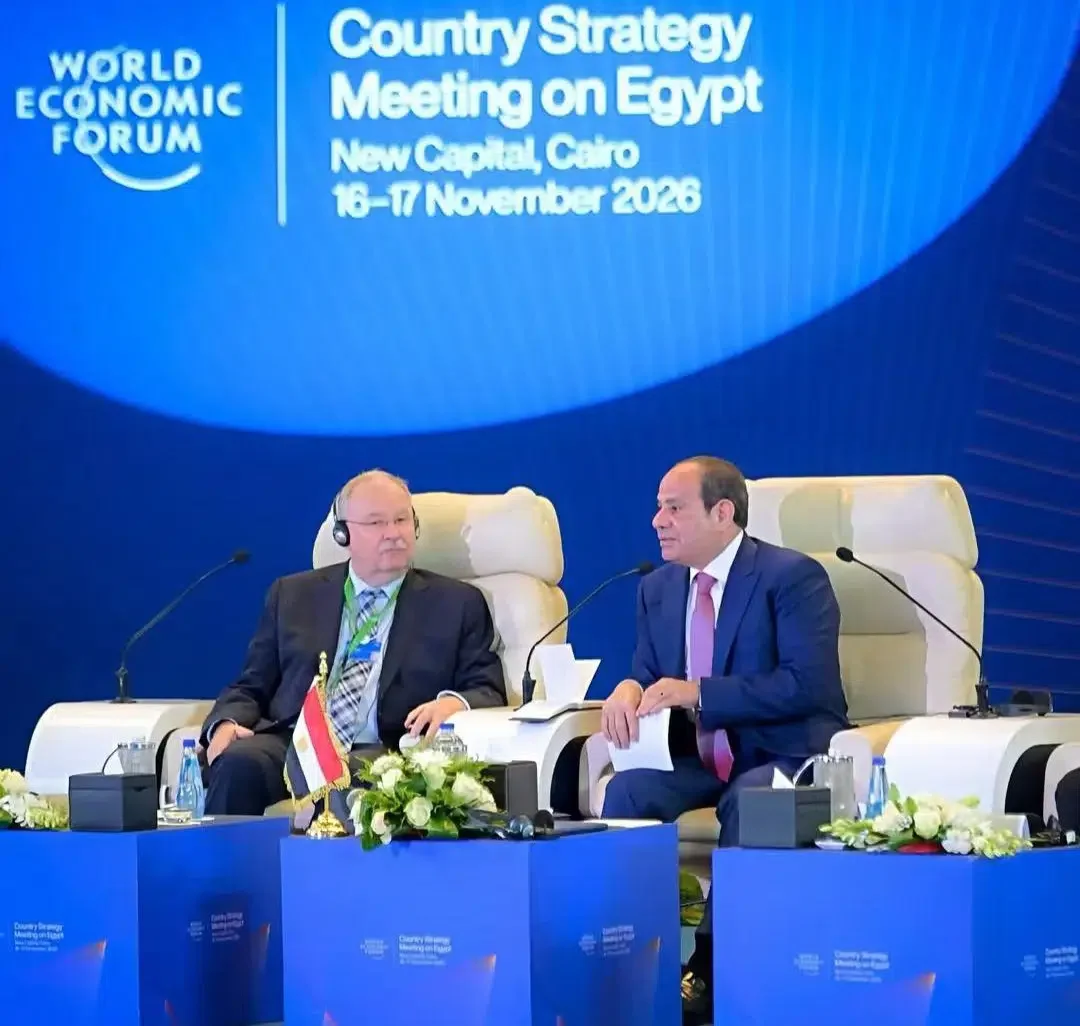
Egyptian President announces economic growth of 5.1% and rise in foreign direct investment to 18 billion dollars during World Economic Forum events
Translated by Alqyas from KUNA — Original source
Cairo -- Egyptian President Abdel Fattah al-Sisi announced on Tuesday that his country achieved an economic growth rate of 5.1 percent during the 2025-2026 fiscal year, while its foreign currency reserves rose to approximately $57.5 billion by the end of last October, and foreign direct investment reached $18 billion.
This statement came during a speech delivered by President al-Sisi at a high-level strategic dialogue session, part of the Strategic Meeting on Egypt organized by the World Economic Forum in Cairo. The event was attended by Forum President Borge Brende and around 80 entities, including leaders and representatives of major global companies, as well as presidents and representatives of multilateral international financial institutions.
President al-Sisi emphasized that Egypt aims to transform into an industrial and export production base by localizing industries, transferring technology, increasing the local content, and enhancing the integration of Egyptian companies into global value chains. In this regard, he pointed out that Egypt launched the Industry 2030 strategy, which aims to raise the industrial sector’s contribution to 20 percent of GDP and increase the share of green industries to five percent. He noted the provision of investment incentives in sectors such as clean energy, automotive manufacturing and its components, pharmaceuticals, solar panels, and information and communications technology.
Regarding the energy sector, the Egyptian President clarified that his country has increased electrical capacity to approximately 64,000 megawatts and aims to raise the share of new and renewable energy to 45 percent by 2028. He confirmed efforts to strengthen electrical interconnection with neighboring countries and to transform Egypt into a regional energy hub in the Eastern Mediterranean and Africa.
He noted that the state settled all dues owed to foreign partners in the oil and gas sectors by June 30 last year, adding that Egypt is cooperating with Cyprus to transport its produced gas to the LNG plants in Idku and Damietta for re-export to Europe by 2028.
Furthermore, the President stated that over the past 12 years, the state has implemented an economic reform program in collaboration with several international institutions, most notably the International Monetary Fund (IMF). He indicated that the cooperation program with the IMF is nearing completion and that the reforms have contributed to improving macroeconomic indicators and boosting investor confidence.
President al-Sisi affirmed that his country has taken measures to improve the investment climate, including implementing a flexible exchange rate system, facilitating the repatriation of foreign investors’ profits, launching the Golden License program, reducing the average customs clearance time to two days, expanding the digitization of government services, and launching a unified digital business platform.
He highlighted that Egypt has doubled the built-up area from approximately 7 percent to 14 percent, increased the number of new cities from 22 to 61, and developed road networks extending to approximately 31,000 kilometers. He also mentioned the modernization of ports and railways and the establishment of logistics centers, which have enhanced domestic and foreign trade flows.
Referring to the Iranian crisis and developments related to the situation in the Strait of Hormuz, he noted that these issues have cast shadows on visions concerning logistics zones, while outlining the developments undertaken by the Egyptian state in the legislative framework designed to encourage investments.
Regarding the Suez Canal, President al-Sisi stated that Egypt lost approximately $20 billion in canal revenues over the past years, but ship traffic is showing improvement. He affirmed that the Canal remains an indispensable artery for international trade and that alternative transport routes do not represent an equivalent substitute for it.
The meeting, organized by the World Economic Forum, is the first of its kind for a strategy targeting countries in Africa and the Middle East, and the fourth globally, reflecting Egypt’s pivotal position on the international investment map and its strategic role as a hub linking African, Arab, and global markets. The meeting aims to explore ways to enhance investment-driven inclusive growth, boost the competitiveness of the Egyptian economy, and support the transition toward an economic model more reliant on the private sector, exports, and productivity, in line with the state’s economic priorities, while opening new horizons for cooperation and partnerships with major global companies. (End) A.F.F. / M.A.A.
