Japan Proposes Creation of Asian Working Group on Oil Security to Address Energy Supply Disruptions
صورة: وكالة الأنباء الكويتية (كونا)
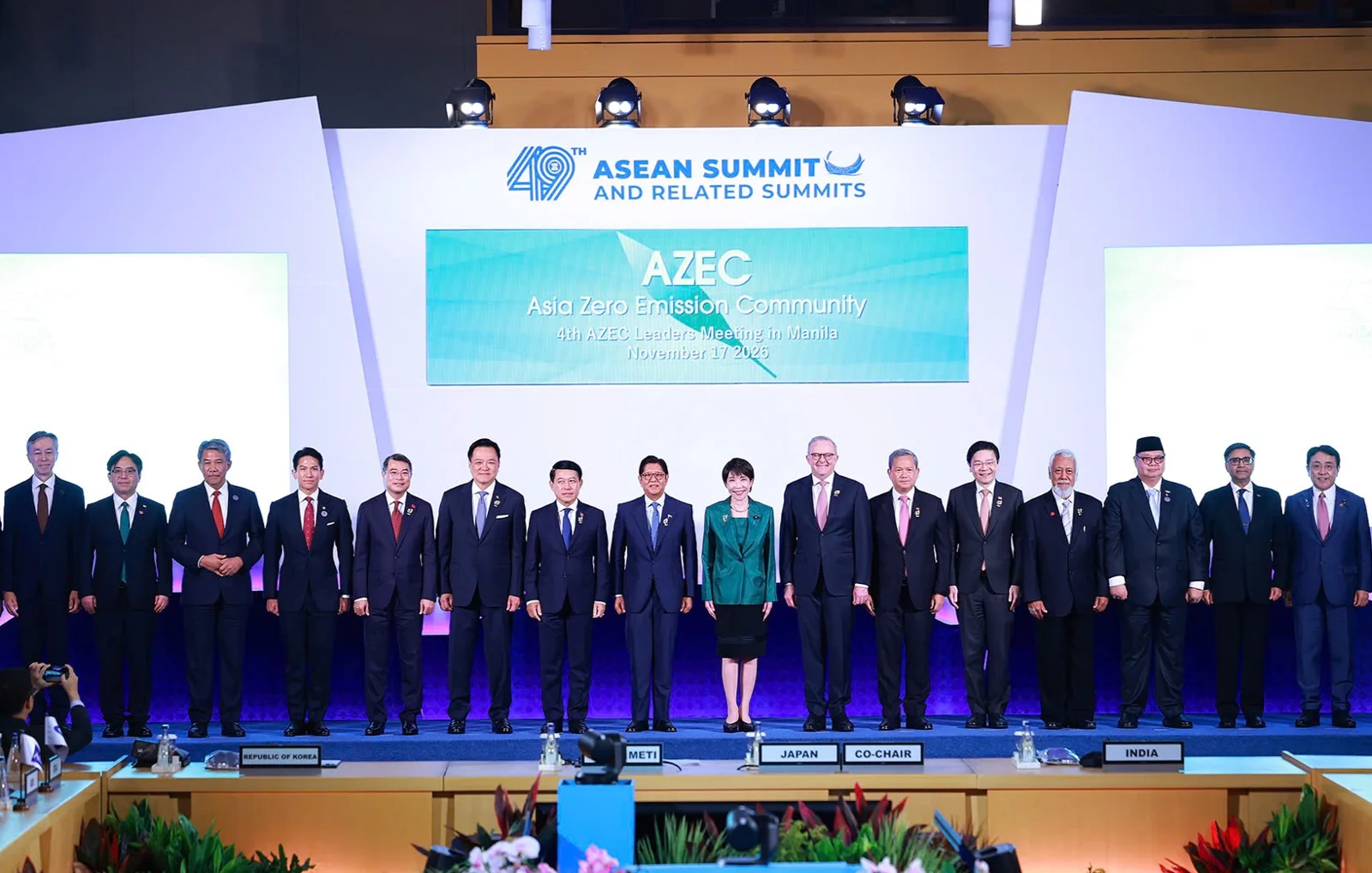
Japanese Prime Minister Sanae Takaichi proposed the creation of an Asian working group to coordinate emergency oil reserves during a meeting of leaders of the Zero Emissions Initiative Community in Manila.
Translated by Alqyas from KUNA — Original source
Kuala Lumpur -- Japanese Prime Minister Sanae Takaichi proposed on Tuesday the establishment of an Asian oil security task force to coordinate the emergency release and transfer of oil reserves among participating countries, with an operational headquarters in the Japanese capital, Tokyo. This proposal was made during the fourth meeting of the leaders of the Zero-Emission Asia Community initiative, which Takaichi co-chaired with Philippine President Ferdinand Marcos Jr., as part of the 49th Association of Southeast Asian Nations (ASEAN) Summit and related meetings in Manila, the Philippine capital.
Takaichi stated that the proposal includes setting up an operational center in Tokyo to coordinate the release and transfer of oil reserves among member countries in emergencies, thereby paving the way for a regional framework similar to the International Energy Agency (IEA), which provides recommendations on energy policies, analysis, and data globally. She added that Japan intends to make its unused oil storage facilities available for storing regional oil reserves, in coordination with the Philippines-led Joint Oil Stockpiling Initiative, to enhance cooperation among Asian countries in addressing supply disruptions.
For his part, Marcos Jr. warned that Asian countries remain vulnerable to energy supply disruptions through vital sea lanes, citing the Strait of Hormuz and its impact on global supply chains. He noted that there are approximately 600 active projects in the energy sector under the Zero-Emission Asia Community initiative, alongside initiatives related to oil storage, carbon markets, and enhanced regional energy cooperation.
The Zero-Emission Asia Community is a Japan-led regional framework aimed at reducing carbon emissions while maintaining economic growth and energy security, allowing participating countries to choose transition pathways suited to their national circumstances. In addition to Japan and the Philippines, the initiative includes Australia, Brunei, Cambodia, Indonesia, Laos, Malaysia, Singapore, Thailand, and Vietnam.
The Philippines, which holds the ASEAN chairmanship this year, is hosting the 49th ASEAN Summit and related summits from November 15 to today, with participation by at least 19 leaders representing countries and international organizations from Southeast Asia and ASEAN’s dialogue and development partners.
ASEAN was founded on August 8, 1967, by five countries: Indonesia, Malaysia, the Philippines, Singapore, and Thailand. Its membership later expanded to include Brunei, Vietnam, Laos, Myanmar, and Cambodia, and officially Timor-Leste in October 2025, bringing the total number of member states to 11.
ASEAN maintains formal dialogue relations with 12 partners, including the United States, China, Japan, South Korea, India, Australia, New Zealand, Russia, Canada, the United Kingdom, Turkey, and the European Union. These partnerships aim to strengthen political, security, economic, and technological cooperation and to coordinate positions on regional and international issues.
The association also maintains sectoral dialogue partnerships with 10 countries: the United Arab Emirates, Qatar, Brazil, Morocco, Denmark, Germany, Norway, Pakistan, South Africa, and Switzerland, focusing on cooperation in trade, investment, energy, technology, and development. Additionally, five countries hold the status of development partners: France, Italy, the Netherlands, Chile, and Peru, with the goal of supporting development projects and capacity building. (End) ANA/MWK
