Seventh Review Conference of the Convention on Certain Conventional Weapons Begins in Geneva with Kuwait's Participation
صورة: وكالة الأنباء الكويتية (كونا)
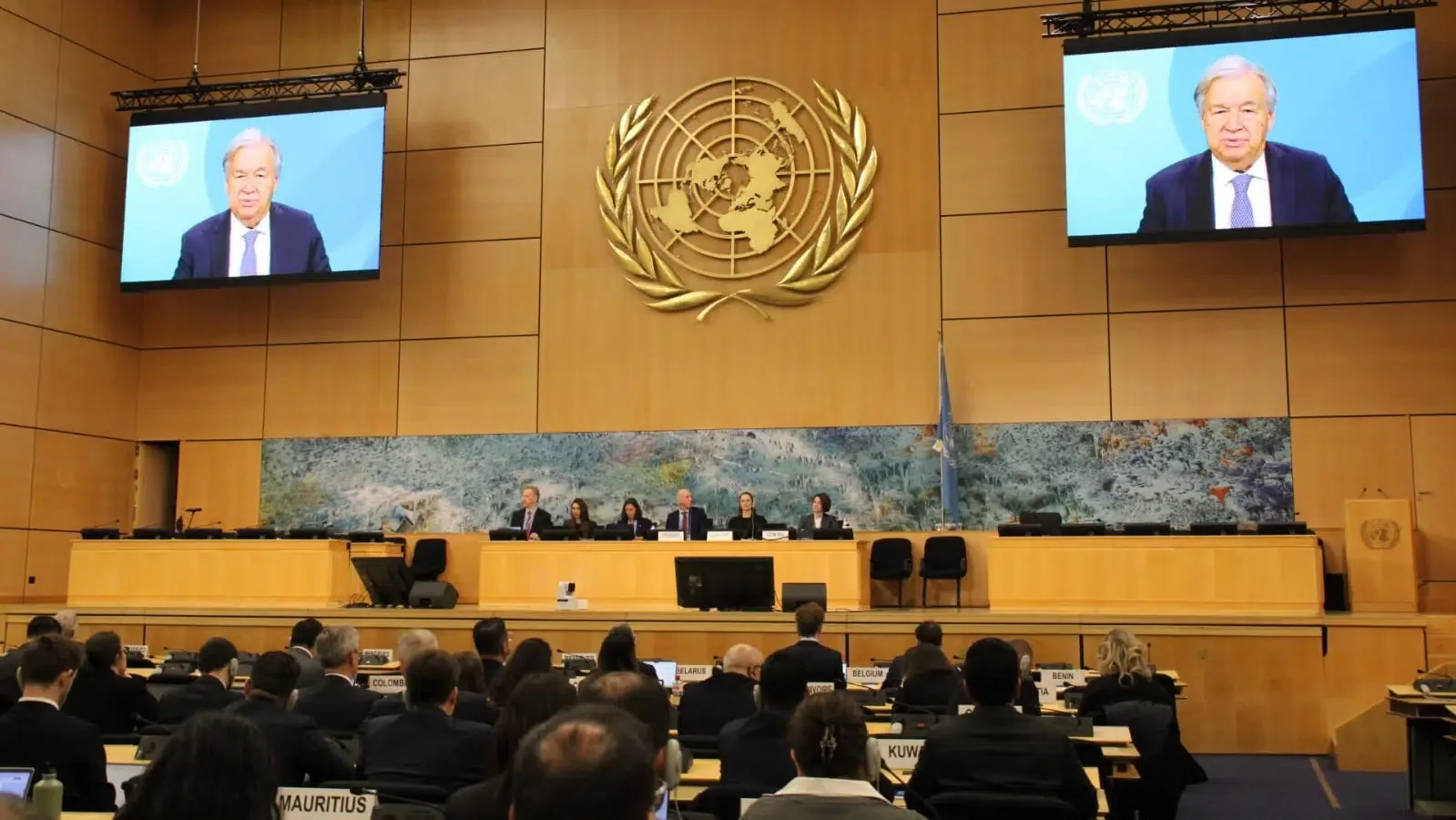
The seventh review conference of the Convention on Certain Conventional Weapons began in Geneva with the participation of a Kuwaiti delegation led by Osama Al-Afasi to discuss autonomous weapons.
Translated by Alqyas from KUNA — Original source
Geneva – The seventh Review Conference of the States Parties to the Convention on Prohibitions or Restrictions on the Use of Certain Conventional Weapons Which May Be Deemed to Be Excessively Injurious or to Have Indiscriminate Effects began today in Geneva, with the participation of delegations from States Parties and relevant international organizations, including a delegation from the Kuwaiti Ministry of Defense led by Colonel Dr. Osama Al-Afasi, a legal expert. The conference, which convenes every five years in Geneva, focuses on assessing the implementation of the Convention and its protocols, reviewing the scope of their application and effectiveness. Discussions also center on developments in the means and methods of warfare and their humanitarian implications, as well as setting priorities for future work to strengthen international humanitarian law and reduce suffering in armed conflicts.
Lethal autonomous weapons systems top the conference agenda, marking the conclusion of the work of the Group of Governmental Experts on emerging technologies in this field for the 2024–2026 period. In September last year, the group adopted its final report, which included a set of proposals for an international instrument and other measures to address challenges associated with these weapons. The conference is expected to consider adopting a set of elements reached by the expert group, including defining the mandate and future mechanisms of work regarding lethal autonomous weapons systems, thereby paving the way for continued international efforts to establish clear legal controls on the use of these modern military technologies. These elements include keeping decisions on the use of armed force subject to human judgment and discretion to ensure legal and ethical accountability for decisions made during military operations, as well as addressing the role of armed groups and ensuring compliance with international humanitarian law.
In a video message delivered during the conference, UN Secretary-General António Guterres emphasized that the Convention on Certain Conventional Weapons, which has reflected the principle that “war has limits” for over four decades, has contributed to reducing the human suffering caused by the use of landmines, booby traps, and explosive remnants of war. He added that the rapid evolution in the nature of armed conflicts, particularly the emergence of lethal autonomous weapons systems, poses new humanitarian, legal, ethical, and security challenges, calling for efforts toward negotiating a legally binding international instrument to regulate these systems, including a clear prohibition on certain uses and restrictions on others.
Kuwait’s participation in the conference reflects its commitment to the multilateral international mechanism and its keenness to keep pace with international efforts aimed at strengthening the rules of international humanitarian law, supporting initiatives to mitigate the humanitarian impact of armed conflicts, and monitoring developments related to the regulation of the use of modern weapons and military technologies. The participation also underscores Kuwait’s dedication to contributing to international efforts to develop mechanisms for joint action and enhance compliance with relevant international agreements, ensuring the protection of civilians and critical infrastructure, respecting the sovereignty and territorial integrity of states, and consolidating international peace and security, especially in light of the escalating security and military challenges facing the region. (End) A.M.K. / F.S.
