UN official: Inclusion of persons with disabilities a cornerstone for human investment and building societies
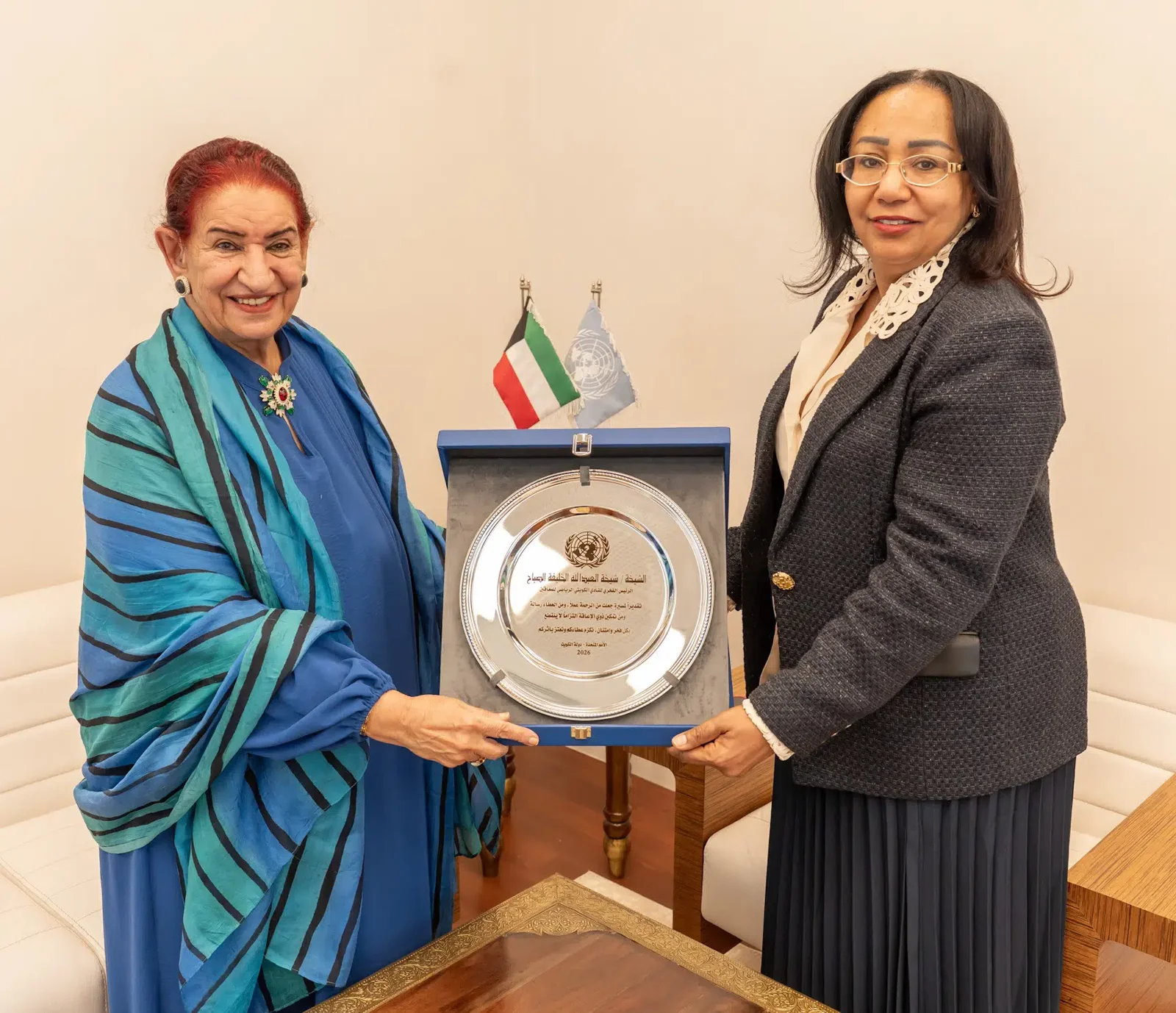
صورة: وكالة الأنباء الكويتية (كونا)
UN representative in Kuwait stresses the importance of including persons with disabilities with Sheikh Sheikha Al-Abdullah Al-Sabah
Translated by Alqyas from KUNA — Original source
Kuwait City, Salman Al-Mutairi – Ghada Al-Tahir, the Representative of the UN Secretary-General and Resident Coordinator in Kuwait, affirmed on Monday that the inclusion and empowerment of persons with disabilities constitute a fundamental pillar in building societies, achieving sustainable development, and investing in human capital. She made these remarks in a statement to the Kuwait News Agency (KUNA) after hosting “Mother of Persons with Disabilities” Sheikhha Sheikha Abdullah Al-Sabah at the United Nations House in the Mishref area for a dialogue honoring her pioneering career and sustained efforts in supporting persons with disabilities. The meeting coincided with the upcoming International Day of Persons with Disabilities on December 3 and the International Human Rights Day on December 10.
Al-Tahir stated that the linkage between these two occasions reflects the reality that the rights of persons with disabilities are an integral and indivisible part of the human rights framework. She emphasized that guaranteeing these rights requires providing equal opportunities and removing barriers that hinder their active participation in society. She noted that these efforts align with the objectives of “Kuwait Vision 2035,” which prioritizes investing in people and developing their capabilities. She stressed that true development is not measured solely by projects and infrastructure, but by the extent to which a society can provide opportunities for all its members and harness their energies and potential.
She underscored the importance of ensuring the full inclusion and participation of persons with disabilities across all areas of life, leaving no group behind in the path of progress. Al-Tahir pointed out that the issue of integrating persons with disabilities receives significant attention from the United Nations and forms one of the key pillars of Secretary-General António Guterres’s efforts. She added that comprehensive inclusion goes beyond providing facilities and accommodations to ensuring access to education, training, rehabilitation, employment, and participation in decision-making.
She further explained that UN cooperation has evolved from raising awareness about the rights of persons with disabilities to supporting practical pathways for rehabilitation, skills building, and expanding employment opportunities, in coordination with relevant UN agencies, including UNESCO, the International Labour Organization (ILO), and the World Health Organization (WHO), each according to its mandate, expertise, and relevant international standards.
She highlighted that support from the Kuwait Fund for Arab Economic Development, as part of a broader $5 million program, contributed to 481 individuals benefiting from training programs and enabled approximately 231 of them to access employment opportunities. This reflects the convergence of priorities between Kuwait and the United Nations, and aligns with “Kuwait Vision 2035” and the Sustainable Development Goals, particularly quality education, decent work, reduced inequalities, and strengthened partnerships.
Al-Tahir affirmed that persons with disabilities possess diverse talents and capabilities that add value to societies when provided with an appropriate environment to nurture and showcase them. She praised the role of Kuwaiti institutions and associations working in various fields of disability, including autism, visual, hearing, and motor impairments, in raising awareness, providing support, and promoting a culture of empowerment.
She commended Sheikhha Sheikha Abdullah’s journey and her decades of voluntary and community service efforts, emphasizing that inspiring figures contribute to driving change and motivating others to participate in humanitarian and community work. She noted that the Kuwaiti experience offers an important model in the evolving attention given to persons with disabilities and their enhanced presence across various fields.
For her part, Sheikh Sheikha Abdullah Al-Sabah, in a statement similar to that given to KUNA, outlined the beginnings of her interest in the issues of persons with disabilities dating back to the middle school stage in the 1970s, when she studied alongside a blind student who excelled academically and consistently ranked first. She affirmed that this experience raised questions within her regarding the conditions and needs of other persons with disabilities, and the extent to which care and opportunities were available to them in society. She said that this experience remained vivid in her mind even after she graduated from Kuwait University, noting that her focus was less on securing employment and more on understanding the reality of persons with disabilities in the country and working to support them. She pointed out that the encouragement of the late Amir Sheikh Jaber Al-Ahmad Al-Sabah had a significant impact on her orientation toward this field.
Sheikh Sheikha Abdullah Al-Sabah added that her professional journey began when she joined a group of Kuwaiti women who founded the Care of the Disabled Association in the 1970s, including Moudhi Al-Sultan, Munira Al-Mutawa, and Munira Al-Qutami. She explained that the objective was to provide a suitable environment for children with disabilities, care for them, and open new horizons for them and their families. She clarified that Kuwait witnessed significant progress during that period in the concept of social welfare, as attention was not limited to state-building and infrastructure development, but extended to human development by establishing care institutions and specialized services for persons with disabilities, including citizens, residents, and nationals of the Gulf Cooperation Council countries. This reflected an early societal awareness of the importance of safeguarding human dignity and meeting individual needs.
She highlighted that an important milestone in the empowerment process was the opening of the Arab Open University, which provided persons with disabilities with the opportunity to pursue higher education, alongside the role played by governmental and non-governmental institutions in developing educational and care services. She commended the National Assembly’s approval of the Law on the Rights of Persons with Disabilities, which has become a model cited in her external engagements, given the rights and benefits it grants to this group.
Sheikh Sheikha Abdullah Al-Sabah affirmed that the participation of persons with disabilities in sports, work, and creativity marked an important stage in their integration process. She pointed to the establishment of the Sports Club for Persons with Disabilities in the Hawalli area, supported by the late Amir Sheikh Jaber Al-Ahmad Al-Sabah, which provided opportunities for training, competition, and sporting achievements, enabling athletes to reach international platforms and win medals. She added that private sector institutions have become more interested in employing persons with disabilities after their competence and commitment to work have been proven, noting their excellence in sports, arts, music, and painting, which underscores the importance of discovering their talents and providing them with opportunities to participate and create. (End) S.L.M./K.D.A.
