Philippines Foreign Minister Warns of Continued Impact of Strait of Hormuz Closure on Energy Security in ASEAN
صورة: وكالة الأنباء الكويتية (كونا)
Philippines Foreign Minister Warns of Continued Impact of Middle East Crisis and Strait of Hormuz Closure on Energy and Food Security in Southeast Asian Nations
Translated by Alqyas from KUNA — Original source
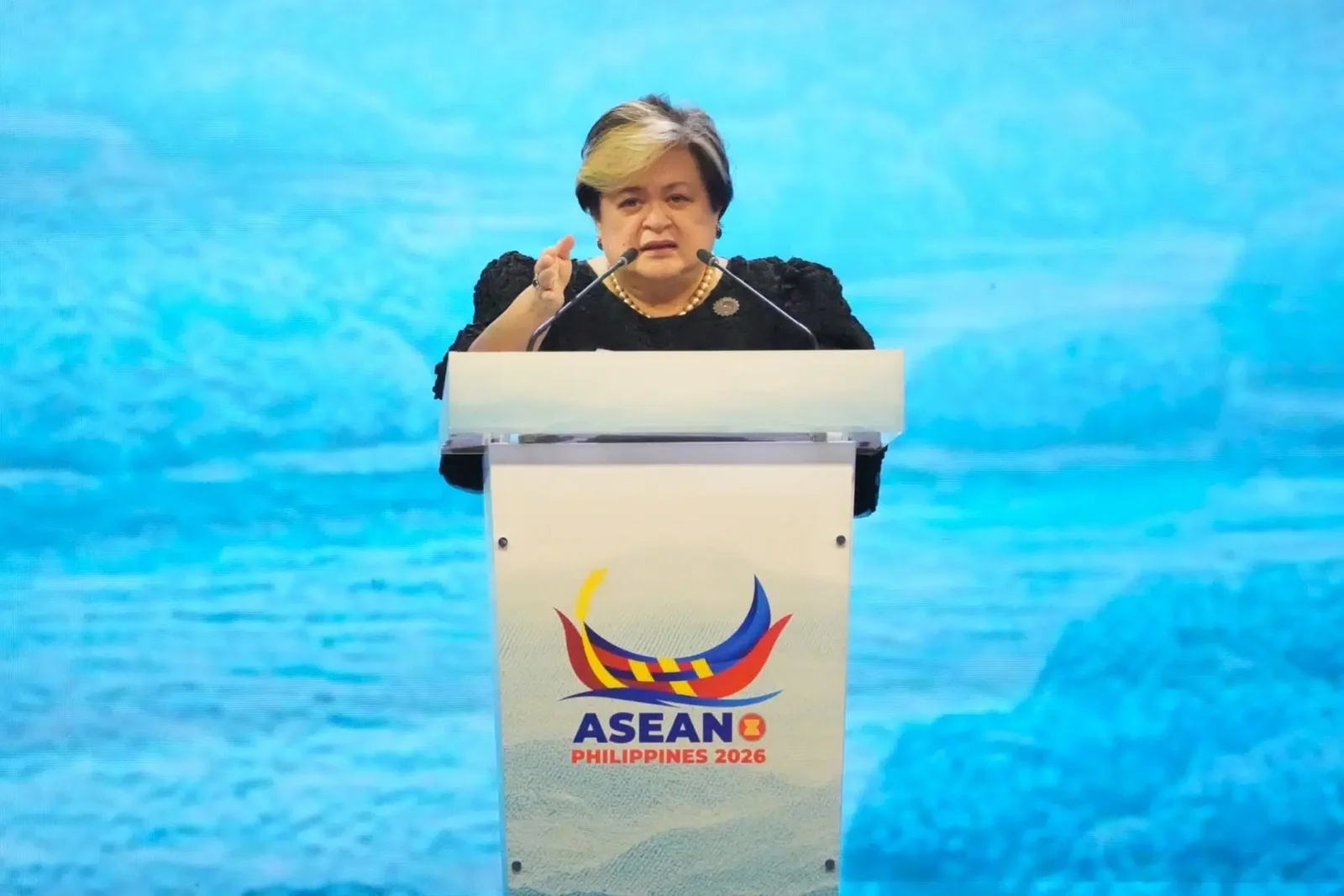
Kuala Lumpur -- Philippine Foreign Secretary Maria Teresa Lazaro warned on Monday of the continuing repercussions of the Middle East crisis and the closure of the Strait of Hormuz on energy and food security in Association of Southeast Asian Nations (ASEAN) countries, emphasizing that the crisis is affecting the economies of ASEAN member states and their energy supplies.
Speaking at a press briefing on the sidelines of the 49th ASEAN Summit and related summits in the Philippine capital, Manila, Lazaro said, “The issues remain, the Strait of Hormuz is still closed, and there is potential for further developments.” She noted that discussions among ASEAN leaders addressed geopolitical issues broadly, with a primary focus on internal situations in Southeast Asian countries and the shared challenges they face.
Lazaro added that ASEAN leaders called for accelerating the integration of regional energy networks by activating the ASEAN Power Grid project, which has been under discussion for years. She pointed out that the Middle East crisis has spurred efforts to expedite its implementation, with participation from financial institutions including the Asian Development Bank.
She further noted that leaders also encouraged the full implementation of the ASEAN Petroleum Security Agreement, which aims to enhance cooperation among member states in addressing challenges related to oil supplies, thereby complementing existing power interconnection projects in the region.
The Philippines, which holds the ASEAN chairmanship this year, is hosting the 49th ASEAN Summit and related summits from November 15 to 17, with participation by at least 19 leaders representing countries and international organizations from Southeast Asia and ASEAN’s dialogue and development partners.
ASEAN was established on August 8, 1967, by five founding members: Indonesia, Malaysia, the Philippines, Singapore, and Thailand. Its membership later expanded to include Brunei, Vietnam, Laos, Myanmar, and Cambodia, followed by East Timor, which officially joined in October 2025, bringing the total number of member states to 11.
ASEAN maintains formal dialogue relations with 12 partners, including the United States, China, Japan, South Korea, India, Australia, New Zealand, Russia, Canada, the United Kingdom, Turkey, and the European Union. These partnerships aim to strengthen political, security, economic, and technological cooperation and to coordinate positions on regional and international issues.
The association also maintains sectoral dialogue partnerships with 10 countries: the United Arab Emirates, Qatar, Brazil, Morocco, Denmark, Germany, Norway, Pakistan, South Africa, and Switzerland, covering cooperation in trade, investment, energy, technology, and development. Additionally, five countries hold the status of development partners: France, Italy, the Netherlands, Chile, and Peru, with the goal of supporting development projects and capacity building. (End) A.A.B./M.Kh.
