NATO Regional Centre in Kuwait Organizes Specialized Course on Combating Maritime Terrorism with Gulf Participation
صورة: وكالة الأنباء الكويتية (كونا)
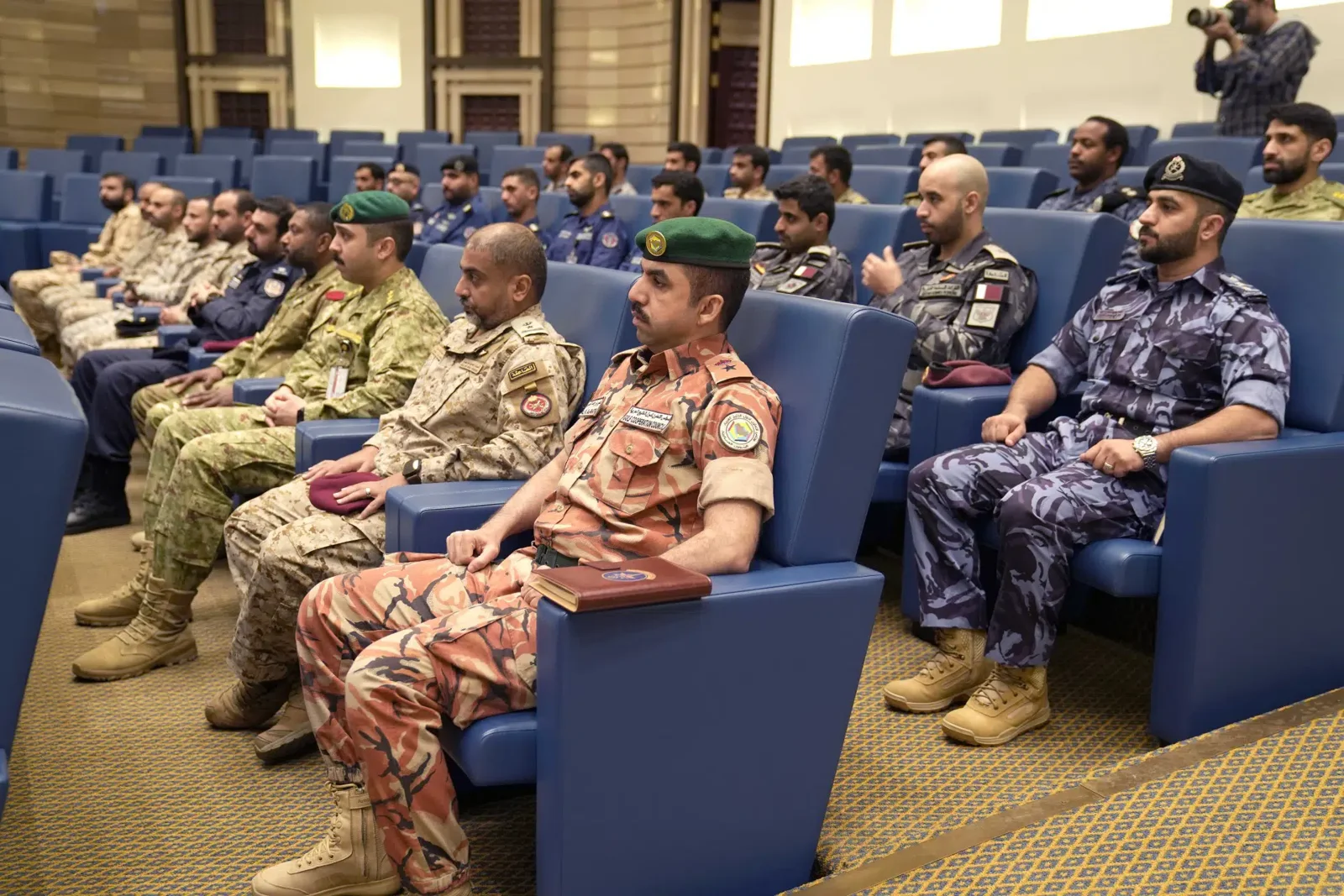
The NATO Regional Centre in Kuwait organized a specialized course on combating maritime terrorism in cooperation with the Maritime Security Centre of Excellence, with trainees from Gulf countries participating.
Translated by Alqyas from KUNA — Original source
By Yousef Al-Tattan, Kuwait City – The NATO Regional Cooperation Centre (NRCC) and the Istanbul Cooperation Initiative (ICI) in Kuwait organized a specialized training course today, Monday, titled “Countering Maritime Terrorism,” in collaboration with the Alliance’s Maritime Security Centre of Excellence (MARSEC COE) and with participants from the Gulf Cooperation Council (GCC) countries.
Speaking to the Kuwait News Agency (KUNA) during the course, which runs until November 19, NRCC Director Emad Al-Kandari said the program aims to enhance the capacities of maritime security specialists and equip them with the knowledge and skills needed to counter terrorist threats at sea, thereby contributing to maritime security and stability and protecting critical infrastructure.
Al-Kandari explained that the course includes theoretical lectures, practical exercises, and lessons learned designed to deepen participants’ understanding of maritime interdiction operations from both strategic and operational perspectives, and to strengthen their ability to confront security challenges and protect vital maritime infrastructure. He added that the program also focuses on raising awareness of defense mechanisms against chemical, biological, radiological, and nuclear (CBRN) threats, as well as countering the proliferation of weapons of mass destruction and managing associated risks in the maritime environment.
He noted that the course features training scenarios simulating various maritime threats, aiming to develop decision-making skills, enhance coordination and cooperation among relevant authorities, and facilitate the exchange of expertise and best practices in countering maritime terrorism. Al-Kandari emphasized the importance of such specialized programs in developing Gulf competencies and strengthening joint cooperation in addressing maritime security challenges, wishing participants success and encouraging them to benefit from the expertise and exercises provided by the training program.
For his part, Turkish Ambassador to Kuwait Jan Oğuz praised Kuwait’s role, particularly its hosting of the NATO Regional Cooperation Centre and the Istanbul Cooperation Initiative, highlighting their distinctive and effective role in bridging differences and exchanging expertise in several vital areas.
Oğuz said that by offering numerous specialized activities and training courses, the Centre works to enhance cooperation between NATO and Middle Eastern countries, specifically GCC states. He commended the course and its important security topics, such as countering terrorism by land, sea, and air, as well as cybersecurity, noting that these contribute to strengthening systems in relevant countries and enhancing their readiness to face regional challenges.
He pointed out that since the signing of the Istanbul Cooperation Agreement in 2004, NATO has been keen to enhance cooperation with friendly countries in the Middle East and the GCC, praising the role of the Centre and Kuwait in this regard. (End) Y.T. / A.N.D.
