49th ASEAN Summit: Importance of diversifying supplies to counter the fallout of the Middle East crisis
صورة: وكالة الأنباء الكويتية (كونا)
ASEAN leaders discuss energy and food security and source diversification at the Manila summit.
Translated by Alqyas from KUNA — Original source
Kuala Lumpur -- The Association of Southeast Asian Nations (ASEAN) affirmed on Sunday the importance of enhancing energy and food security, diversifying supply sources, strengthening supply chains, and accelerating electricity interconnection among its member states to address economic disruptions caused by international crises, particularly the repercussions of the Middle East crisis. This came during the launch of the 49th ASEAN Summit and related summits, hosted by the Philippines in the capital, Manila, with the participation of leaders and officials from ASEAN member states and their partners.
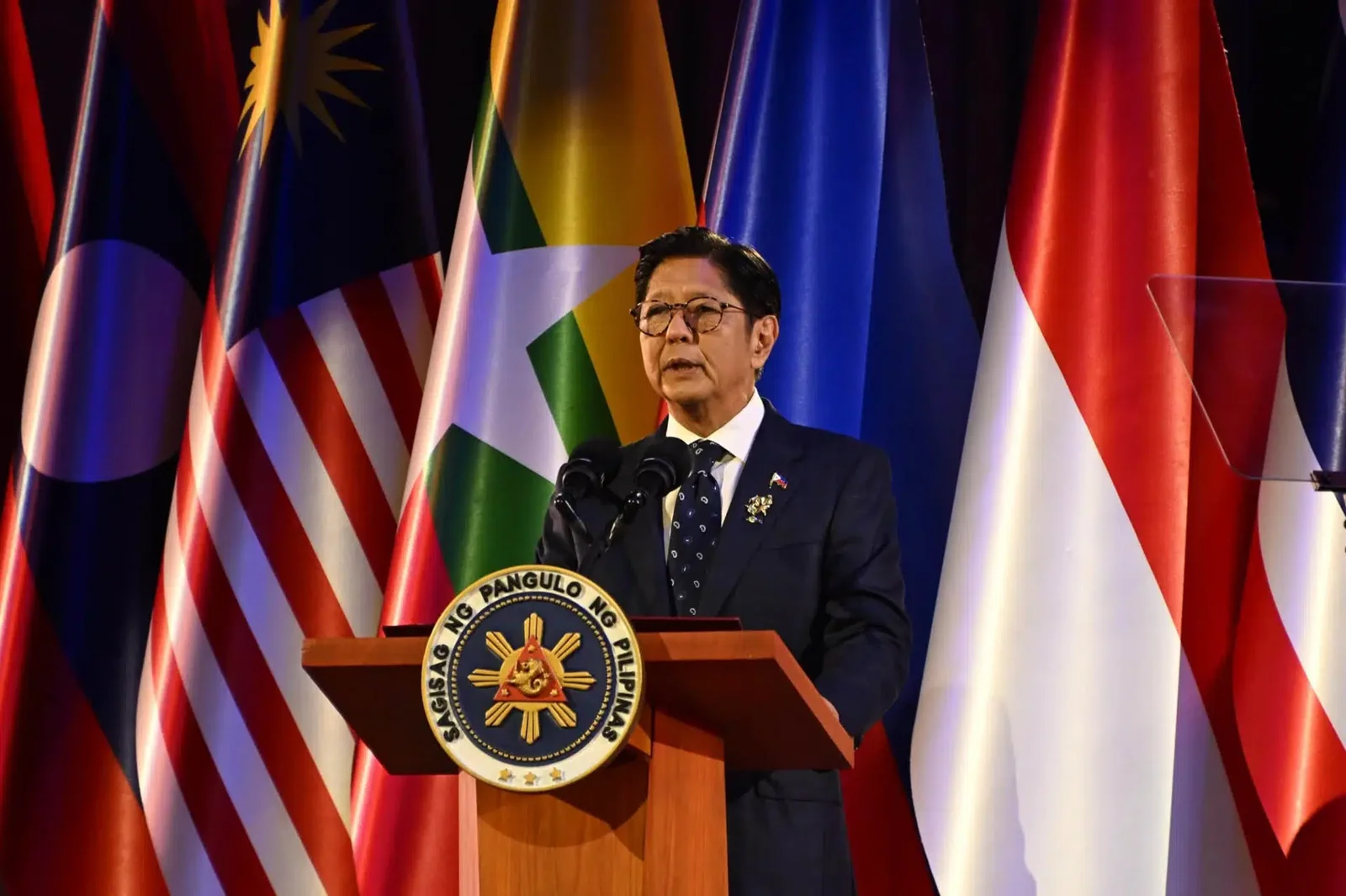
Philippine President Ferdinand Marcos Jr., in a speech delivered at the opening, stated that developments in the Middle East had threatened Southeast Asia’s stability and disrupted transportation and energy and food supplies. This occurred concurrently with the ASEAN Summit held earlier this year in Cebu, Philippines. Marcos added that member states had agreed at that time to work together to formulate a decisive regional response, and that the Association had reorganized its summit activities to focus on core issues and continue implementing tasks on its agenda.
In this context, he called for solidarity in the face of escalating geopolitical tensions, economic uncertainty, climate change, and cross-border threats, as well as in addressing technological developments. He emphasized that “no single member state possesses all the resources and capabilities needed to confront these challenges and seize available opportunities.”
For his part, Malaysian Prime Minister Anwar Ibrahim, in his speech, called for diversifying food and pharmaceutical sources and enhancing the production capacities of ASEAN countries to reduce reliance on external suppliers. He urged the strengthening of intra-ASEAN trade in areas such as fertilizers, seeds, and animal feed. Ibrahim also called for accelerating the implementation of the ASEAN electricity grid interconnection project, stressing that national power grids could no longer operate in isolation, given projections that regional energy demand will reach four times its current level by 2060.
On another note, Ibrahim welcomed the Association’s Framework Agreement on the Digital Economy, emphasizing that rules governing artificial intelligence must not be subject to the commercial interests of a limited number of global technology companies. He also called for protecting Southeast Asia’s biological resources from “external exploitation and unlawful appropriation,” given their direct link to food and water security, livelihoods, and sustainable development.
The Philippines, which holds the ASEAN chairmanship this year, is hosting the 49th ASEAN Summit and related summits, with the participation of at least 19 leaders representing countries and international institutions from Southeast Asia and ASEAN’s dialogue and development partners.
ASEAN was established on August 8, 1967, by five countries: Indonesia, Malaysia, the Philippines, Singapore, and Thailand. Its membership later expanded to include Brunei, Vietnam, Laos, Myanmar, and Cambodia, and then Timor-Leste, which officially joined in October 2025, bringing the total number of member states to 11.
ASEAN maintains formal dialogue relations with 12 partners, including the United States, China, Japan, South Korea, India, Australia, New Zealand, Russia, Canada, the United Kingdom, and the European Union. These partnerships aim to enhance political, security, economic, and technological cooperation and to coordinate positions on regional and international issues.
The Association also maintains sectoral dialogue partnerships with ten countries: the United Arab Emirates, Qatar, Brazil, Morocco, Denmark, Germany, Norway, Pakistan, South Africa, and Switzerland, covering cooperation in trade, investment, energy, technology, and development. In addition, five other countries hold the status of development partners: France, Italy, the Netherlands, Chile, and Peru, with the aim of supporting development projects and capacity building. (End) A.B./S.M.A.
