Russian President: Sustainable Peace in Ukraine Requires Resolution of Territorial Issues and New European Security Arrangements
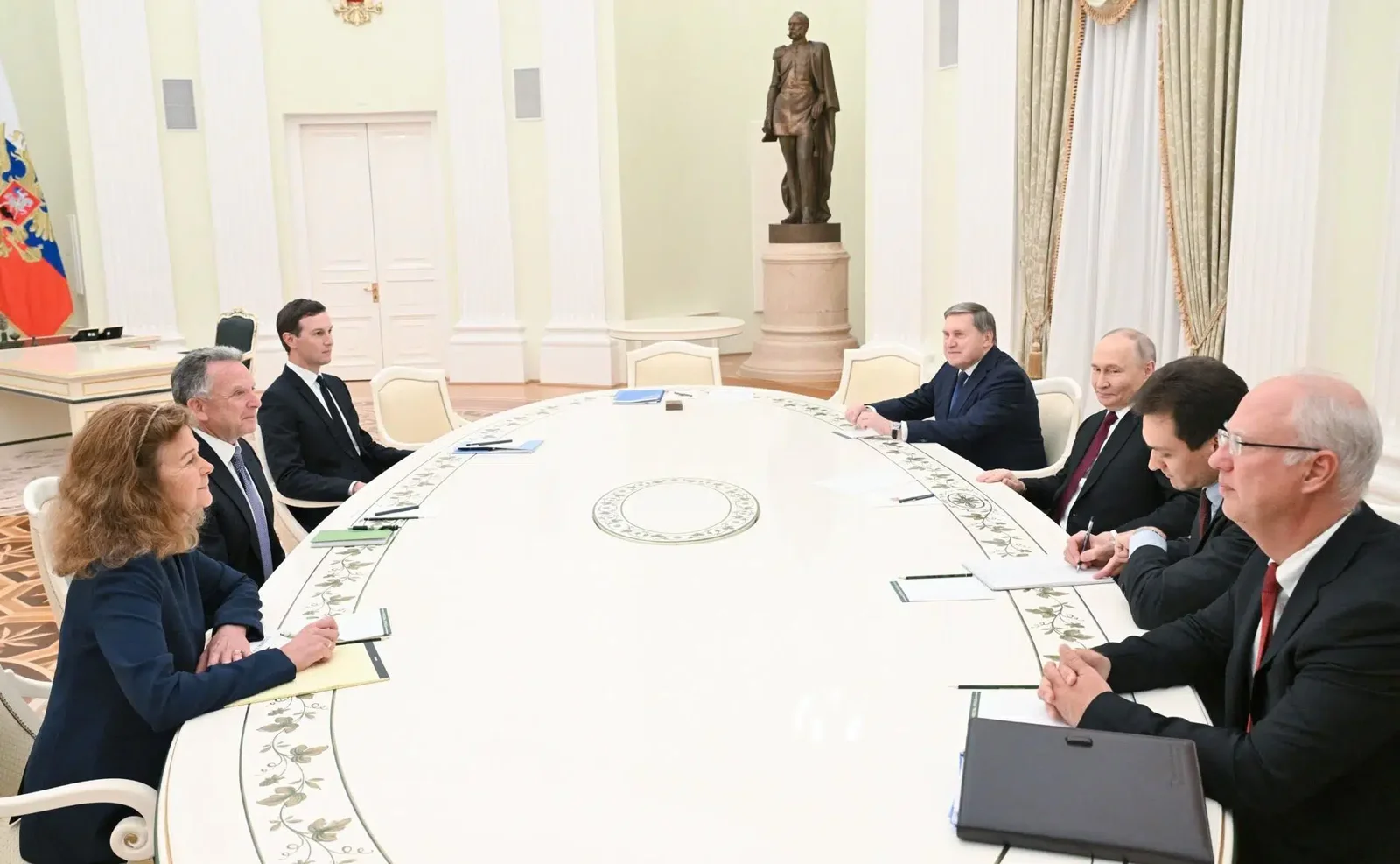
صورة: وكالة الأنباء الكويتية (كونا)
Putin emphasizes the need to address territorial issues and new security arrangements with US envoys.
Translated by Qiyas from كونا — Original source
Moscow, November 12 (KUNA) -- Russian President Vladimir Putin said on Thursday that achieving a sustainable peace in Ukraine requires addressing the issue of land in conflict zones and reaching new security arrangements in Europe that take into account Russia’s security concerns.
Putin, speaking during a meeting at the Kremlin with U.S. envoys Steve Witkoff and Jared Kushner, stated that “the presence of foreign troops in Ukraine poses a threat to Russia’s national security,” warning that they “would be legitimate targets for the Russian Armed Forces.”
The meeting discussed prospects for resolving the Ukrainian conflict, the outcomes of the trilateral talks held in Abu Dhabi involving Russia, the United States, and Ukraine, as well as the future of dialogue with European countries and the possibility of reaching a new security framework for the continent.
In this regard, Putin urged Washington to work with European countries on the future of continental security, enabling Europeans to determine their stance on the prospects for peace. He noted that U.S. President Donald Trump had proposed the development of a new European security system, but that Europeans had not responded to it.
Putin affirmed that Russia had not opposed dialogue with Europe nor initiated a cutoff of communications, arguing that it was the European side that had halted such engagement. He asked the U.S. envoys to convey their assessment of the European position and the prospects for resuming dialogue, based on their contacts with EU representatives.
For his part, Witkoff described the atmosphere of the trilateral talks in Abu Dhabi as positive, noting that both the Russian and Ukrainian delegations demonstrated effectiveness in negotiations. He considered the anticipated prisoner exchange between the two countries as an indicator of progress in the settlement process.
Witkoff expressed appreciation for the resumption of trilateral negotiations, thanking Russian chief negotiator Vladimir Medinsky for his efforts in Abu Dhabi and his participation in conflict-resolution initiatives. He clarified that European officials did not directly participate at the negotiating table but were briefed on the outcomes.
He affirmed that the U.S. administration is making intensive efforts to end the conflict and that President Trump is committed to reaching a settlement as quickly as possible. Witkoff added that he would convey to Ukrainian President Volodymyr Zelenskyy the results of his meeting with Putin and the proposals discussed.
For his part, Kushner expressed hope that the Kremlin talks would contribute to progress toward ending the conflict. He noted that Washington had begun discussions with Europeans on the continent’s security architecture and that European countries were increasingly eager to participate in negotiations and efforts to end the war.
Witkoff and Kushner are scheduled to travel to Dublin after their meeting with Putin to meet with Zelenskyy, brief him on the talks’ outcomes, and exchange views on the proposed initiatives.
The two U.S. envoys arrived in Moscow from Abu Dhabi following the conclusion of trilateral consultations among representatives of Russia, the United States, and Ukraine. Meanwhile, Russian chief negotiator Vladimir Medinsky said that the parties had come close to achieving peace, but that further progress remained contingent on the positions of all concerned parties. (End) D.A.N./A.M.S.
