ASCOON Conference in Muscat Discusses Development of Education, Culture, and Science Sectors in Arab Countries with Kuwait's Participation
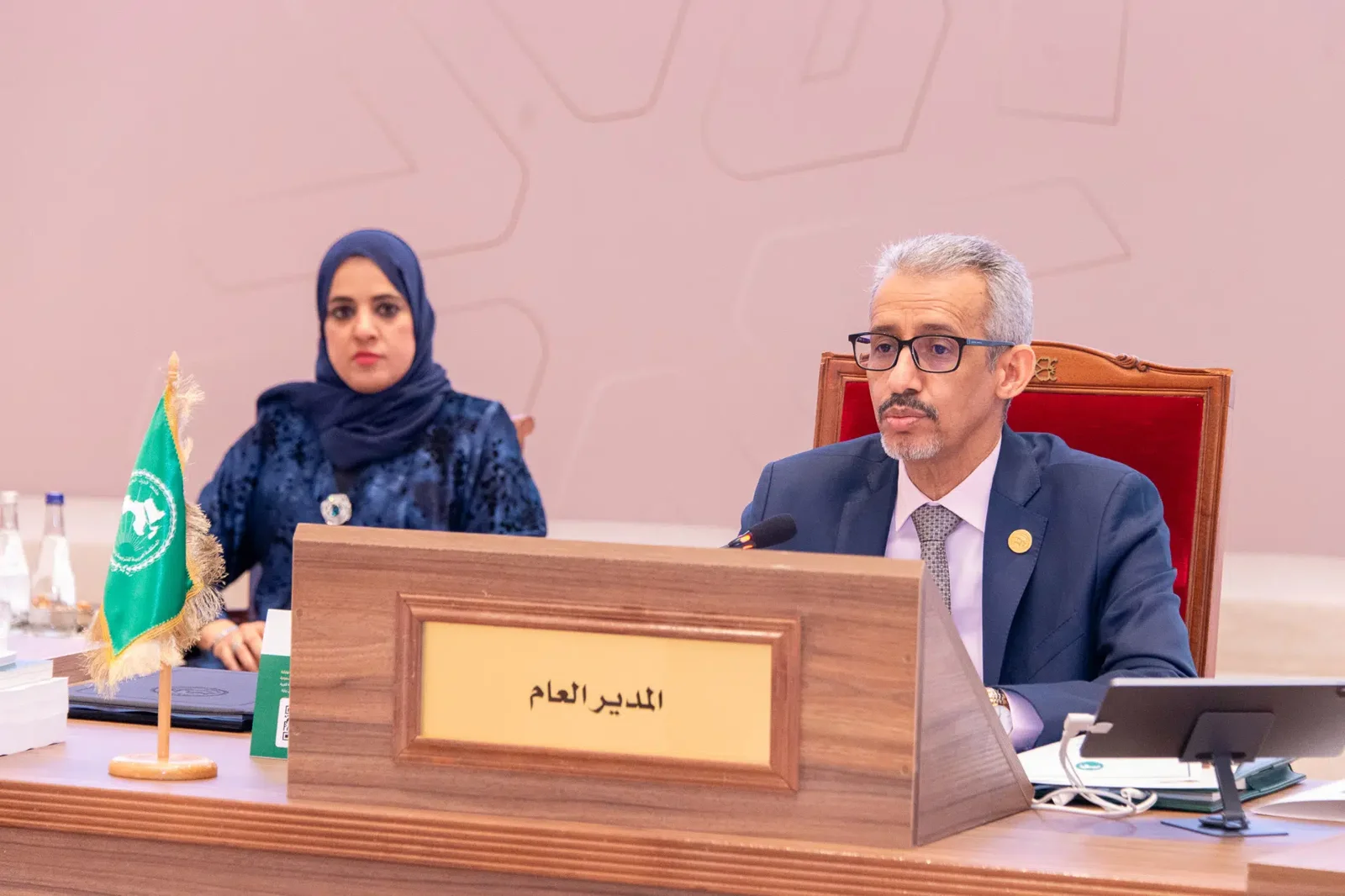
صورة: وكالة الأنباء الكويتية (كونا)
The 28th General Conference of ASCON begins in Muscat to discuss the development of Arab sectors.
Translated by Alqyas from KUNA — Original source
Muscat, November 12 (KUNA) -- The Arab Organization for Education, Culture and Science (ALECSO) launched today, Thursday, the work of its 28th ordinary session of the General Conference in Muscat, to discuss coordinating efforts aimed at developing the education, culture, and science sectors in the Arab world. Kuwait is participating with a delegation headed by Mohammed Al-Khalidi, Assistant Undersecretary for Administrative and Financial Affairs at the Ministry of Education, alongside representatives of Arab member states, representatives of the General Secretariat of the League of Arab States, and a number of regional and international organizations.
In her opening address, Omani Minister of Education Dr. Madiha Al-Shibani, who will preside over the country’s tenure as chair of the current General Conference session for the next two years, stated that the current stage is witnessing “an intensification of humanitarian and security challenges, both regionally and internationally.” She added, “The Palestinian issue remains at the forefront of matters that place the Arab and international communities before their humanitarian and ethical responsibilities, especially in light of the dire humanitarian conditions and their repercussions affecting educational, cultural, health, and scientific institutions, as well as heritage sites.”
Al-Shibani commended ALECSO’s efforts in supporting the Palestinian people, emphasizing the necessity of continuing, intensifying, and enhancing support for Palestinian educational, scientific, and cultural institutions.
For his part, Saudi Minister of Education and head of the previous session, Yusuf Al-Bunyam, stressed in his address that Saudi Arabia had focused during its chairmanship on four axes related to developing work mechanisms and achieving greater effectiveness: (responding to changing priorities), (integrating governance and decision-making), (improving the efficiency of the operational model), and (managing performance, resources, and impact). He pointed to tangible results, including the preparation of a new internal system for the General Conference, the first evaluation of the Organization’s plan (2023–2028), the first staff training strategy (2027–2028), and the first framework for governing its performance. He also noted the establishment of a General Conference office, the formation of preparatory, strategic, and legal committees, and, for the first time in the Organization’s history, the allocation of $500,000 over two years to support countries affected by crises, disasters, and emergencies.
Al-Bunyam highlighted that 11 countries, representing half of ALECSO’s member states, submitted 25 proposals and initiatives, underscoring that “updating the Organization is a shared responsibility.”
For his part, ALECSO Director-General Dr. Mohamed Ould Ahmed El-Moctar stated that the period between the General Conference sessions constituted a “qualitative milestone” in ALECSO’s trajectory, characterized by the integration of visions and an accelerated pace of work. He added that this period led to consolidating strategic orientations more aligned with the challenges of the Arab reality, better equipped to keep pace with global transformations and anticipate future requirements. He noted that the Organization adopted a “comprehensive strategic vision” in the field of education, considered the fundamental pillar of human development and a driver of sustainable development, aiming to transform education in the Arab world into an integrated system capable of responding to global transformations and shaping the future.
The Arab delegations participating in the General Conference, which is the highest legislative authority in the Organization, are scheduled to discuss several key Arab files, including priorities for joint Arab action in the fields of education, culture, and science, as well as future plans and strategies. They will also review the foresight plan for the development and renewal of education in the Arab world (2026–2035), the plan for developing cultural and creative industries, alongside the draft budget and program for the financial year (2027–2028), and a number of proposals submitted by member states.
The conference will discuss a number of topics related to the organization’s trajectory and its work priorities, including the Director-General’s report on the implementation of ALECSO’s programs and activities during the period between the 27th and 28th sessions of the General Conference, as well as the Executive Board Chairman’s report on the Board’s work. It will also address educational, cultural, and scientific conditions in Palestine, and issues related to countries facing conflicts, crises, disasters, and emergencies. The conference will examine a range of future strategic plans and orientations, foremost among them ALECSO’s Foresight Plan for the Development and Renewal of Education in the Arab World for the period 2026–2035, the plan for developing cultural and creative industries, the main axes of the future vision for the organization’s post-2028 action plan, and the comprehensive strategy for human resources development within ALECSO and its external centers.
The conference proceedings will include meetings of several specialized committees, namely the Education Committee, the Culture Committee, the Science Committee, the Information and Communication Committee, the National Committees, the Financial and Administrative Committee, and the Drafting Committee. These committees are scheduled to discuss matters within their respective competencies, as well as draft programs and budgets for the 2027–2028 financial year, and proposals to develop the organization’s activities across various sectors.
Earlier, the Executive Board of ALECSO, at the conclusion of its 125th ordinary session held over the past two days, recommended adopting several initiatives proposed by various member states. These include the initiative designating Tripoli as the Capital of the Arab Child in 2027, and the adoption of the Arab Strategy for Persons with Disabilities, a proposal submitted by the ALECSO Chair for Persons with Disabilities based in Lebanon. The Board also recommended that the General Conference be authorized to adopt a unified Arab strategy for persons with disabilities.
Additionally, the Board recommended the initiative to twin Jerusalem, the Arab Child Capital, with every Arab capital that declares itself as such, to celebrate children in the Arab world. It also endorsed initiatives to establish a platform for a unified Arab terminology dictionary and a linguistic policy system in Arab countries, as well as a mechanism to prepare the organization’s budget in a more professional manner.
The Board further recommended adopting several strategies to be implemented by the organization in the coming years, including the Aksum Strategy for international cooperation and partnerships, the strategy for diversifying self-financing sources, ALECSO’s strategy to enhance the organization’s media and marketing role, and the comprehensive strategy for human resources development within ALECSO and its external centers, in collaboration with Arab committees.
Participating in the General Conference are representatives from regional and international organizations, including the United Nations Educational, Scientific and Cultural Organization (UNESCO), the Islamic World Educational, Scientific and Cultural Organization (ICESCO), several organizations related to ALECSO’s work, the Arab Educational Organization, and the Union of Arab Universities.
Founded in 1970, ALECSO is one of the specialized agencies affiliated with the League of Arab States and comprises 22 Arab member states. Headquartered in Tunis, ALECSO aims to advance the sectors of education, culture, and science, and to enhance coordination and cooperation among member states in these fields. (End) M.G.B. / T.M.A.
