Bahraini Interior Minister: Gulf security is indivisible; we reaffirm full solidarity with Saudi Arabia in facing Houthi aggression
Press coverage 1 newspapers covered this event: KUNA →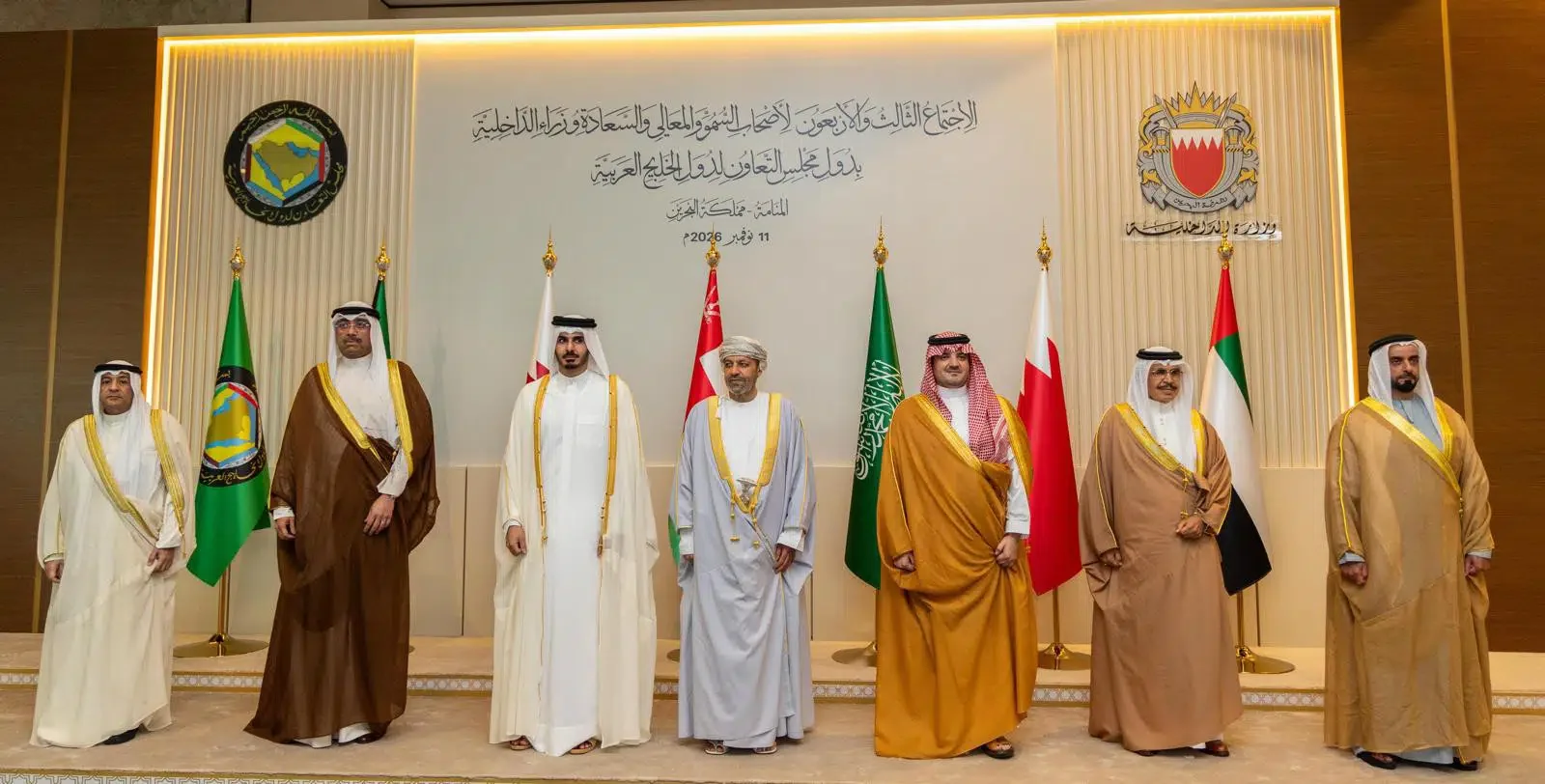
صورة: وكالة الأنباء الكويتية (كونا)
Bahraini Interior Minister Sheikh Rashid bin Abdullah Al Khalifa affirmed Bahrain's full solidarity with the Kingdom of Saudi Arabia and proposed measures to enhance joint security readiness and face regional threats during the 43rd meeting of Interior Ministers.
Translated by Qiyas from كونا — Original source
Manama, November 11 (KUNA) -- Bahraini Interior Minister, First Class General Sheikh Rashid bin Abdullah Al Khalifa, reaffirmed today, Wednesday, the Kingdom of Bahrain’s full solidarity with and support for the sister Kingdom of Saudi Arabia in all measures it takes to safeguard its sovereignty, security, and stability against the blatant attacks carried out by the terrorist Houthis militia. This stance is rooted in the understanding that the security of both kingdoms and the Gulf Cooperation Council (GCC) system are indivisible.
This statement was made by Sheikh Rashid bin Abdullah during his address while presiding over the 43rd meeting of the interior ministers of the GCC member states. The meeting was attended by Minister of Defense Sheikh Abdullah Ali Al-Salem Al-Sabah, representing the First Deputy Prime Minister and Minister of Interior Sheikh Fahad Yousef Al-Saud.
Sheikh Rashid bin Abdullah expressed his sincere pride in the patronage and support enjoyed by the GCC security cooperation process by the leaders of the GCC states, which contributes to developing security cooperation and coordination and consolidating stability within the region.
The Bahraini Interior Minister stated, “Our meeting today holds significance that transcends the topics on its agenda. Security in today’s world is no longer an isolated issue defined by geography, nor do threats come only from their traditional sources.” He clarified that “border security is linked to port security, supply chains, and economic security is connected to community security and cyberspace, making all these elements an integral part of the security system.”
He added that a state’s strength is now measured by its ability to protect its people, safeguard its interests, and prepare for the future with a sound mind and firm will. Today’s responsibility requires moving from crisis management to enhancing the concept of constant preparedness, shifting from isolated responses to strengthening and supporting joint GCC security capabilities, and transitioning from exchanging information when needed to building a system that provides information before it is requested.
He pointed out that the importance of the GCC system becomes evident in its ability to facilitate immediate security information exchange based on speed, accuracy, and trust, granting security agencies a clearer, integrated vision. He noted that the security of GCC states is fully interlinked; for example, enhancing the efficiency of a border crossing in one GCC state strengthens the security of the entire region. He emphasized that verifying security information in a timely manner prevents crimes before they occur, thwarts threats before they materialize, and protects communities and economies from repercussions that may be difficult to contain later.
He further noted that the GCC security strategy represents a significant achievement, as it covers security in its multiple dimensions, including community security, with human security remaining the primary objective.
He praised the efforts of the GCC Secretariat General in organizing a high-level workshop in coordination with the United Nations to prepare a comprehensive security strategy that reflects the reality of a new world where threats intersect and the nature of risks changes.
He stated that the dangerous repercussions witnessed in the region due to the unjust Iranian aggression, along with the security challenges stemming from the regional crisis, underscore the necessity of drawing lessons and enhancing joint GCC preparedness. From this perspective, he recently submitted two proposals to the GCC Secretary-General, Jassem Al-Budaiwi.
He clarified that the first proposal is to prepare a GCC document outlining security lessons learned from the regional crisis. This document would include a comprehensive assessment of the challenges and threats that emerged during the crisis, as well as documentation of security experiences and practices, thereby enhancing the efficiency of joint planning and contributing to the development of the GCC security response system.
He added that the second proposal involves forming a Gulf committee of security experts tasked with anticipating future security challenges and threats that may face the GCC states, with its responsibility being to provide forward-looking insights and practical recommendations to support security decision-making. He emphasized that the role of civil defense agencies in GCC countries in dealing with the repercussions of Iran’s blameworthy aggression and the targeting of Gulf states is highly valued from both security and societal perspectives, given their professional and commendable performance in protecting lives and property, managing crises, and containing their effects in coordination with relevant authorities. He pointed out that lessons learned should be built upon to enhance joint security readiness and develop emergency, evacuation, sheltering, and health response plans, while intensifying joint Gulf security exercises, amid developments surrounding the coming phase whose trajectories are difficult to predict. In this context, he stressed the importance of prioritizing this sector in the Gulf security cooperation agenda to ensure public safety, rapid response, and continuity of essential services, as embodied by the Gulf Emergency Management Center as a pioneering Gulf achievement in this field. He expressed hope that the coming years would mark a transition from close coordination to comprehensive integration, from exchanging expertise to building joint capacities, and from responding to threats to proactive prevention. During the meeting, several important security topics were discussed, foremost among them ways to enhance joint Gulf security cooperation and coordination to address challenges stemming from the repercussions of Iran’s blameworthy attacks. Mechanisms for exchanging expertise across all security fields were also discussed, aiming to safeguard public security and safety within the framework of the GCC system and its unifying principles for joint Gulf action, which would help preserve security and strengthen joint efforts to deal efficiently with security challenges. Ministers also reviewed updates on the joint mobilization exercise of security agencies in GCC countries, scheduled to be held in Kuwait in 2027, as well as developments in projects overseen by the Deputy Secretary-General for Security Affairs, including the adoption of the Gulf strategy to combat cybercrime and AI-related crimes. The meeting also approved two initiatives presented by Field Marshal Sheikh Rashid bin Abdullah Al Khalifa, which contribute to enhancing joint Gulf security. (End) K.N.A. / M.A.A.
