ASEAN Summit in Manila Discusses Enhancing Regional Security, Stability, and Cooperation
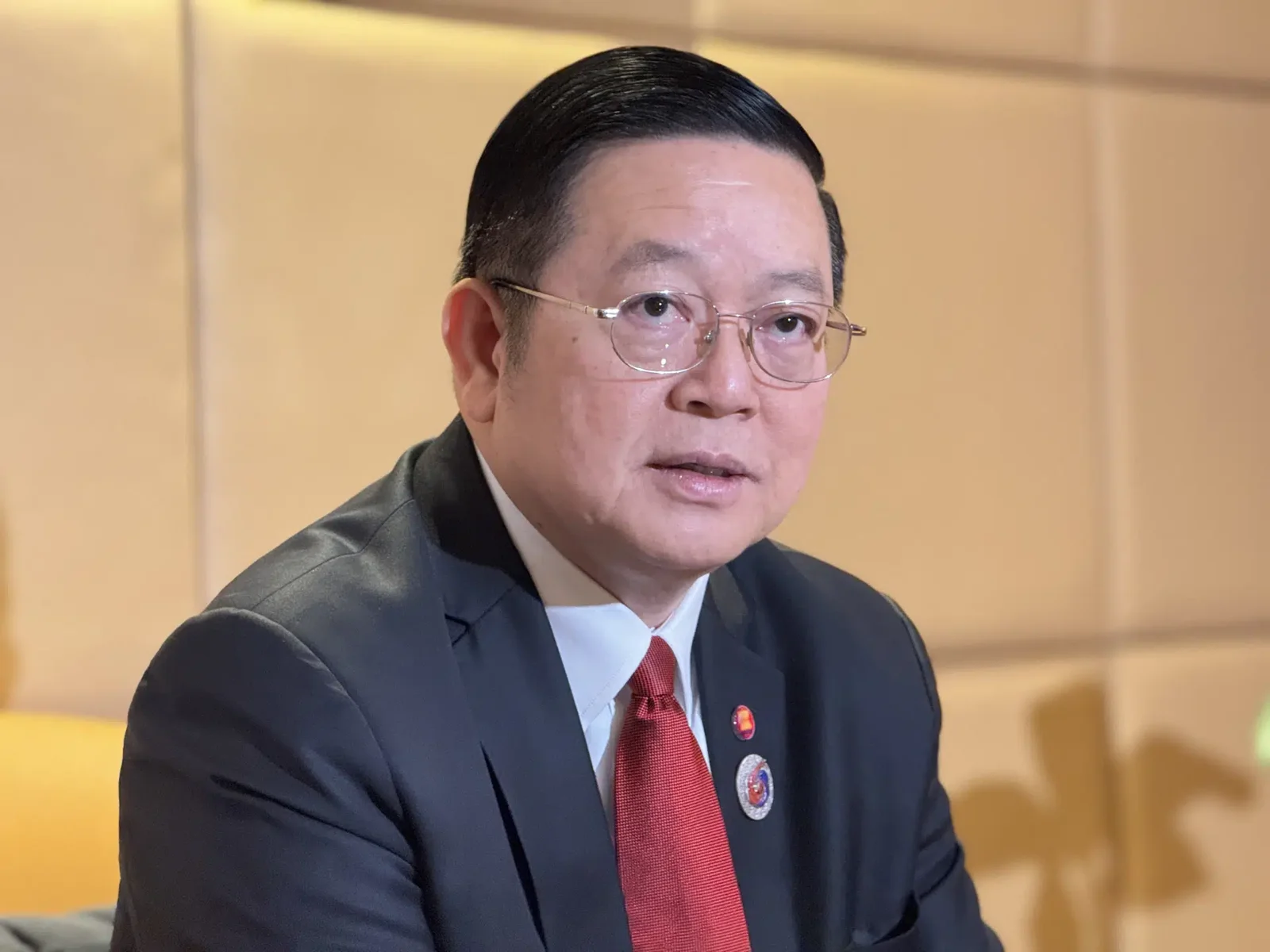
صورة: وكالة الأنباء الكويتية (كونا)
The 49th ASEAN Summit in Manila focuses on security, stability, and economic cooperation, with participation from global leaders.
Translated by Alqyas from KUNA — Original source
Kuala Lumpur -- The ASEAN Secretariat announced on Wednesday that the 49th ASEAN Summit, scheduled to be held in the Philippine capital, Manila, from November 14 to 17, will focus on enhancing regional peace, security, and stability, alongside reviewing the achievements of the Philippine Chairmanship in 2026.
In a statement, the Secretariat clarified that ASEAN Secretary-General Dr. Kao Kim Hourn will lead the Secretariat’s delegation to the Summit and related meetings, in response to an invitation from Philippine President and 2026 ASEAN Chair Ferdinand Marcos Jr.
The statement added that the high-level meetings will provide an opportunity to review the progress made by ASEAN during the Philippine Chairmanship, identify future cooperation pathways, and reinforce member states’ commitment to maintaining regional peace and stability amid the political, economic, and security challenges facing the region.
The program includes a series of preparatory ministerial meetings, including the 28th ASEAN Economic Community Council meeting, the ASEAN Foreign Ministers’ Meeting, the 32nd ASEAN Political-Security Community Council meeting, and the 39th Coordinating Council meeting responsible for overseeing coordination among ASEAN bodies and institutions.
Leaders’ meetings are scheduled for November 15–17, with participation from member state leaders and international dialogue partners, to discuss a range of political, security, and economic issues of common interest.
Security matters are expected to dominate the agenda, including developments in the South China Sea, where maritime and territorial disputes exist between several regional countries and China, as well as ongoing negotiations between ASEAN and Beijing on a Code of Conduct, and the political crisis in Myanmar. Efforts to implement the five-point consensus adopted by ASEAN to address the crisis, encourage dialogue, and halt violence will also be discussed.
Economically, leaders will discuss strengthening regional economic integration and ways to cope with fluctuations and shocks facing the global economy, as well as monitoring trade negotiations with external partners, including making progress on the proposed ASEAN-Canada Free Trade Agreement.
The Summit is also expected to see the signing of the ASEAN Digital Economy Framework Agreement, aimed at regulating digital trade and data exchange, enhancing cybersecurity, and fostering cooperation in AI governance. Discussions will also cover energy and food security, and the development of a regional power grid to interconnect member states’ systems, facilitate energy exchange, support economic integration, and ensure supply security in Southeast Asia.
Regarding international participation, the Philippine state news agency reported that US President Donald Trump, Canadian Prime Minister Mark Carney, and Brazilian President Luiz Inácio Lula da Silva will attend as guests of the Summit host. Australia and Japan have announced that Australian Prime Minister Anthony Albanese and Japanese Prime Minister Sanae Takaichi will participate alongside ASEAN leaders, with the exception of Myanmar, which will be represented by a diplomat. UN Secretary-General António Guterres and Chinese Premier Li Qiang are also expected to attend.
ASEAN was founded on August 8, 1967, by five countries: Indonesia, Malaysia, the Philippines, Singapore, and Thailand. Its membership later expanded to include Brunei, Vietnam, Laos, Myanmar, and Cambodia, followed by East Timor, which officially joined in October 2025, bringing the total number of member states to 11.
ASEAN maintains formal dialogue relations with 12 partners, including the United States, China, Japan, South Korea, India, Australia, New Zealand, Russia, Canada, the United Kingdom, Turkey, and the European Union. These partnerships aim to enhance cooperation in political, security, economic, and technological fields, as well as to coordinate positions on regional and international issues. (End) A.B./S.M.A.
