Cybersecurity Center Concludes 'Sur' Awareness Campaign After Visiting Public High Schools and Hosting a Content Creation 'Media-Thon'
صورة: وكالة الأنباء الكويتية (كونا)
The National Cybersecurity Center concluded the 'Sur' awareness campaign, which included 12 schools and a media-thon event with participation from the Ministry of Education, Kuwait Finance House, and Code Academy
Translated by Qiyas from كونا — Original source
Kuwait City, 10 November (KUNA) -- The National Cyber Security Center announced on Tuesday the conclusion of the 2026 National Cyber Security Awareness Campaign, "Sur," a joint initiative involving the Center, the Ministry of Education, Kuwait Finance House, and Code Academy.
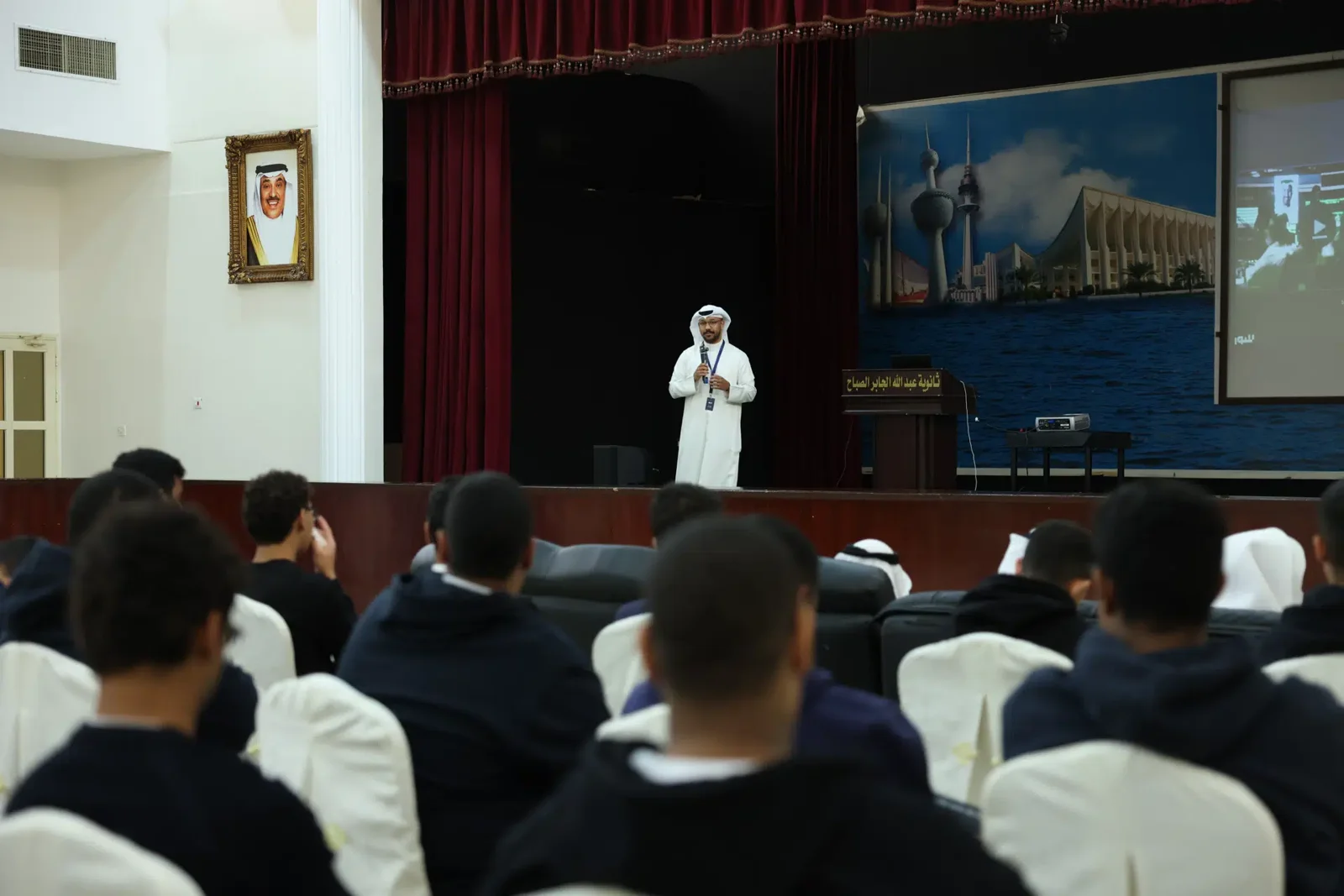
In a press statement, the Center said the campaign was implemented across two integrated pillars: an awareness tour covering 12 government secondary schools across all governorates of Kuwait, and a "Mediathon" for producing awareness content that attracted Kuwaiti youth aged 15 to 25.
The Center added that the campaign’s name, "Sur," was inspired by the historic walls of Kuwait, symbolizing protection, resilience, and social responsibility. The campaign represents a modern line of defense against the risks of the digital world, based on the premise that cyber awareness is the first line of defense for everyone.
The tour ran from October 11 to the present day, covering 12 government secondary schools—two in each educational district, one for boys and one for girls—in the Capital, Hawalli, Farwaniya, Ahmadi, Jahra, and Mubarak Al-Kabeer governorates.
It noted that 1,215 students in the 10th, 11th, and 12th grades benefited from the initiative, in cooperation with the Ministry of Education, which coordinated the tour with participating schools. Topics covered included the concept of cyber security, social engineering, digital fraud techniques, the strength of passwords, two-factor authentication, and digital footprints.
The "Sur" Mediathon was held on October 23 and 24. Code Academy hosted a training day, while the National Cyber Security Center hosted the competition day. The event involved 125 young men and women organized into 35 teams, transforming them from passive recipients of awareness campaigns into active creators.
The Center stated that participants learned during the training day how to transform a cyber security topic into a clear awareness message. On the second day, they worked in teams to develop ideas, write scripts, and produce awareness videos no longer than 60 seconds using content creation tools and artificial intelligence. The Mediathon resulted in the production of 35 short awareness videos for publication.
The statement affirmed that Maryam Al-Anzi, Director General of the General Administration of Supporting Educational Services at the Ministry of Education, emphasized the Ministry’s commitment to strengthening cooperation and partnership with various state institutions and the private sector, and supporting national initiatives and awareness activities that contribute to enhancing learners’ awareness to keep pace with technological developments.
Al-Anzi noted that these activities serve as a complementary supplement to the educational process, helping to reinforce concepts and values included in the curriculum and translate them into life practices and skills that enhance learners’ awareness of the safe and responsible use of technology, as well as protecting their privacy and personal data from digital risks.
She added that the "Sur" campaign embodies the importance of integrating efforts between educational institutions and specialized national entities in providing awareness and practical programs that support what learners receive in classrooms and contribute to developing their capacity to deal consciously with digital challenges.
For his part, Bader Al-Asimi, Director of the Cyber Excellence and Capacity Development Department at the National Cyber Security Center, affirmed that the "Sur" campaign contributed to enhancing cyber awareness among students and youth, equipping them with the knowledge and practical skills needed to detect fraud attempts, protect their accounts and data, and make safer decisions when using technology.
Al-Asimi added that awareness and knowledge are the foundation for building a safer society in the digital world, and what has been achieved through the “Sur” campaign reflects the importance of investing in youth awareness and developing their skills, not only to protect themselves from cyber risks but also to empower them to contribute to spreading cyber culture among members of society. He emphasized that the campaign highlighted the importance of cooperation among various entities in delivering knowledge through interactive methods linked to the daily lives of students and young people, and affirmed that the Center continues its efforts to promote cyber culture and develop national capabilities, based on the principle that cybersecurity is a shared responsibility that begins with individual awareness and is reinforced through learning and practice.
For his part, Faisal Al-Sari, Chief Executive Officer of Institutional Relations and Corporate Social Responsibility at Kuwait Finance House, said the bank is keen to support national initiatives that contribute to enhancing cyber awareness among youth and empowering them to protect themselves and their communities from digital risks, thereby supporting the building of a generation better prepared for the demands of digital transformation. Al-Sari added that the “Sur” initiative represents a successful model of partnership between Kuwait Finance House, Code Academy, and the National Cybersecurity Center, aimed at consolidating a culture of safe digital practices and equipping students with the necessary knowledge and skills to keep pace with rapid technological developments.
For his part, Hashem Bahbahani, Co-founder and Chief Operating Officer of Code Academy, said, “We launched ‘Sur’ with a single conviction: cybersecurity is no longer a technical specialty confined to a specific group, but has become a life skill needed by anyone who owns a mobile phone. Today, we are concluding the campaign, having reached students in 12 schools across all governorates of Kuwait, and we have personally witnessed how student awareness changes when risks are explained in their own language and in the context of their daily lives.” (End) A.H.K
