Saudi Hajj Minister outlines seven major transformations in the Hajj and Umrah system
صورة: وكالة الأنباء الكويتية (كونا)
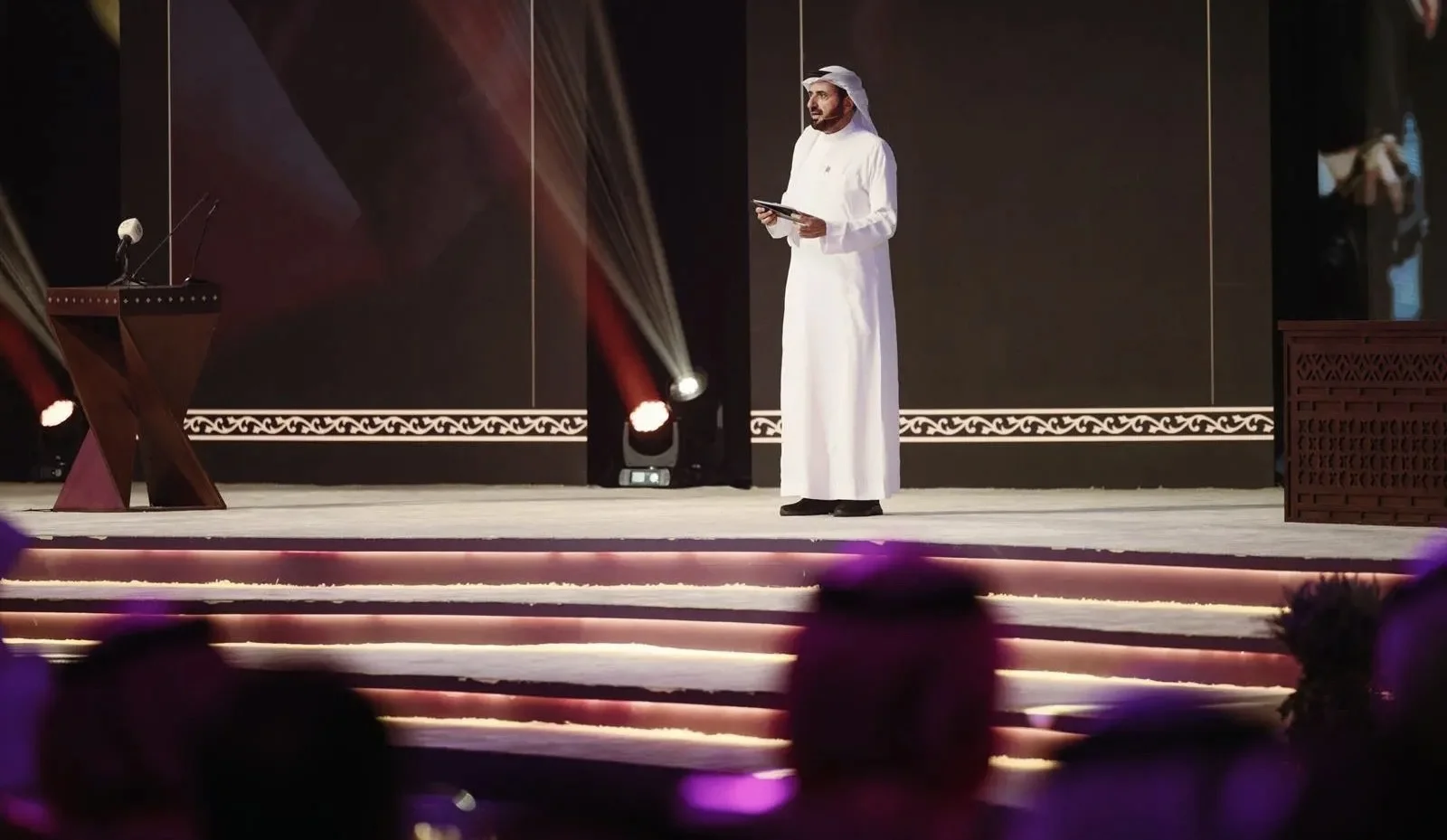
Hajj Minister outlines major transformations at the sixth conference in Jeddah
Translated by Alqyas from KUNA — Original source
Riyadh -- Saudi Minister of Hajj and Umrah, Dr. Tawfiq Al-Rabiah, who also chairs the Committee for the Service of Guests of Allah (Hajj and Umrah Program), outlined seven major transformations that have reshaped the Hajj and Umrah system. These changes encompassed the development of the services market, expanded access to Hajj, early-season preparation, the enhancement of the Holy Sites, transportation improvements, digital transformation, travel facilitation, and the enrichment of the experience for Guests of Allah.
This statement was made during Al-Rabiah’s address at the sixth edition of the Hajj Conference and Exhibition in Jeddah, which launched yesterday, Sunday. He emphasized that the shared goal of the conference participants is to facilitate the performance of the fifth pillar of Islam for Muslims worldwide.
Al-Rabiah explained that the Guests of Allah Service Program, launched in 2019 as part of Saudi Vision 2030 initiatives, aims to streamline access for pilgrims, elevate service quality, and enrich their experience from the initial planning stages in their home countries until their return. He noted that fostering competition and developing the services market has broadened options for Hajj missions, allowing each mission to choose from 34 service providers for outbound Hajj pilgrims.
He added that the Hajj Conference and Exhibition reinforces this competitiveness by hosting companies and serving as a global platform for early preparation, partnership building, contract finalization, and service development. This is complemented by the promotion of direct contracting in 58 countries, fostering competition based on service quality and pricing.
Al-Rabiah highlighted the expansion of Hajj access through the Direct Hajj Program to an additional 75 countries that previously did not send pilgrims, bringing the total number of participating countries to 133.
Regarding strategic transformations, he pointed to the commencement of early preparations for the Hajj season on the 12th of Dhul-Hijjah. This involves implementing a detailed program covering all stages of Hajj and delivering preliminary arrangement documents to Hajj affairs offices in 78 countries. This includes developing training and awareness programs in pilgrims’ languages and finalizing contracts four months before the season to ensure quality and readiness.
In the realm of developing the Holy Sites and transportation, Al-Rabiah stated that the “Nask” platform and application have become a comprehensive digital gateway for the pilgrim’s journey. The app has surpassed 70 million users globally, while the platform’s digital system processes over 4.4 billion transactions annually. The application offers digital services to facilitate ritual performance, including a “Digital Mufti” service that helps pilgrims track the number of Tawaf and Sa’i circuits, along with relevant supplications and remembrances.
He also noted that the “Traveler Without Luggage” initiative handled approximately 9.2 million bags during the 1447 AH Hajj season, reducing airport check-in times from two hours to just 15 minutes.
Furthermore, the number of qualified historical sites and enriching destinations in Makkah and Madinah increased from 15 sites and destinations in 2022 to 102 by 2026.
Regarding service development at the Two Holy Mosques, Al-Rabiah clarified that the capacity of the Rawdah Al-Sharifah has increased, with visitor numbers rising from approximately six million in 2022 to nearly 16 million in 2025.
He affirmed that these transformations were achieved through the support and empowerment of Custodian of the Two Holy Mosques King Salman bin Abdulaziz and Crown Prince and Prime Minister Mohammed bin Salman, under the supervision of the Supreme Hajj Committee chaired by Interior Minister Prince Abdulaziz bin Saud bin Naif and its members.
He also highlighted the continuous oversight of Prince Khaled Al-Faisal, Advisor to the Custodian of the Two Holy Mosques, Emir of the Makkah Region, and Chairman of the Permanent Committee for Hajj and Umrah, alongside the Permanent Committee for Hajj and Umrah in the Madinah Region, chaired by Emir Prince Salman bin Sultan.
He praised the role of Deputy Emir of the Makkah Region, Prince Saud bin Mishal, in overseeing and monitoring the Hajj Projects Office within the Service of the Guests of Allah program, which involves more than 60 governmental and operational entities. He noted that Prince Saud supervised the implementation of more than 600 action plans within a unified and integrated framework, ensuring coordination among participating entities. He clarified that the impact of these efforts was reflected in the pilgrims’ experience and satisfaction levels, with pilgrim satisfaction rising from 74 percent in 1443 AH to 78 percent in 1444 AH, then to 81 percent in 1445 AH, 91 percent in 1446 AH, and reaching 93 percent in 1447 AH. The sixth edition of the Hajj Conference and Exhibition continues over four days, with participation from more than 520 entities from local and international governmental, private, and non-profit sectors, and attendance and participation from over 150 countries, across an area exceeding 67,000 square meters, as part of the Kingdom’s early preparations for the Hajj season and its efforts to develop services provided to the Guests of Allah. (End) K.N.Sh / A.B.G
