Datura: An attractive yet poisonous flower spotted locally... Authorities mobilize awareness efforts
Press coverage 1 newspapers covered this event: KUNA →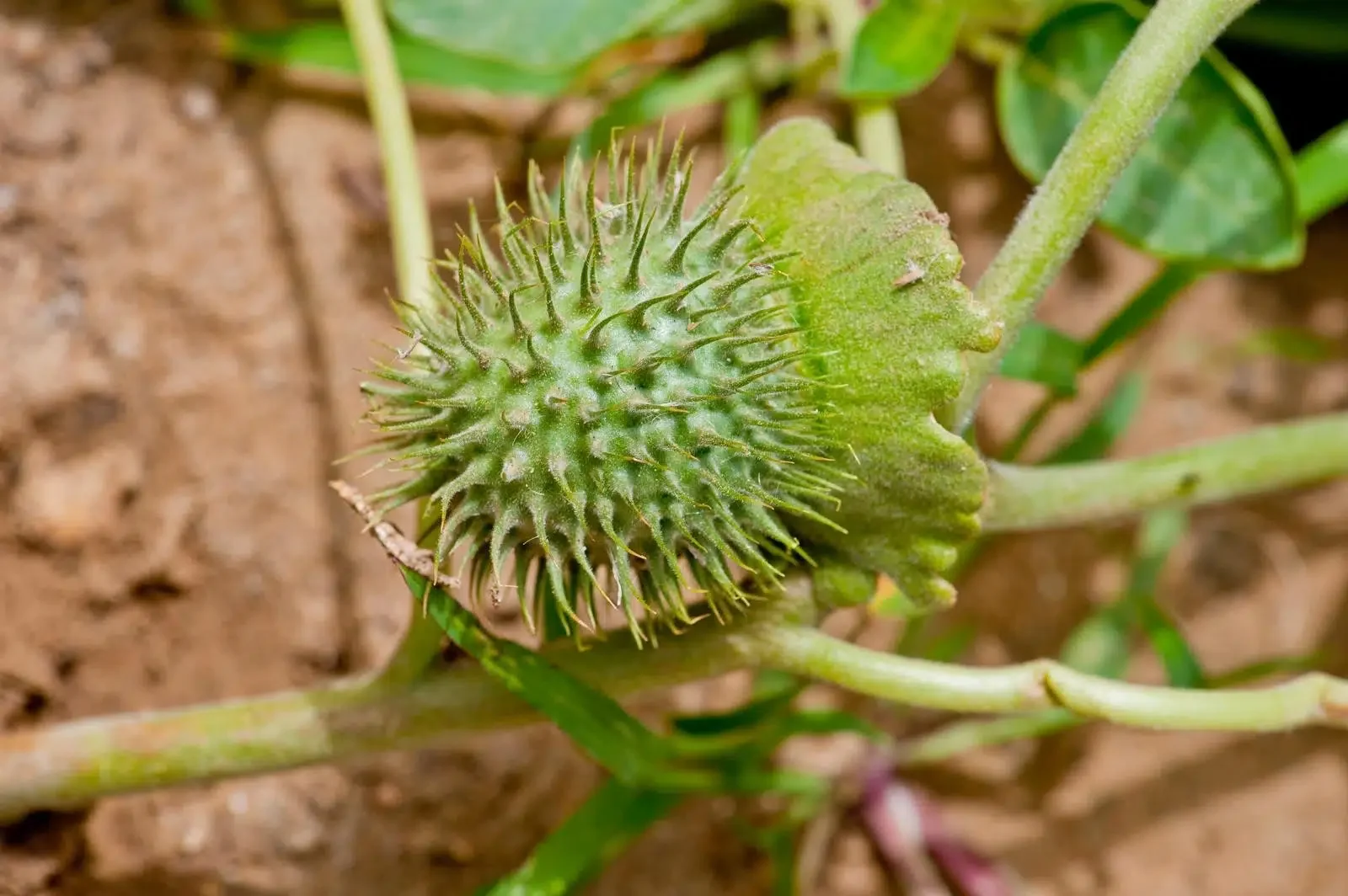
صورة: وكالة الأنباء الكويتية (كونا)
Monitoring of the spread of poisonous Datura plant in Kuwait and coordination between the Public Authority for Environmental Affairs and the Poison Control Center for awareness and removal
Translated by Qiyas from كونا — Original source
By Zuhra Al-Kaadimi (Report) Kuwait – An attractive flower and a poisonous plant at the same time, the Datura has been recorded among Kuwait’s plant species, although it is an invasive species in the local environment. Given its dangers, relevant authorities are mobilizing efforts to raise awareness about it, especially after its spread was detected in several locations across the country.
The seasonal Datura belongs to the Solanaceae (nightshade) family. It typically appears in spring and summer, with its growth and flowering sometimes extending into early autumn, depending on temperature, humidity, and moisture availability. It is characterized by large, trumpet-shaped white or purple flowers that bloom at night, large leaves with a pungent odor, and spherical, spiky green fruits containing numerous seeds.
Its danger lies in the fact that all its parts—including leaves, stems, flowers, fruits, and seeds—contain toxic alkaloid compounds, particularly tropane alkaloids such as atropine, hyoscyamine, and scopolamine. Ingestion can lead to acute poisoning. Symptoms of consumption also include neurological and cardiac disturbances, such as dry mouth, dilated pupils, rapid heartbeat, confusion, delirium, and severe hallucinations. It may cause seizures or coma, and poses a life-threatening risk that can lead to death.
Dr. Abdul Latif Al-Omeir, head of the Kuwait Poison Control Center at Al-Amiri Hospital under the Ministry of Health, told the Kuwait News Agency (KUNA) on Monday that there are various plant species in the country that naturally contain toxic substances, whether they are ornamental plants grown indoors and in gardens or wild plants growing in open areas.
Al-Omeir added that the danger of these plants varies depending on the species, the part of the plant involved, and the method of exposure. Some plants may cause mild symptoms, while ingestion of parts of other species can lead to severe poisoning requiring medical intervention.
Regarding the Datura, he noted that it can grow and reproduce spontaneously, and its presence in a location does not necessarily mean it was intentionally cultivated. Furthermore, the presence of a poisonous plant in the environment does not imply an immediate direct threat to the public; the primary risk arises when the plant is consumed or used unsafely, which necessitates health awareness campaigns for prevention.
He clarified that the Center recently dealt with severe poisoning cases in the country resulting from the consumption of poisonous plants like the Datura, which required hospitalization and treatment, underscoring the importance of raising awareness about exposure to such plants, particularly among children.
With regard to reports of the Datura in the country, he stated that the Center received reports of its presence in some residential areas and public places. Consequently, coordination has been established with relevant authorities for preventive awareness and for serious action to locate and remove the plants.
Al-Omeir explained that the Center held a coordination meeting with the Public Authority for Environmental Affairs to discuss the issue of poisonous plants. The two entities are coordinating to establish a clear mechanism for reporting, identifying, and assessing the risks of such plants, and determining appropriate response measures within each entity’s jurisdiction.
He emphasized that this cooperation is part of expanding the preventive role of the Center and enhancing integration between health and environmental authorities to mitigate the risks of exposure to toxic substances and protect the health of citizens and residents.
He warned that if a poisonous plant is consumed and symptoms appear, one should immediately go to the emergency department and seek medical advice early, without attempting to induce vomiting or using home remedies. It is also essential to keep a clear photograph of the plant or a part of it to assist in identifying the species.
He added that the Kuwait Poison Control Center provides specialized advice around the clock at 1804774 regarding exposure and poisoning cases, and assists in determining appropriate medical procedures based on the type of exposure and the patient’s condition. He advised against using wild plants to prepare beverages, folk remedies, or home treatments without verifying their identity and safety, and warned against tampering with or consuming them. He urged keeping children away from such plants and leaving their assessment and handling to the competent authorities.
For her part, Sharifa Al-Salem, head of the Wildlife Monitoring Department at the Public Authority for Applied Education and Training’s Environment Authority, told KUNA that “Datura” is a seasonal toxic invasive plant in the Kuwaiti environment. Ingestion can cause poisoning, hallucinations, and disturbances in the nervous system, heart rhythms, and various bodily functions, and may lead to death. Al-Salem added that the Authority discussed with the Kuwait Poison Control Center, during a recent coordination meeting, reports concerning the presence of certain toxic plants near public places, with Datura being the most prominent.
She clarified that the meeting also addressed mechanisms for handling reports related to toxic species of wild terrestrial and marine life, including scorpions—with the black-tailed scorpion being the most common in the country—snakes, such as the desert black snake and sea snakes, jellyfish, and some spiny fish with toxic spines, such as the stonefish. The meeting discussed ways to enhance coordination and information exchange among competent authorities, designate contact points, and ensure rapid response and appropriate measures to mitigate potential risks to public health and the environment. She noted that this meeting is part of the Authority’s efforts to strengthen cooperation with relevant entities, monitor sites of toxic plants, and take necessary measures regarding them. She called on the public not to touch, collect, or consume these plants, nor to touch or handle the aforementioned organisms, and to report their locations to the competent authorities, thereby contributing to community protection and the preservation of biodiversity.
On her part, Nof Al-Hashash, Acting Director of the Environmental Rehabilitation Department at the Public Authority for Agriculture Affairs and Fish Resources, told KUNA that Datura is characterized by its ability to adapt to various environmental conditions, grow in open lands and environmentally disturbed sites, and produce large numbers of seeds that can remain dormant in the soil for long periods before germinating when suitable environmental conditions, particularly moisture and water, are available. Al-Hashash added that favorable conditions contribute to increasing the plant’s spread and the difficulty of controlling it, highlighting the importance of a scientific and systematic approach to managing toxic plants, especially invasive species that have a high capacity for spread and reproduction in local environments, as part of efforts to protect public health and preserve the environment and plant diversity in the country.
Regarding the legislative and regulatory aspects, she clarified that the Seed, Seedling, and Cutting Regulations of the Gulf Cooperation Council (GCC) countries constitute one of the relevant legal frameworks governing the trade and control of seeds, seedlings, and cuttings, thereby supporting efforts to limit the introduction and spread of unwanted plant species. She noted that the Agriculture Authority plays a fundamental technical role in identifying plant species, assessing their ecological characteristics and spread risks, and contributing to formulating appropriate technical recommendations for their management and control within the competencies assigned to it by prevailing national legislation and in coordination with relevant entities.
It was reported that the Agriculture Authority proposed holding a joint coordination meeting with the Poison Control Center and the Environment Authority, with the aim of developing an integrated national program to manage this plant and curb its spread, in accordance with the mandates and responsibilities of each entity. Al-Hashash explained that the program would focus on conducting a comprehensive field survey to map the locations of its spread, determine its density and growth stages, and prioritize sensitive sites, including schools, public facilities, parks, and areas frequented by children. She clarified that the meeting participants would carry out a scientific assessment of the health and environmental risks associated with the presence of the plant, as a precursor to formulating a technical plan for control and safe removal when necessary. This plan would identify the most appropriate methods for handling existing plants, fruits, and seeds, as well as mechanisms for collecting, transporting, and disposing of toxic plant waste in approved ways that prevent the re-spread of seeds or expose workers and the public to poisoning risks. She added that the plan would also include a monitoring and periodic follow-up program for treated sites, given the ability of Datura seeds to remain viable in the soil and germinate again under suitable conditions, thereby ensuring an evaluation of the effectiveness of control measures and limiting the recurrence of the plant’s spread. She emphasized that community awareness constitutes the cornerstone and most critical element of the proposed program, through the preparation of educational and scientific materials to introduce this plant and other toxic plants prevalent in Kuwait, detailing their morphological characteristics, health risks, and safe handling methods, in collaboration with relevant health, educational, and environmental authorities. She noted that dealing with invasive toxic plants requires an integrated national approach that combines scientific knowledge, environmental assessment, field monitoring, and community awareness, contributing to the protection of public health, the mitigation of environmental risks, and the enhancement of sustainable management of the country’s vegetation cover. (End) Z.H.R. / N.W.F.
