From Classrooms of Knowledge to Springs of Life: Kuwait's Giving Plants Hope and Enhances Sustainability for Needing Peoples
صورة: وكالة الأنباء الكويتية (كونا)
The Islamic World Charity Organization and Sheikh Abdullah Al-Nouri Charity Association implement development projects in Uganda and Mauritania.
Translated by Alqyas from KUNA — Original source
By Salman Al-Mutairi (Report) Kuwait – In regions where distances are vast and human needs for the essentials of a dignified life are similar, Kuwait continues to write stories of compassion and generosity that extend from classrooms where the seeds of knowledge are sown, to villages awaiting a drop of water, and to treatment centers that restore patients’ hope for a safer and more stable life. Under the directives of the “Kuwait is by Your Side” campaign, Kuwaiti charitable institutions and associations continue their humanitarian journey, carrying a message that transcends immediate aid to focus on building human capital and developing communities through educational, health, and environmental projects that translate values of solidarity and cooperation into tangible reality, opening new horizons toward a better future for the most vulnerable groups.
This journey was evident this week in humanitarian and developmental initiatives extending to Uganda and Mauritania, where the efforts of the Islamic World Charity Organization (IWCO) and Sheikh Abdullah Al-Nouri Charity Association converged to enhance environmental sustainability, provide clean water, deliver healthcare, and care for orphans, thereby reflecting the diversity of Kuwaiti charitable work and its commitment to creating a sustainable impact on beneficiaries’ lives.
In Uganda, IWCO’s efforts to combine education with environmental protection resulted in Dar Al-IWCO Primary School in the Kira-Kitikivumba area receiving recognition under the “Generation Restoration School” initiative, linked to the UN Decade on Ecosystem Restoration (2021–2030). This recognition honored the school’s outstanding practices in environmental sustainability and community responsibility.
In this context, Abdulrahman Al-Mutawa, Deputy Director General of the Corporate Communications Sector at IWCO, told the Kuwait News Agency (KUNA) on Saturday that this recognition reflects the school’s success in transforming sustainability concepts into practical practices that combine education, orphan care, and environmental protection, thereby enhancing the role of educational institutions in serving local communities.
Al-Mutawa added that the school successfully planted approximately 10,000 trees to enhance vegetation cover, invested in solar energy systems, and implemented rainwater harvesting and storage systems with a capacity of up to 60,000 liters. It also developed hygiene and waste management practices and raised environmental awareness among students.
He clarified that the significance of this experience lies in its impact extending beyond the classroom, as it contributes to developing students’ awareness of their responsibilities toward the environment and society, instilling in them values of conserving natural resources and positive participation in building a more sustainable future.
Al-Mutawa affirmed IWCO’s commitment to continuing the development of the educational institutions it manages and enhancing the quality of their educational and humanitarian outputs, noting that the school’s experience serves as a model for the possibility of integrating knowledge building, human care, and environmental conservation within a comprehensive developmental framework.
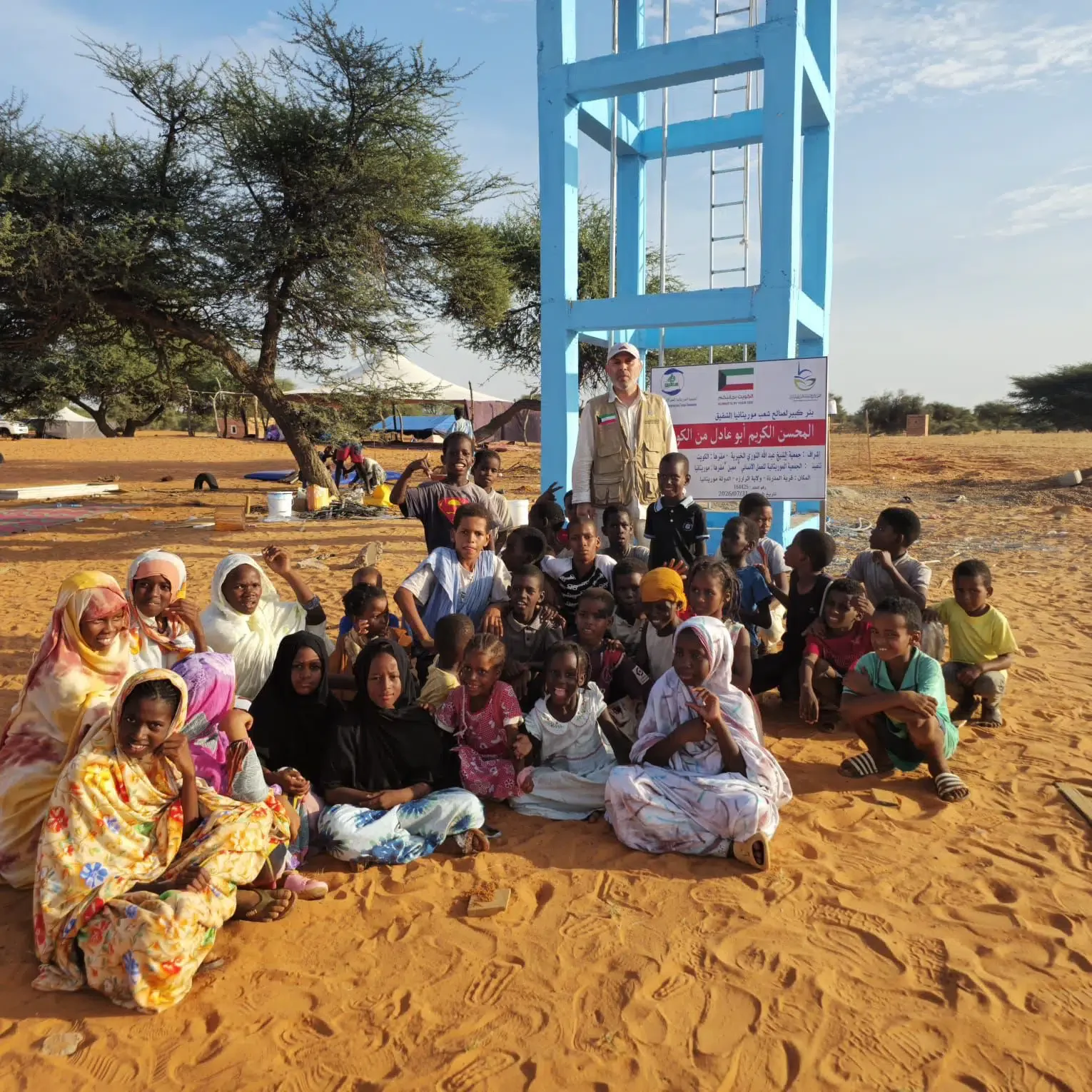
From the fields of knowledge in Uganda, Kuwaiti goodwill extended to Mauritanian villages, whose residents had long awaited clean water and health services. Through projects implemented by Sheikh Abdullah Al-Nouri Charity Association, these efforts alleviated the suffering of families and provided basic living essentials, while also monitoring the conditions of orphans and assessing the needs of the most deprived communities.
In this context, Abdul Latif Al-Dawas, Director of the Resources and Media Sector at the Kuwait Foundation for the Advancement of Sciences (KFAS), told KUNA that a delegation from the foundation opened several water networks during a field visit to Mauritania, serving dozens of villages and tens of thousands of residents, thereby helping to alleviate the hardships faced by locals due to water scarcity and the difficulty of accessing clean water. Al-Dawas added that the visit also included the inauguration of several health centers in remote areas to bring medical services closer to residents and reduce the burden of traveling long distances in search of treatment, emphasizing that providing water and healthcare constitutes a fundamental pillar for protecting human well-being, improving living conditions, and enhancing community stability. He further explained that the delegation inspected an orphanage and met with several sponsored children to ensure their living and educational conditions and to monitor their needs, noting that caring for orphans represents a comprehensive humanitarian responsibility that goes beyond providing material aid to encompassing attention to their future and ensuring the prerequisites for a dignified life. Al-Dawas affirmed that the foundation places great importance on field visits and post-implementation monitoring of projects to guarantee the sustainability of their impact and ensure that benefits reach the intended beneficiaries. He noted that the delegation assessed the needs of several villages for water networks, schools, and health centers to determine the priorities of upcoming projects and translate the generosity of Kuwaitis into continuous developmental achievements. Thus, the various dimensions of Kuwaiti generosity converge: a school that instills a culture of sustainability in the hearts of generations, a village that regains the pulse of life through the arrival of clean water, a health center that spares patients the ordeal of long journeys, and humanitarian care that gives orphans a sense of security and belonging. These initiatives confirm that the value of charitable work is measured not only by the aid provided but also by its lasting impact on human lives and the future of societies. Kuwait, bearing a firm humanitarian legacy, remains present in the fields of goodness through its institutions and charitable associations, which continue to transform values of compassion and solidarity into developmental projects that transcend borders and provide new opportunities for life to those in need. Thus, the message of Kuwaiti generosity stands as testimony that when goodness is coupled with sustainability, it becomes a renewing hope and a legacy that extends across generations. (End) S.L.M./T.A.B.
