Joint Arab-Islamic-African Statement: Just Peace in the Region Contingent on Ending Israeli Occupation
صورة: وكالة الأنباء الكويتية (كونا)
The Arab League, the Organization of Islamic Cooperation, and the African Union Commission affirmed that achieving just, permanent, and comprehensive peace in the region remains contingent on implementing the two-state solution, ending the Israeli occupation, and establishing an independent, sovereign Palestinian state.
Translated by Qiyas from كونا — Original source
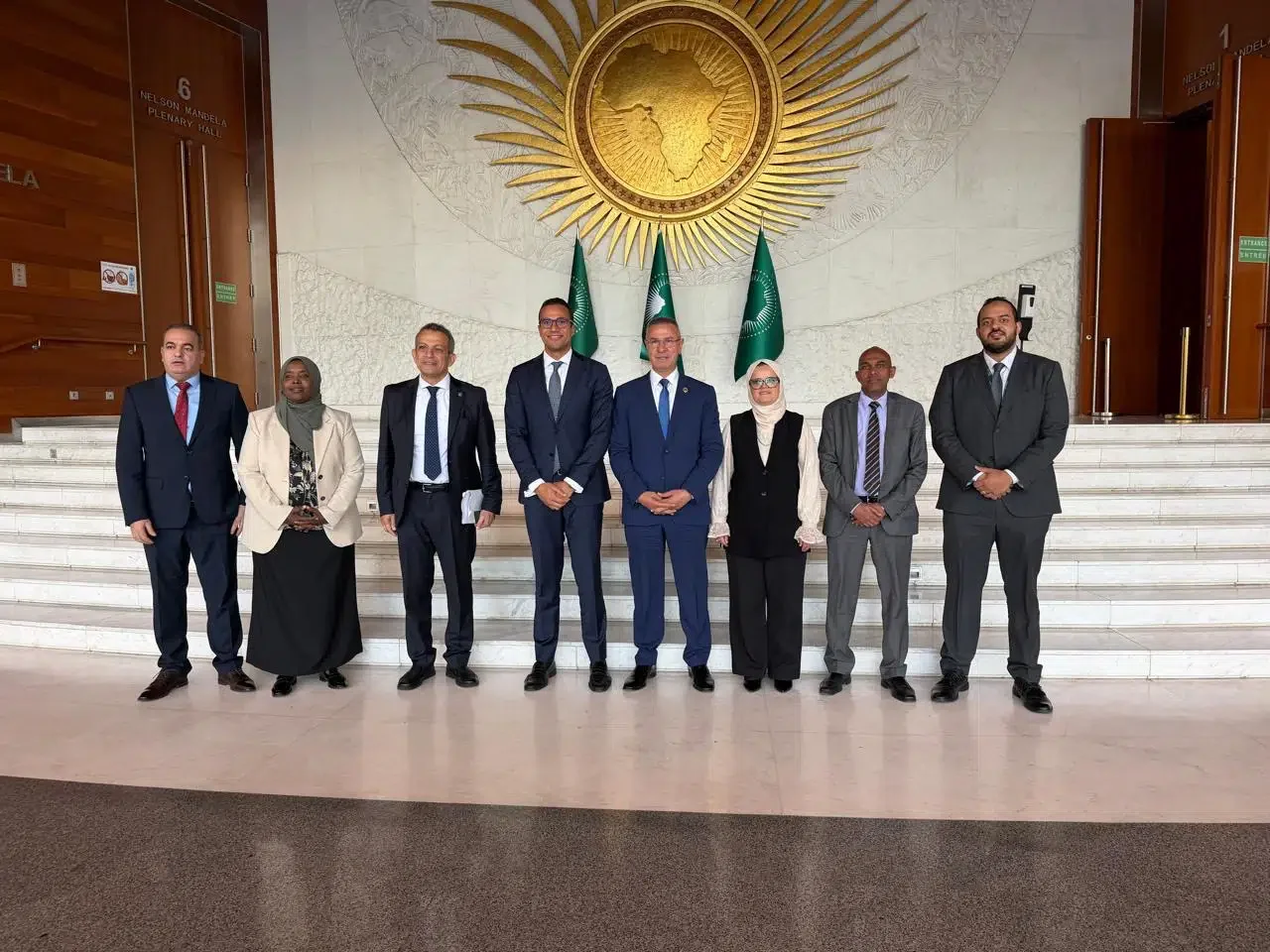
Cairo, November 5 (KUNA) – The Arab League, the Organization of Islamic Cooperation, and the African Union Commission affirmed that achieving a just, permanent, and comprehensive peace in the region remains contingent upon implementing the two-state solution, ending the Israeli occupation, and establishing an independent, sovereign State of Palestine on the June 4, 1967 borders, with East Jerusalem as its capital. This was stated in a joint statement issued today, Thursday, at the conclusion of a consultative meeting on developments in the occupied Palestinian territories, held at the African Union Commission headquarters in the Ethiopian capital, Addis Ababa. The meeting was attended by high-level delegations from the three organizations as part of the joint coordination mechanism to support the Palestinian cause.
The three organizations stressed in the statement, as reported by the Arab League, the necessity of the immediate and unconditional withdrawal of the Israeli occupation from the occupied Palestinian territories in accordance with the principles of international law, relevant United Nations resolutions, and the Arab Peace Initiative. They reaffirmed their commitment to calling for practical steps to implement the two-state solution and to continue working toward the implementation of relevant UN and international organization resolutions and the New York Declaration of 2025. They emphasized the need for member states to take necessary measures to ensure the exercise by the Palestinian people of their inalienable rights to independence, return, self-determination, and the establishment of their independent state.
They called for the implementation of the second phase of the ceasefire agreement in the Gaza Strip, leading to a permanent cessation of hostilities, the end of the Israeli blockade and occupation, and the opening of all crossings to facilitate the safe and unhindered entry of humanitarian aid, as well as the commencement of reconstruction of the Strip while ensuring geographic connectivity and territorial integrity.
The organizations rejected any Israeli attempts or plans to forcibly displace the Palestinian people from the Gaza Strip or the West Bank, considering such practices as war crimes, a blatant violation of international humanitarian law, and a serious threat to regional and international peace and security. They called on countries that have transferred their diplomatic missions to occupied Jerusalem or announced their intention to do so to reverse these illegal decisions that violate relevant Security Council resolutions, and to refrain from taking any positions or actions that would entrench the Israeli occupation or recognize illegal annexation measures or attempts to impose alleged sovereignty over the city.
The organizations affirmed the illegality of all Israeli settlements in the occupied Palestinian territories and the necessity of dismantling them, warning against the escalation of systematic crimes, acts of violence, and “terrorism” committed by extremist settlers under the protection of the Israeli occupation forces against the Palestinian people, their property, lands, and holy sites. They also called on the international community to work to stop these crimes and hold their perpetrators accountable in accordance with international criminal law, and to disarm the settlers in implementation of Security Council Resolution 904 (1994).
In this context, the organizations welcomed relevant decisions adopted by the UN Human Rights Council, including those concerning a database of commercial companies involved in illegal settlement activities in the occupied Palestinian territories, including East Jerusalem, calling on states to take necessary legal and economic measures in compliance with the Council’s resolutions. They reiterated that East Jerusalem is an inseparable part of the occupied Palestinian territories since 1967, expressing their rejection of illegal Israeli decisions and actions aimed at altering the city’s political, geographic, and demographic status.
The organizations called for preserving the historic and legal status of the Islamic and Christian holy sites in Jerusalem, particularly the Al-Aqsa Mosque compound. They condemned the crimes of enforced disappearance, extrajudicial executions, torture, ill-treatment, and other violations suffered by Palestinian prisoners in Israeli occupation prisons, calling on the occupation authorities to disclose their fate and guarantee the protection of their rights in accordance with international human rights law and international humanitarian law. They also urged the international community to take all necessary steps to ensure that Israeli occupation forces are held accountable before national and international courts, particularly the International Court of Justice, to end impunity, and to provide international protection for the Palestinian people. They affirmed that the Palestine Liberation Organization (PLO) is the legitimate and sole representative of the Palestinian people, emphasizing the need to provide all forms of support to the Government of the State of Palestine to enable it to fully exercise its responsibilities across all occupied Palestinian territories, including the Gaza Strip, which constitutes an inseparable part of the State of Palestine. The organizations demanded that the Israeli occupation authorities be compelled to immediately and fully release the Palestinian tax revenues unlawfully withheld by them. They welcomed the decision of the UNESCO World Heritage Committee to inscribe the archaeological site in Sebastia on the List of World Heritage in Danger, considering it to reflect the civilizational, historical, and heritage significance of Palestine and its people. They also called on UNESCO to continue fulfilling its responsibilities in protecting Palestinian culture and heritage, as well as Islamic and Christian holy sites. The organizations renewed their full support for the United Nations Relief and Works Agency for Palestine Refugees in the Near East (UNRWA), condemning the illegal policies and measures of the Israeli occupation aimed at undermining its mandate and its vital role in serving Palestinian refugees and protecting their rights. They commended the positions of countries that have recognized the State of Palestine and its decisions, and urged other countries to take similar steps and support Palestine’s admission as a full member of the United Nations, considering this a fundamental pillar for implementing the two-State solution and achieving peace, stability, and security in the region. The three organizations reaffirmed their commitment to continuing their work through the trilateral mechanism to support the Palestinian cause, striving to reach a just, permanent, and comprehensive resolution to the Palestinian issue. (End) MM / NA
