Seventh Global Media Summit Kicks Off in China with Kuwaiti Participation
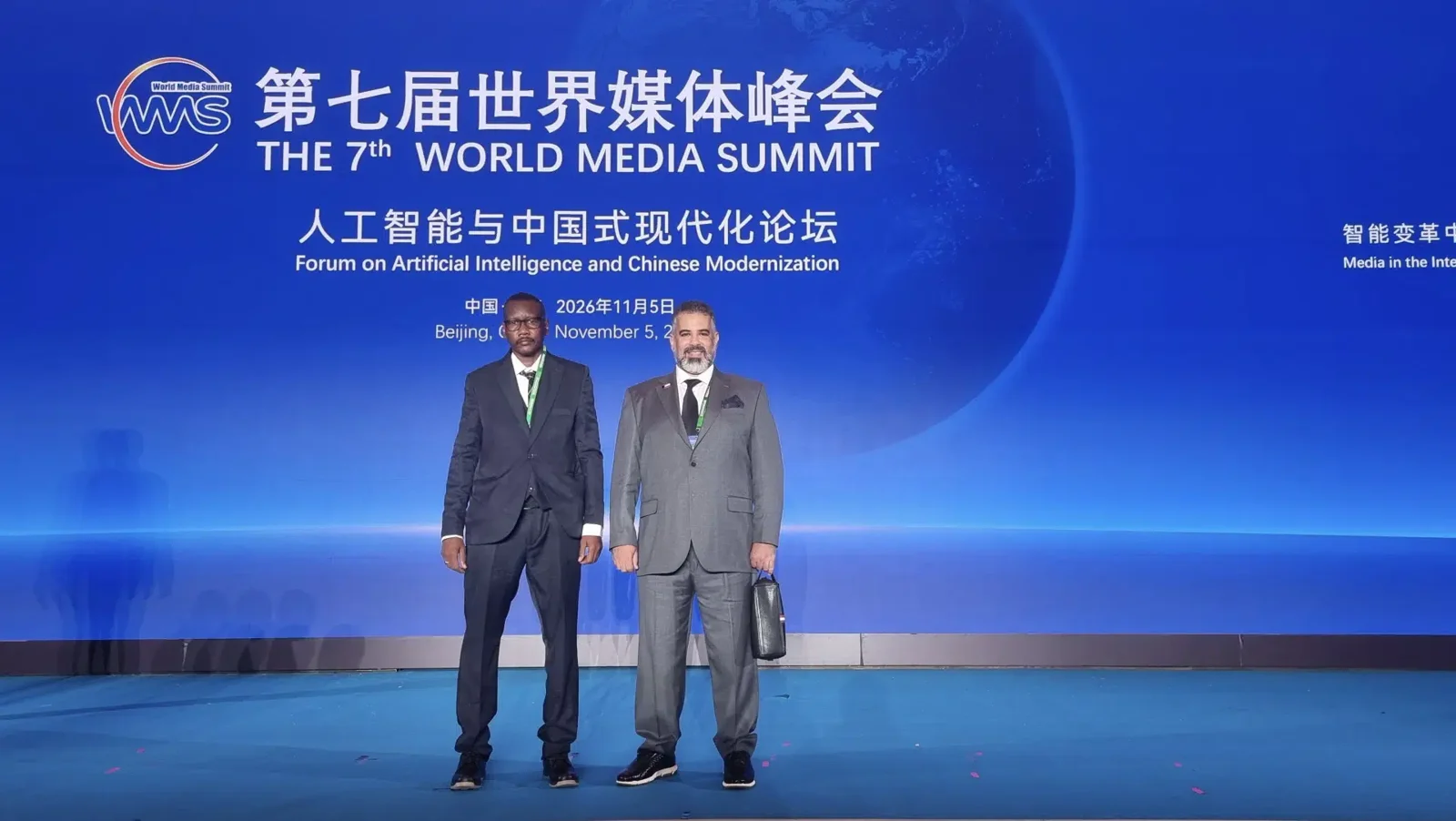
صورة: وكالة الأنباء الكويتية (كونا)
The seventh Global Media Summit has commenced in Beijing with the participation of 500 delegates from 112 countries, where KUNA emphasized the role of human elements and AI regulations.
Translated by Qiyas from كونا — Original source
Beijing -- The seventh Global Media Summit kicked off today, Thursday, in the Chinese capital, Beijing, under the theme “The Media Message and Collaborative Action in the Era of Smart Transformation,” with participation from the Kuwait News Agency (KUNA) alongside representatives of media institutions and international organizations from around the world.
The state-run Xinhua News Agency, the organizer of the summit, said that approximately 500 delegates representing nearly 330 major media institutions, research centers, government bodies, and international organizations from 112 countries and regions are taking part in the summit, which will run until next Monday.
Speaking to KUNA on the sidelines of his participation in the summit, Hamad Al-Fahad, Editor-in-Chief of KUNA’s Arabic service, said the conference serves as an international platform that brings together media decision-makers, offering them an opportunity to exchange views, align perspectives, and coordinate on the future of the media industry.
He added that KUNA’s participation in the summit represents a strategic step to enhance the presence of Kuwaiti media on the international stage and contribute to conveying the voice of Arab, Islamic, and Global South media to major global media gatherings shaping the future of the industry worldwide.
Al-Fahad emphasized that human resources remain indispensable in media work despite the rapid advancement of artificial intelligence technologies, stressing the need to establish controls to govern algorithms, strengthen international cooperation to keep these technologies under human oversight, and address associated challenges, particularly those related to credibility, deepfakes, misinformation, and the digital divide.
He noted that AI technologies are driving profound changes in the global media industry, necessitating intensified dialogue, deeper cooperation, and enhanced coordination among media institutions across different countries. This, he said, would reinforce shared responsibility in the era of smart transformation and help convey a true and fair image of development paths in developing countries to the world.
He also pointed to the launch by Xinhua of an AI-powered news anchor during the summit’s events today, viewing this step as a development in the application of AI technologies and their practical uses in the media sector. (End) S.L.Q / S.M.A
