Presidents of Yemen and Lebanon Discuss Strengthening Coordination to Face Common Challenges
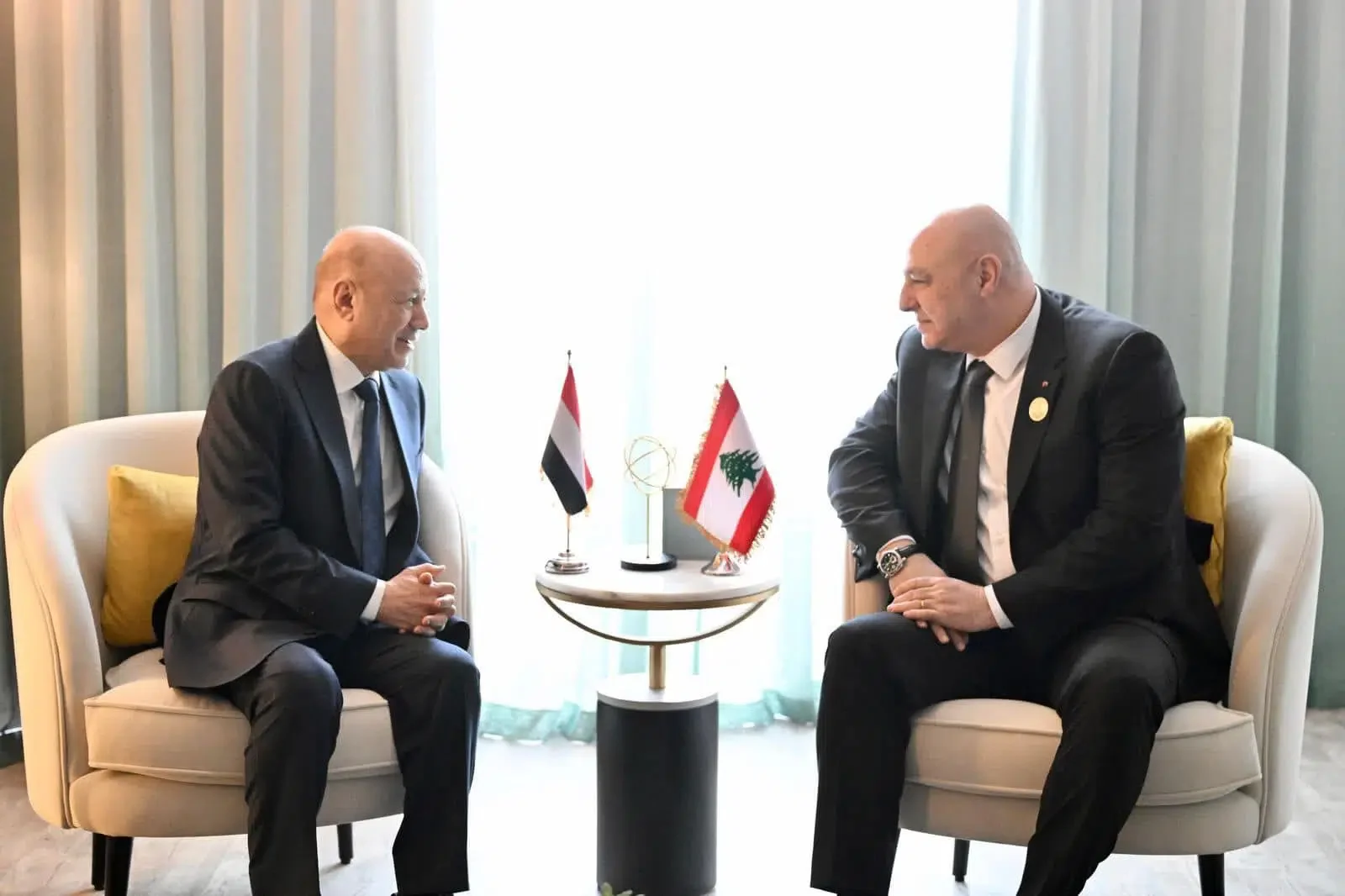
صورة: وكالة الأنباء الكويتية (كونا)
The presidents of Yemen and Lebanon discussed ways to enhance bilateral coordination and confront terrorist militias during a phone call.
Translated by Alqyas from KUNA — Original source
Aden, April 4 (KUNA) -- Rashad al-Alimi, Chairman of the Yemeni Presidential Leadership Council, and Lebanese President Joseph Aoun discussed bilateral relations and ways to enhance coordination between the two countries to address shared challenges on Wednesday. The Yemeni News Agency (Saba) reported that the discussion took place during a phone call received by al-Alimi from Aoun, who reaffirmed Lebanon’s steadfast position alongside the Yemeni people and its political leadership, and expressed support for Yemenis’ aspirations to restore state institutions and achieve security, stability, and peace.
The statement quoted al-Alimi expressing his appreciation for Lebanon’s fraternal stances, emphasizing Yemen’s solidarity with the Lebanese people and its support for President Aoun and his government’s efforts to extend the authority of the Lebanese state over its entire territory and to confine weapons to the hands of its legitimate institutions. He pointed to the shared destiny of the Yemeni and Lebanese peoples, given the suffering endured by both countries due to the arrogance of terrorist militias and their abduction of decisions on war and peace.
The two presidents affirmed their commitment to continuing consultations and coordinating positions in Arab and international forums, in support of the sovereignty of both countries, the security and stability of the region and its waterways.
The call came a day after Yemen’s Interior Minister, Major General Ibrahim Haidan, announced the presence of 21 foreign experts working with Houthi militias, including 14 from Iran’s Islamic Revolutionary Guard Corps and seven from Lebanese Hezbollah, distributed across several governorates under militia control. Haidan noted that these experts are carrying out specialized military tasks, including command, planning, and directing military operations by the militias within Yemen and across borders, as well as against maritime navigation. They function as a “complete general staff,” with roles extending beyond training to planning, overseeing military operations, and managing the militias’ capabilities. (End) S.N.S. / M.A.A.
