Launch of UNESCO's 5th Conference on Higher Education in Arab Countries in Doha
صورة: وكالة الأنباء الكويتية (كونا)
Qatari Minister of Education emphasizes the need to enhance cooperation to address education challenges in conflict zones.
Translated by Qiyas from كونا — Original source
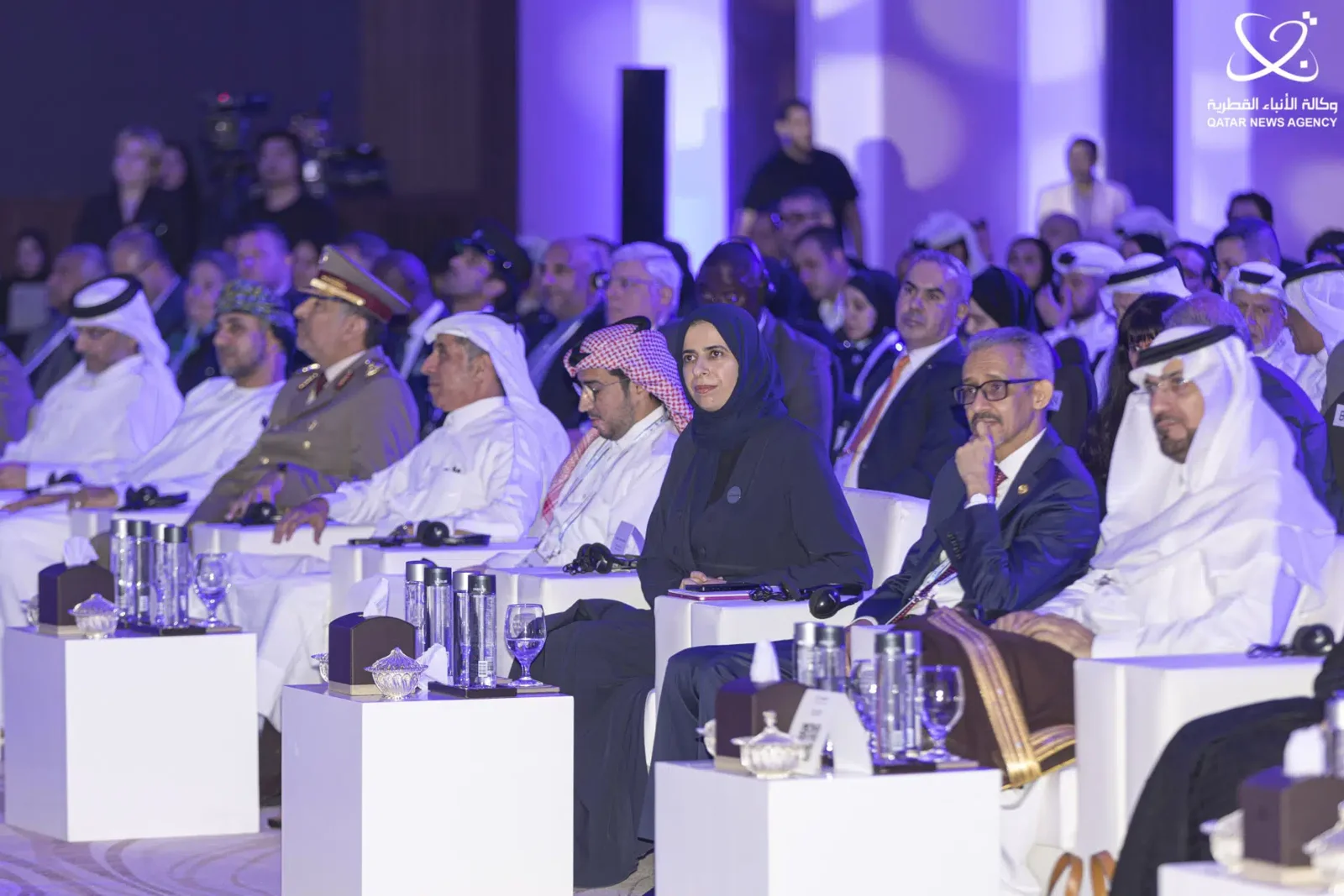
Doha -- The fifth UNESCO Conference on Higher Education in Arab States kicked off today, Monday, in Doha. The event is organized by Qatar’s Ministry of Education and Higher Education in collaboration with the United Nations Educational, Scientific and Cultural Organization (UNESCO) and the Qatar National Commission for Education, Culture and Science.
In her address, Qatar’s Minister of Education and Higher Education, Lulwa Al-Khater, emphasized that the future of higher education in the Arab region requires strengthening cooperation among universities and academic institutions and integrating efforts to confront current and future challenges. These challenges include ensuring the continuity of education in conflict zones, leveraging artificial intelligence technologies, and safeguarding the Arabic language within the knowledge production ecosystem.
She noted that Arab universities have made significant progress over the past two decades in expanding access to higher education, developing academic and research institutions, and advancing gender equality indicators. Women now account for 52 percent of undergraduate students and 57 percent of master’s students in the Arab region. Furthermore, their representation in academic staff has risen from 32 percent in 2000 to 44 percent currently.
However, Al-Khater stressed that this progress does not erase existing disparities among Arab universities, which continue to face challenges related to funding, retaining talent, and disruptions to the educational process in several countries, notably Palestine, Sudan, Yemen, and Syria.
She revealed that UNESCO estimates indicate that 95 percent of university campuses in the Gaza Strip have been destroyed or damaged, including 22 universities that were completely destroyed. Additionally, 124 universities and artistic institutions in Sudan have been destroyed or damaged.
Regarding technological transformations, Minister Al-Khater pointed out that artificial intelligence is directly impacting the core mission of universities, from knowledge production and evaluation to defining the skills required of graduates. She noted that a UNESCO survey found that only 19 percent of the higher education institutions included in the study have adopted official AI policies.
She also underscored the importance of enhancing the presence of the Arabic language in the development of modern technologies, praising the “Fanar” model developed by the Qatar Computing Research Institute at Hamad Bin Khalifa University. She called on academic institutions to adopt and contribute to the development of Arabic language models, making it a shared Arab project.
For his part, Dr. Nasser Al-Ansari, Executive Board Member of UNESCO and Qatar’s Permanent Representative to the organization, affirmed that higher education represents a long-term investment in human capital, social and economic development, and the future of coming generations. He stressed the importance of strengthening regional and international cooperation to address the growing challenges facing education systems in the Arab region and worldwide.
He highlighted the significant expansion of higher education globally, noting that total enrollment reached 269 million students, according to UNESCO’s first Global Education Monitoring Report for 2024. He called for addressing challenges related to quality and equal opportunities through sustainable investment and shared responsibility among member states.
In his turn, Salah Khalid, Director of the UNESCO Regional Bureau for Education in the Arab States, Doha Office, emphasized the leading role played by Qatar, represented by the Ministry of Education and Higher Education and the Qatar National Commission for Education, Culture and Science. He praised Qatar’s constructive partnership and steadfast support for education, innovation, and international cooperation.
The conference brings together a distinguished group of academics, experts, policymakers, and representatives of universities and regional and international organizations to discuss the most significant transformations and challenges facing the higher education sector, and to forecast its future in the post-2030 era, thereby enhancing the quality of education, scientific research, and innovation, and supporting the development of policies and academic practices. It is worth noting that UNESCO’s Fifth Higher Education Conference in Arab Countries has opened in the capital Doha under the theme “The New Landscape of Learning in Higher Education in Arab Countries,” and will continue over two days. (End) S S S / A B G
