Arab League Secretary-General: Addressing root causes of crises essential to enhance security and stability in the Arab region
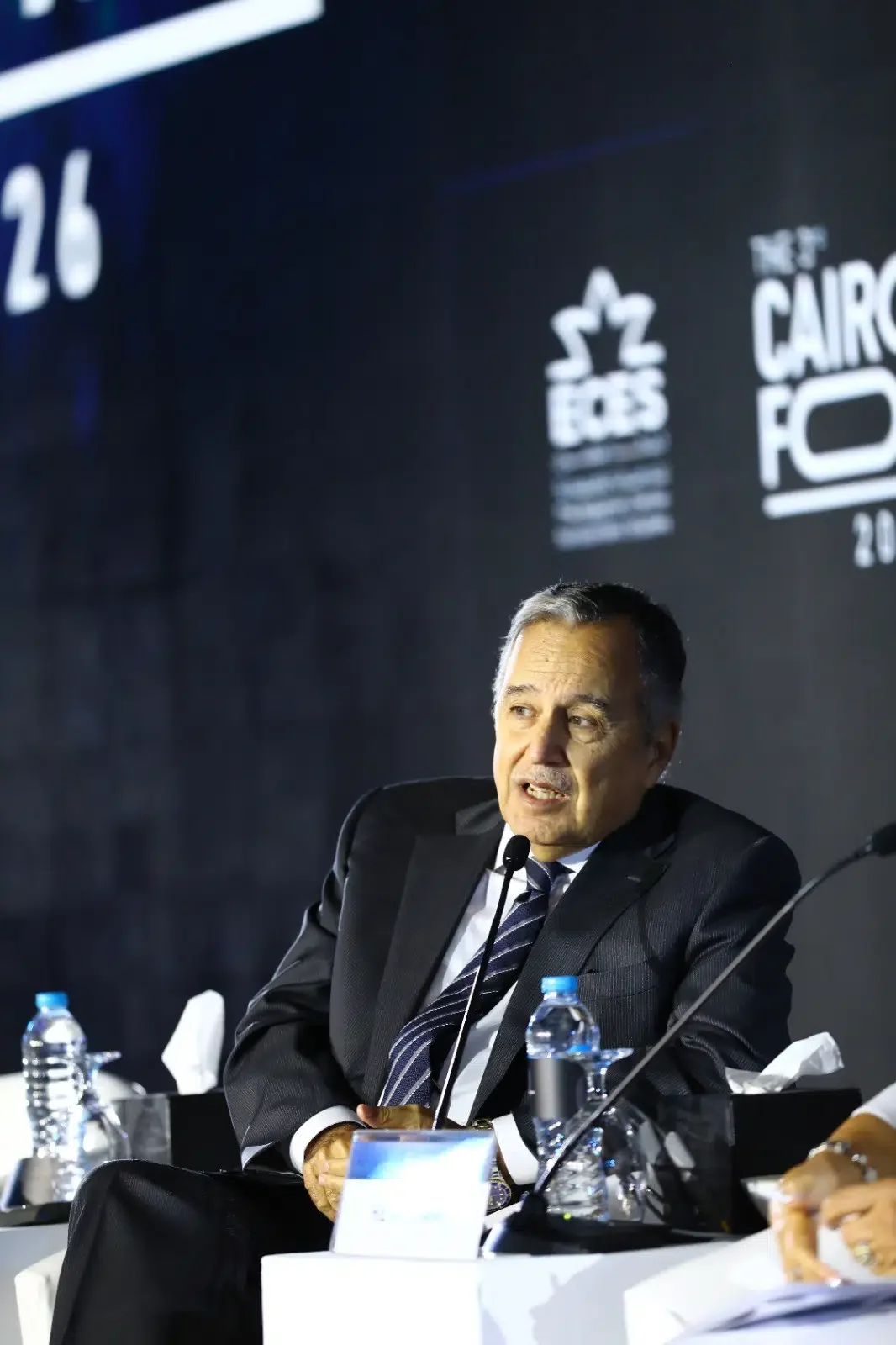
صورة: وكالة الأنباء الكويتية (كونا)
Nabil Fahmy stressed that enhancing security requires addressing the root causes of crises, not just their repercussions
Translated by Qiyas from كونا — Original source
Cairo -- Arab League Secretary-General Nabil Fahmy affirmed on Monday that enhancing security and stability in the Arab region requires shifting from crisis management and dealing with its repercussions to addressing their root causes, as well as adopting proactive approaches that prevent their recurrence.
Speaking at a session during the third edition of the Cairo Forum, Fahmy said that institutional weakness and the accumulation of political, economic, and social challenges are among the main factors contributing to the exacerbation and persistence of crises. He stressed the importance of strengthening the capacity of Arab states to confront these challenges by supporting their national institutions and preserving their unity, sovereignty, and territorial integrity.
He pointed to the key challenges threatening security and stability in the Arab region, noting that the Palestinian issue represents a true test of the credibility of the international system, given the continued double standards and violations of international law. He added that the international system cannot demand respect for its rules while remaining silent when those rules are violated in Palestine, arguing that the continued exemption of the Israeli occupation from accountability sends a dangerous message that power can replace international legitimacy.
In this context, he emphasized the necessity of ending the occupation and establishing an independent Palestinian state in accordance with international legal resolutions, in order to put an end to the longest occupation in recent decades.
Fahmy clarified that the concept of Arab security is not limited to military aspects but extends to political, economic, social, and developmental dimensions. He highlighted the crises and challenges facing Syria, Sudan, Lebanon, Yemen, and the Arab Gulf region, which require enhanced cooperation and integration among Arab states.
He stressed the importance of establishing balanced relations with neighboring countries based on respect for state sovereignty and non-interference in internal affairs, alongside openness to the world on the basis of equality and shared interests.
He considered that the integration of Arab positions and the enhancement of joint Arab action constitute a fundamental entry point for increasing the ability of Arab states to influence regional and international developments and to participate actively in shaping them, rather than merely dealing with their repercussions.
The Arab League Secretary-General expressed hope that the Cairo Forum would contribute to crystallizing practical visions and proposals that support decision-making and translate ideas into actionable steps.
The third edition of the Cairo Forum began yesterday under the theme “Exploring the Depths of Global Transformation,” with the participation of officials, experts, thinkers, and representatives from more than 30 countries and international institutions. The forum, organized by the Egyptian Center for Economic Studies, aims to highlight regional and international economic and geopolitical transformations, analyze the root causes of crises, and anticipate their repercussions. (End) M.M. / N.S. A.
