US Midterm Elections: Battle for Majority Intensifies as Trump Retains Leverage
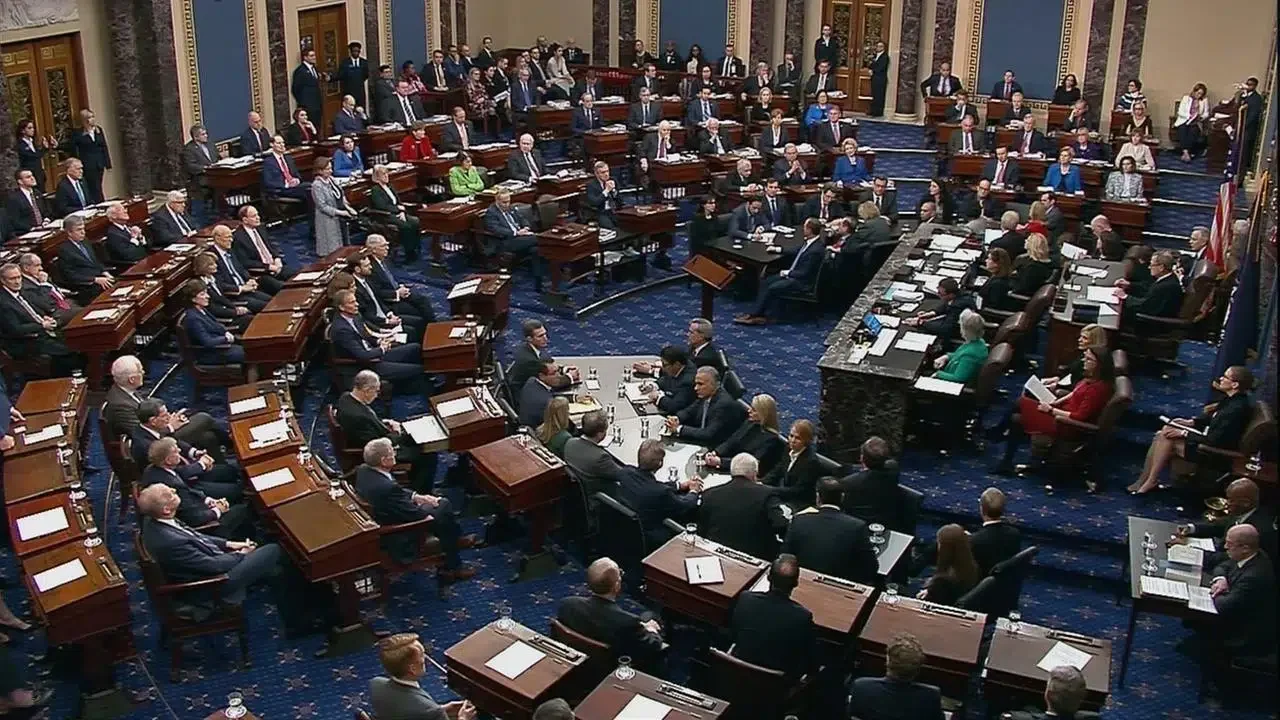
صورة: وكالة الأنباء الكويتية (كونا)
Struggle for Congressional majority escalates amid economic pressures and inflation affecting voters
Translated by Qiyas from كونا — Original source
By Ahmed Al-Muraid (Report) Washington -- As the clock ticks down to the U.S. midterm elections, a fierce battle is underway between the Republican and Democratic camps to control both chambers of Congress, in an effort to shape the second half of President Donald Trump’s term. Trump retains constitutional maneuvering room, including veto power and broad executive authority, regardless of the election outcome. Recent history highlights the significant political impact that midterm elections, held halfway through each four-year presidential term, can have.
Republicans currently hold a majority in the House of Representatives, controlling 218 seats compared to 214 for the Democrats, with two vacant seats and one independent who typically votes with Republicans. To secure a majority, Democrats need to gain four additional seats. The Senate currently comprises 53 Republicans and 45 Democrats, along with two independents, Bernie Sanders and Angus King, who caucuse with the Democrats, bringing the Democratic caucus total to 47 members.
The elections cover all 435 seats in the House of Representatives, whose members serve two-year terms, according to the official House website. They also include 35 of the 100 Senate seats, whose members serve six-year terms, with one-third of the chamber up for election every two years.
A major significance of the midterms lies in the fact that the winning party gains the ability to pass legislation, control spending, and exercise oversight over the administration, including placing some constraints on foreign military actions, while leaving room for legal maneuvering by the president. It is a longstanding political tradition in the United States for the president’s party to lose these elections, resulting in the opposition party controlling Congress or one of its chambers.
This scenario poses a concern for President Trump during the second half of his term, as a shift in control of Congress or one of its chambers to the opposition could to some extent constrain the administration’s agenda. However, even if Democrats gain control of one or both chambers of Congress, Trump will retain his veto power and broad executive authority, limiting their ability to pass major legislation.
Texas stands out as one of the key battlegrounds for the Senate (the upper chamber of Congress), where Republican Attorney General Ken Paxton faces Democrat Jim Talarico for the seat currently held by Republican John Cornyn. Texas is a historical Republican stronghold, and Republicans fear their absolute control may end as momentum continues to build for the Democratic candidate.
In Michigan, Democrat Elissa Slotkin and Republican Mike Rogers are competing for the seat that Democrat Gary Peters will vacate after announcing he will not seek re-election. A Fox News poll conducted between September 24 and 28 showed Slotkin leading with 50 percent of likely voters compared to 49 percent for Rogers.
The map of decisive races is not limited to these two states. The University of Virginia’s Center for Politics has identified five Senate races as toss-ups with no clear advantage for either party: Kansas, Iowa, Maine, Ohio, and Texas, all of which currently hold Republican-held seats. In the House of Representatives, the Center classified 214 seats as leaning toward or favoring Democrats, 201 as leaning toward or favoring Republicans, and 20 as competitive toss-ups.
On the national level, a survey by the Washington, D.C.-based Pew Research Center, conducted between September 28 and October 4, found that 44 percent of registered voters prefer a Democratic candidate for the House of Representatives, compared to 36 percent who prefer a Republican. Five percent chose another candidate, while 15 percent had not yet decided. Economic conditions top the list of issues influencing voters’ choices; Pew found that 84 percent of registered voters consider the economy extremely important to their voting decision. This priority comes amid pressure on U.S. household budgets, underscored by government data. The U.S. Bureau of Labor Statistics reported on October 14 that inflation rose by 3.7 percent year-over-year in September, up from 3.4 percent in August. The bureau noted that gasoline prices increased by 9.1 percent during September, accounting for more than half of the monthly increase in the overall index. On a year-over-year basis, the energy index rose by 20.4 percent, with gasoline up 34.2 percent, while food prices increased by 2.5 percent. In response to persistent inflation, the Federal Reserve raised interest rates by a quarter percentage point on September 16, bringing the target range to between 3.75 percent and 4 percent, emphasizing that the move aims to accelerate the return to 2 percent price stability.
Housing costs and mortgage financing are among the pressures affecting voters’ decisions. The mortgage finance entity Freddie Mac reported that the average mortgage interest rate reached 7.40 percent in the week ending October 15, compared to 6.27 percent a year earlier. Economic issues intersect with the repercussions of military operations against Iran. The U.S. Energy Information Administration stated in its October report that supply disruptions linked to the conflict, along with rising transportation and insurance costs, are adding pressure to oil and fuel prices, thereby linking the war’s effects to household expenses and consequently influencing voter sentiment.
If Democrats gain control of Congress or one of its chambers, Trump will face limited options, as the party opposes the war. Among the measures Democrats might use if they win to constrain the president’s choices are withholding war funding, imposing oversight on how funds allocated to the Department of Defense (Pentagon) are spent, and invoking the War Powers Resolution, which undermines the president’s ability to continue military operations. However, this law contains a loophole that has long provided refuge for U.S. presidents: they can temporarily halt military operations when the 60-day period granted by Congress expires, then resume combat under the label of a new military operation, allowing the president some legal maneuvering room.
Immigration, healthcare, tax reforms, and other domestic and foreign files—such as Middle East policy, energy, and crime—remain prominent among American voters. Alongside the congressional elections, voters are heading to the polls to choose governors in 36 states and participate in other local elections. Ballots also include judicial positions and referendum issues that vary from state to state. As the general election on November 3 approaches, the ability to convert support and attention into actual turnout remains a decisive factor, particularly in races where candidates are separated by narrow margins. The results of the midterm elections may provide indicators for presidential hopefuls on how to craft their messages for the next presidential campaign, scheduled for 2028.
(END) KUNA / T.M.A
