GCC Secretary General: Sustainable Regional Security Requires Respecting State Sovereignty and Enhancing Joint Defense
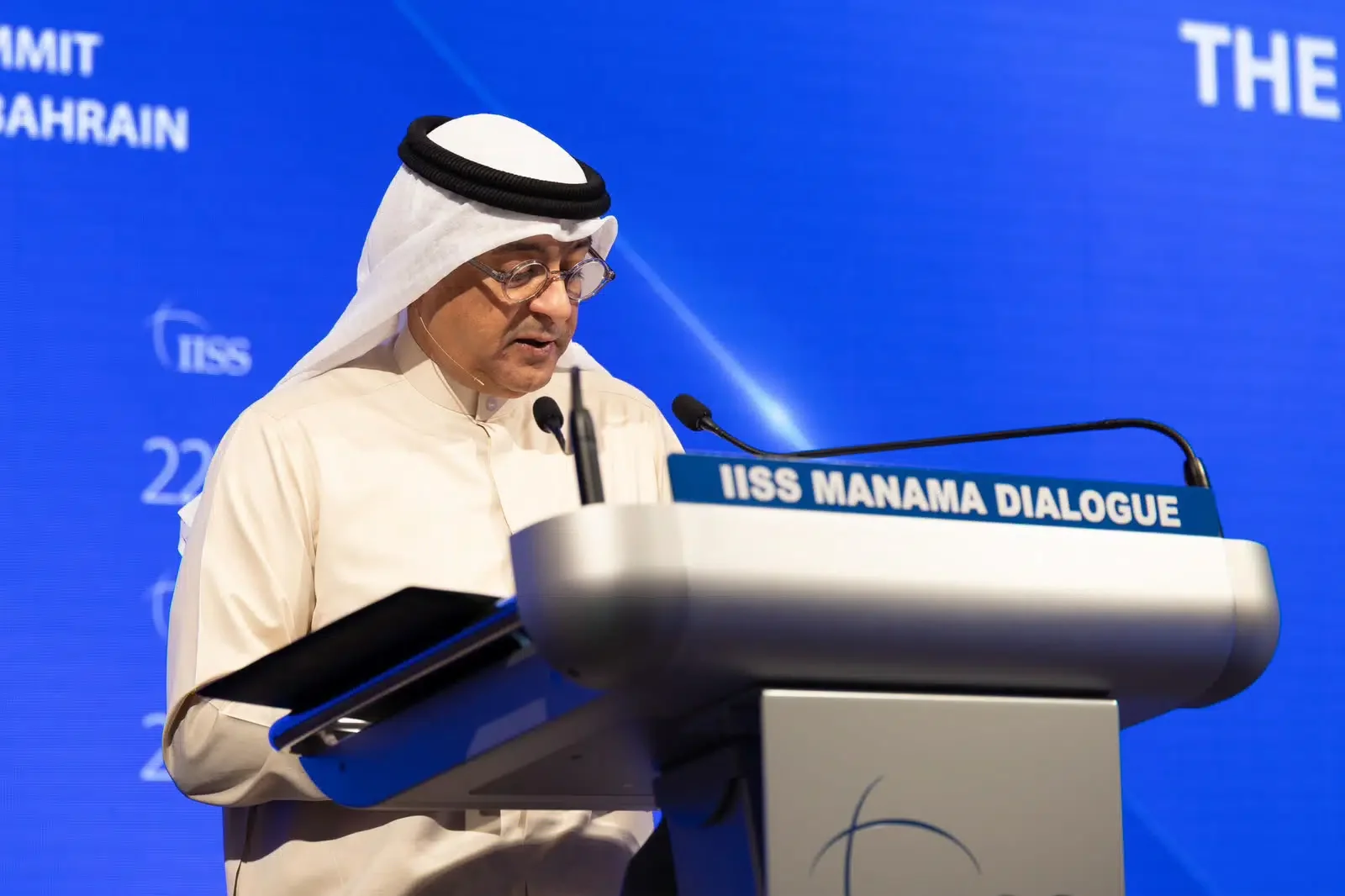
صورة: وكالة الأنباء الكويتية (كونا)
GCC Secretary General Jassim Al-Bedaiwi emphasized that establishing sustainable regional security requires adherence to international law, respect for state sovereignty, and enhancement of joint defense.
Translated by Qiyas from كونا — Original source
Riyadh, October 31 (KUNA) -- Secretary-General of the Gulf Cooperation Council (GCC) Jassem Al-Budaiwi stressed on Saturday that establishing a stable and sustainable regional security system requires strict adherence to international law, respect for state sovereignty, the enhancement of joint defense, the prioritization of diplomatic channels, the safeguarding of the security of waterways and energy supplies, and the consolidation of development and international partnerships.
This statement came during Al-Budaiwi’s participation in the third plenary session, titled “Pillars of Regional Security,” at the 22nd Gulf Regional Security Summit, known as “Manama Dialogue 2026,” in the Bahraini capital of Manama, according to a statement from the GCC General Secretariat.
Al-Budaiwi emphasized that the security of GCC member states is indivisible and that the stability of the Arabian Gulf region constitutes a fundamental pillar of international security and peace. He expressed gratitude and appreciation to Bahrain for hosting the dialogue for the 22nd consecutive year, and to the International Institute for Strategic Studies for organizing it, underscoring the importance of this platform amid the exceptional developments and unprecedented challenges facing the region.
He clarified that developments since February 28 have placed the foundations of regional security under a severe test, following Iranian attacks targeting GCC states and their civilian and vital facilities, which resulted in casualties. He noted that GCC states were not parties to the war nor did they seek it, but instead made intensive diplomatic efforts to mediate, contain escalation, and exercised maximum restraint.
He pointed out that the repercussions of these attacks extended to the global economy due to disruptions in navigation through the Strait of Hormuz, through which nearly a quarter of global seaborne oil trade passed before the crisis. This had a direct impact on energy prices, shipping and insurance costs, and international supply chains.
Al-Budaiwi strongly condemned the repeated terrorist attacks launched by Houthi militias against Saudi Arabia since July last year, which extended to the cities of Makkah Al-Mukarramah and Al-Madinah Al-Munawwarah. He affirmed that these attacks constitute a serious violation of the sanctity of Islamic holy sites, a provocation of Muslim sentiments, and a dangerous escalation that cannot be tolerated or overlooked.
He outlined that building a robust regional security framework relies on five main pillars. The first is respect for international law, state sovereignty, commitment to good neighborliness, non-interference in internal affairs, respect for territorial integrity, refraining from the use or threat of force, and the peaceful settlement of disputes.
In this context, he referred to United Nations Security Council Resolution 2817, issued on March 11, 2026, which was submitted by Bahrain on behalf of the GCC states and Jordan, and co-sponsored by 136 countries, marking the broadest support for a Security Council resolution in its history. He expressed hope that this endorsement would be translated into concrete commitment to implementing the resolution and its requirements.
He affirmed that collective defense and GCC military integration represent the second pillar, praising the efficiency and readiness of the armed forces of GCC states to counter attacks. He also highlighted directives from GCC leaders during their 19th consultative meeting in Jeddah last April to intensify military integration and accelerate the completion of the ballistic missile early warning system, thereby enhancing joint defensive capabilities and the unity of GCC security and destiny.
He explained that the third pillar is diplomacy, which constitutes a strategic asset for GCC states, stemming from their approach advocating dialogue, negotiation, and the peaceful settlement of differences.
He added that the GCC states’ stature, their partnerships with the United States and Europe, their relations with China, India, and other Asian countries, and their communication channels with neighboring states, including Iran, enable them to contribute to bridging differences and reducing tensions. He emphasized that the success of these efforts hinges on mutual will and a responsible response from all parties.
Regarding the fourth pillar, he affirmed that the security of maritime navigation and energy supplies is a shared international responsibility, and that freedom of navigation and the right of transit passage are guaranteed under international law and the 1982 United Nations Convention on the Law of the Sea. He stressed that disrupting international navigation and closing the Straits of Hormuz or the Bab al-Mandab constitute a blatant violation of these principles and a direct threat to global economic and commercial interests. He called on the international community to adopt a firm stance that puts an end to attacks, ensures accountability for those responsible, and restores normal navigation as it was before February 28.
He pointed out that GCC states, guided by their leaders, are working to enhance the resilience of energy supplies through oil and gas pipeline projects, studying the establishment of strategic reserve zones, and accelerating electricity, water, and Gulf railway interconnection projects.
He clarified that the fifth pillar consists of building stability through development and international partnerships, noting that the GCC states have built a solid economic and financial base valued at approximately $4.2 trillion, which has strengthened their capacity to confront crises, absorb shocks, and support regional and international stability.
He affirmed that sustainable security requires addressing the root causes of crises and enhancing development. He noted the GCC states’ continued support for the legitimate Yemeni government and their pursuit of a comprehensive political solution to the crisis in accordance with agreed frameworks, as well as their support for the security, stability, and sovereignty of Iraq, Syria, and Lebanon.
He reiterated that lasting peace is linked to a just and comprehensive solution to the Palestinian issue based on the two-state solution, which guarantees the legitimate rights of the Palestinian people. He noted that regional security also encompasses water and food security and addressing climate challenges.
In conclusion, he affirmed that regional security is based on international rules respected by all parties and a security system whose foundations and priorities are shaped by the participation of regional states. He emphasized the GCC states’ readiness to play a pivotal role in building such a system.
He recalled the GCC’s vision for regional security, launched in 2024, as an open call for joint action toward a secure and prosperous future, stressing that this call remains open to anyone who translates their commitment to security and peace into responsible actions and positions. (End) K.N.S. / M.M.J.
