Egypt: Sustainability becomes a strategic necessity for the future of international aviation
صورة: وكالة الأنباء الكويتية (كونا)
Egypt's Minister of Civil Aviation emphasizes the strategic necessity of sustainability for the future of international aviation.
Translated by Alqyas from KUNA — Original source
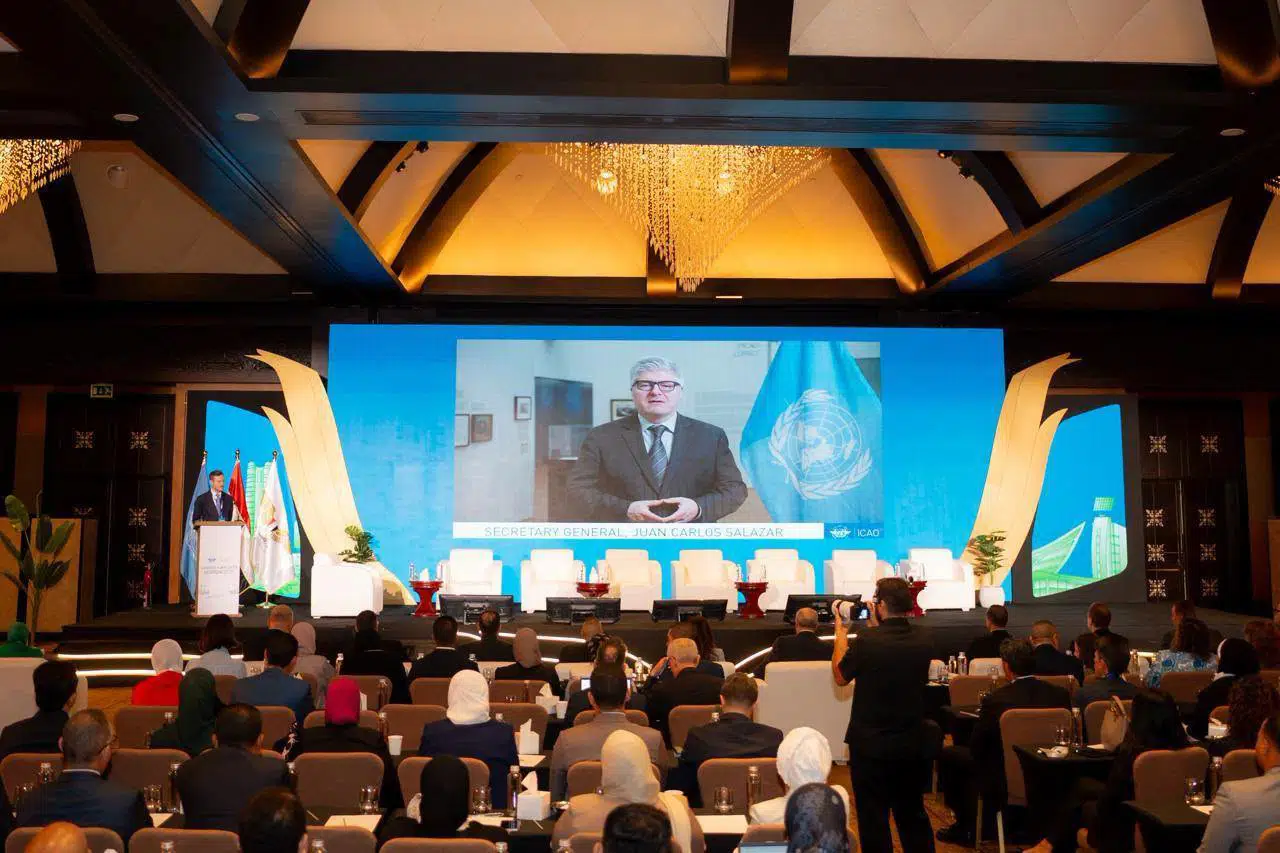
Cairo, October 29 (KUNA) -- Egypt affirmed on Thursday that sustainability has become a strategic imperative for the future of international aviation, amid the continuous growth of air transport and the challenges it entails, which require enhancing operational efficiency, reducing carbon emissions, and strengthening airports’ capacity to adapt to climate change. This was stated in a speech by Egyptian Minister of Civil Aviation Dr. Samah Al-Hafni at the opening of the International Civil Aviation Organization (ICAO) Green Airports 2026 seminar, hosted in Cairo for two days, with high-level participation from leaders of international and regional organizations, aviation industry experts, and airport representatives from various countries around the world.
Al-Hafni noted that the green transition represents one of the main pillars for developing the civil aviation sector and enhancing its ability to keep pace with global changes. He clarified that the core challenge lies in balancing the continued growth of the aviation industry and its vital role in connecting peoples and economies with mitigating its environmental impacts through infrastructure development, modernizing operational methods, and improving energy and resource efficiency. He added that airports play a pivotal role in translating environmental goals into practical projects and measures that yield tangible and measurable results.
Al-Hafni stressed that achieving sustainability targets requires moving from goal-setting to implementing practical solutions based on reliable data and measurable indicators, alongside strengthening international cooperation, sharing expertise and technology, building capacities, and developing financing mechanisms that enable the broader application of sustainable solutions, particularly in developing countries, thereby supporting the construction of a more efficient, sustainable, and resilient aviation sector capable of facing climate challenges.
In a video-conferenced address, ICAO Secretary-General Juan Carlos Salazar emphasized the importance of intensifying international efforts to build green and resilient airports by expanding the use of clean energy, protecting critical infrastructure, and developing operational processes in line with climate change. Salazar stressed the importance of enhancing cooperation among governments, airports, international organizations, and investors, as well as sharing expertise that supports climate action in the aviation sector. He pointed out that these efforts align with ICAO’s 2050 Strategic Vision, which aims to make air transport accessible to all, achieve zero fatalities, and reach net-zero carbon emissions.
For his part, ICAO Regional Director for the Middle East, Mohamed Rahma, stated in his speech that aviation sustainability extends beyond reducing carbon emissions to enhancing airports’ capacity to adapt to climate change and ensuring operational continuity in the face of extreme weather events, thereby maintaining service efficiency and infrastructure safety. He explained that rising temperatures, water scarcity, and changing weather patterns in the region necessitate integrating climate resilience considerations into airport planning, design, and development. He emphasized that infrastructure modernization projects present an opportunity to apply sustainability standards from the earliest stages, thereby improving resource efficiency and reducing future risks.
Rahma highlighted the importance of coordination among civil aviation authorities, airports, airlines, air navigation service providers, and energy and financing stakeholders, along with the exchange of expertise and successful experiences, to help countries translate sustainability goals into practical solutions tailored to their circumstances and capabilities, and to strengthen regional cooperation in building more efficient and climate-resilient airports.
For his part, Justin Erbacci, Director General of the Airports Council International, said in his speech that airports serve as key engines of economic development due to their role in boosting trade and tourism, creating jobs, and connecting communities and markets. This makes their sustainable development essential to preserving their efficiency and capacity to continue fulfilling these roles. Erbacci added that the green transition requires improving energy efficiency, expanding the use of renewable energy sources, electrifying vehicles and ground equipment, enhancing water and waste management, reducing noise, and protecting biodiversity. He also emphasized that strengthening airports’ resilience to climate change demands integrated efforts among governments, airports, financing institutions, energy suppliers, and providers of technology, expertise, and necessary resources, particularly for African and developing countries.
The symposium discusses ways to develop airport infrastructure, enhance operational and energy system efficiency, and leverage digital solutions and artificial intelligence to reduce emissions, expand clean energy and sustainable aviation fuel, improve resource and waste management, and mitigate noise. It also covers integrating climate resilience standards into airport planning and design, exploring innovative financing mechanisms, and strengthening international cooperation to implement environmental projects. (End) A.S.M./M.N.F
