Launch of 'Muscat Maritime Resilience Forum 2026' to Address Challenges Facing the Maritime Sector
صورة: وكالة الأنباء الكويتية (كونا)
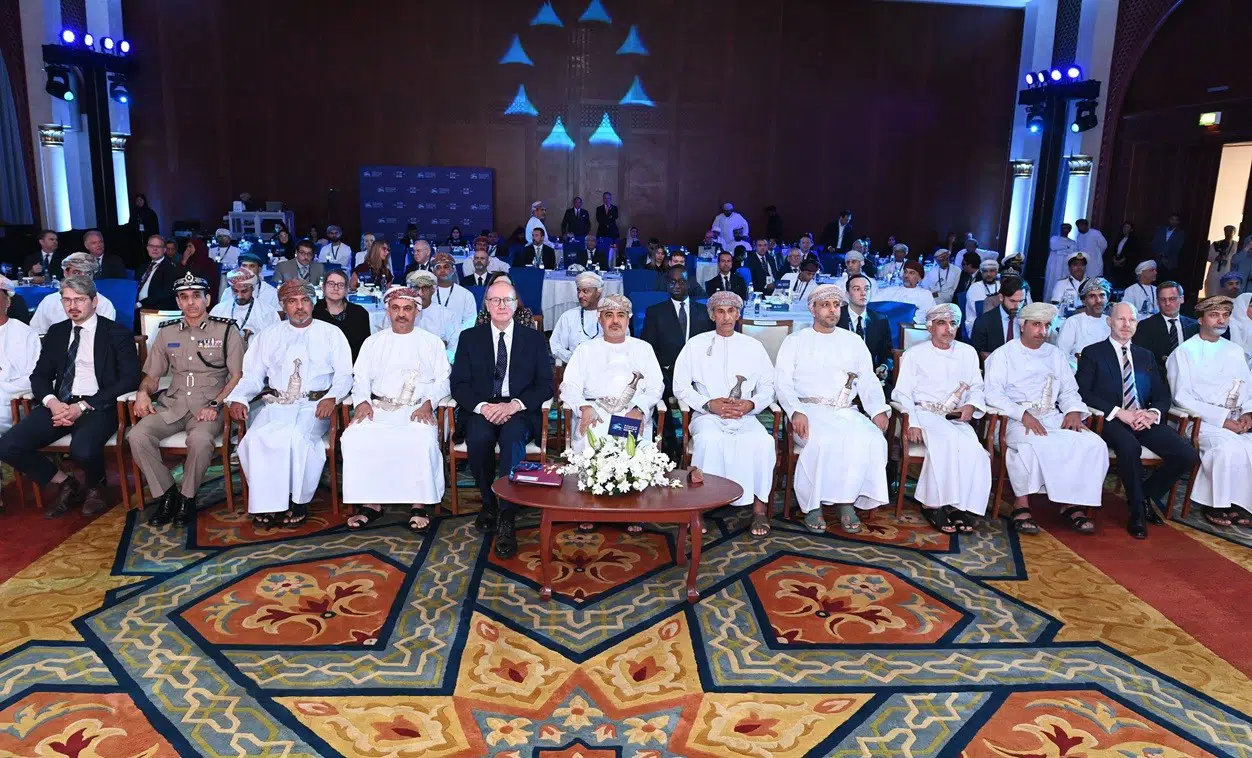
The 2026 Muscat Maritime Resilience Forum has commenced with the participation of experts to discuss challenges facing the maritime sector.
Translated by Alqyas from KUNA — Original source
Muscat -- The 2026 Muscat Maritime Resilience Forum kicked off today, Tuesday, to examine the challenges facing the maritime sector and explore opportunities to enhance cooperation between maritime and logistics systems, thereby developing the resilience and readiness of maritime networks, supporting the continuity of supply chains, and facilitating the flow of global trade amid rapid changes.
Abdulrahman Al-Hatmi, CEO of the Omani national Asyad Group, said in a speech during the opening that maritime networks play a pivotal role in sustaining global trade, as more than 80 percent of global merchandise trade by volume is transported by sea. He added that the changes witnessed in maritime trade and the accompanying challenges affect transportation movements and supply chains, highlighting the importance of proactive preparedness through sustainable infrastructure investment, enhancing operational readiness, strengthening commercial partnerships, and exchanging knowledge and field expertise.
Al-Hatmi pointed to an operational study by the group showing a 137 percent change in the total cost of a maritime voyage between India and the Al Sharqiyah Governorate of Musandam (Sohar) in the Sultanate of Oman, reflecting the scale of changes that could impact maritime trade economics. He emphasized the importance of solidifying resilience among companies, markets, and institutions, and integrating efforts to confront challenges and support the continuity of trade flows.
For his part, Khamis Al-Shamaikhi, Undersecretary of the Ministry of Transport, Communications and Information Technology for Omani Transport, said in a similar speech that the forum aims to enhance the Sultanate of Oman’s role in maritime transport and maritime services. He noted that the participation of a group of decision-makers and stakeholders in the maritime transport sector “underscores the importance of Oman’s role as a country bordering the most important and largest maritime trade routes.”
In turn, Hamed Al-Maaini, Ambassador and Head of the Diplomatic Academy at the Omani Ministry of Foreign Affairs, said the forum “represents a qualitative leap in making Omani diplomacy a catalyst for international trade, cooperation, and building partnerships that can benefit the economies of the Sultanate of Oman and the region.” In this regard, he stressed the need to leverage current risk management practices to create “opportunities for the Sultanate of Oman and the region, and to make Muscat a host for these maritime gatherings,” noting that the Sultanate is an “important strategic partner” in the region for maritime trade and supply chains.
For his part, Dr. Ibrahim Al-Nathiri, CEO of the Omani maritime transport company Asyad, emphasized in his speech that the Sultanate of Oman “enjoys confidence in the maritime sector,” adding that the participation of many experts from within and outside the Sultanate at the forum demonstrates decision-makers’ interest in reaching a “common mechanism” that ensures the resilient continuity of the maritime transport sector, which will positively reflect on consumers.
The Asyad Group, in partnership with the Omani Ministry of Foreign Affairs, the Ministry of Transport, Communications and Information Technology, and the Oman Investment Authority, is organizing the 2026 Muscat Maritime Resilience Forum, which will run for two days. The event is part of efforts to enhance the Sultanate of Oman’s position as a hub for international dialogue on the future of global trade and maritime network resilience.
The forum, which features international participation from experts and specialists in the maritime and logistics sectors, includes a number of working sessions to discuss challenges facing the maritime sector, practical experiences, and operational and commercial insights, as well as to identify practical priorities to enhance the readiness and connectivity of maritime networks and support the continuity of supply chains and trade across markets.
The discussions are expected to contribute to the development of the “Muscat Framework for Maritime Resilience,” which the ASYAD Group aims to establish as the first comprehensive global framework based on the expertise of participating leaders and practitioners, with the goal of setting priorities that ensure sector resilience, supply chain continuity, and deeper commercial cooperation. The outcomes of the dialogue are also anticipated to help prepare a joint reference document that responds to the operational and commercial changes affecting global maritime trade. Through hosting the forum, the Sultanate of Oman is leveraging its economic diplomacy and its international relationships built on trust, dialogue, and cooperation, in synergy with its strategic location overlooking major maritime trade routes, as well as its integrated ports, infrastructure, and logistics services that connect regional and international markets. (End) M.G.B. / N.A.A.
