Social Affairs Minister: Ease of access is an inherent right to achieve independence for persons with disabilities
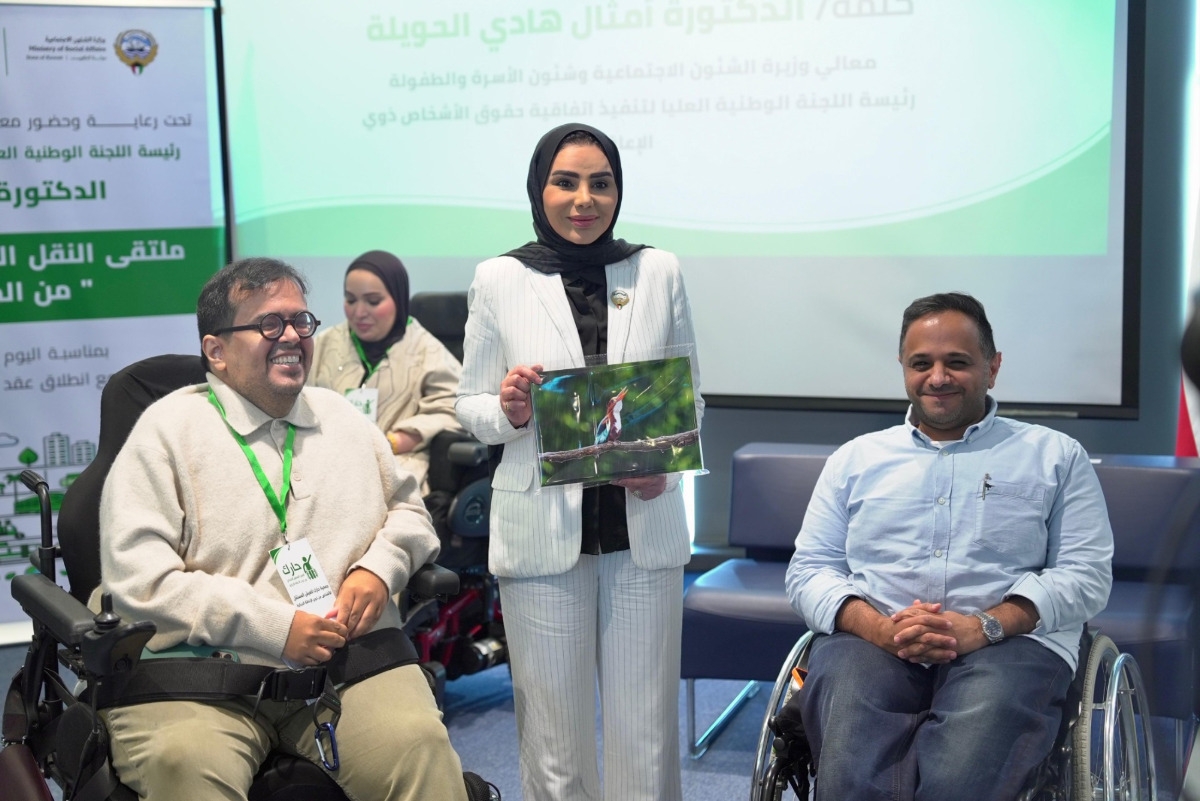
Emphasis on the right to sustainable transport access for persons with disabilities in Kuwait.
Translated by Alqyas from Al-Jarida — Original source
This was stated in the opening address delivered by Dr. Al-Huwailat at the “Sustainable Transport and Ease of Access – From Home to Destination” forum, held at the United Nations House in Kuwait. The event was organized by the Harek Association for Independent Living for Persons with Motor Disabilities and the United Nations Development Programme (UNDP).
She noted that sustainable transport encompasses ensuring everyone’s right to safe, affordable, and independent mobility, alongside developing transport systems, reducing emissions, and removing barriers that hinder daily life.
She added that the forum coincides with World Sustainable Transport Day and marks the first year of the UN Decade of Action for Road Safety, underscoring the importance of international cooperation in developing more efficient and inclusive transport systems aligned with the “New Kuwait 2035” vision and the Sustainable Development Goals, particularly Goal 11 on sustainable cities and communities.
She clarified that Law No. 8 of 2010 concerning the rights of persons with disabilities, and Kuwait’s accession to the International Convention on the Rights of Persons with Disabilities, form an important legislative foundation for enhancing these rights, including the provision of accessible transport and public facilities and facilitating their use.
She emphasized the importance of adhering to the implementation of the “Kuwait Code for Accessibility through Universal Design,” which was issued by a Cabinet decision mandating its widespread application. She stressed the necessity of applying it to ensure accessibility requirements are considered in the planning, implementation, and monitoring of projects and public facilities, in coordination with relevant authorities.
She affirmed the importance of developing the public transport system and expanding environmentally friendly transport options, while ensuring they are accessible to persons with disabilities and that services and information facilitating their use are provided.
She mentioned that the National High Committee for the Implementation of the Convention on the Rights of Persons with Disabilities, which she chairs, works to enhance coordination among relevant authorities and follow up on national efforts to remove barriers and translate international commitments into practical measures that support the independence and social participation of persons with disabilities.
For her part, Emma Morley, UNDP Resident Representative in Kuwait, emphasized in her speech that providing accessible transport for persons with disabilities enhances their opportunities in education, employment, and community participation. She noted that ensuring accessibility is both a right and an investment in human capital.
Morley stated that any obstacle at any stage of travel can prevent a person from reaching their workplace, university, or accessing services, stressing the importance of ensuring accessibility throughout the entire journey, from home to destination.
She explained that human development is based on expanding the options available to individuals, enabling them to learn, earn a living, make independent decisions, and participate fully in society, highlighting that accessible transport is a fundamental element in making these options available.
She pointed out that the UN Convention on the Rights of Persons with Disabilities, to which Kuwait acceded in 2013, affirms their rights to accessibility, personal mobility, and equal employment opportunities. She noted that Kuwait’s national report submitted under the Convention outlines measures to enhance accessibility in residential buildings, workplaces, schools, health facilities, and transport systems.
She added that removing mobility barriers provides persons with disabilities with broader opportunities for employment, entrepreneurship, and contributing to the development of new economic sectors, thereby supporting the realization of the “Kuwait 2035” vision, diversifying the economy, and leveraging the skills and capabilities of all members of society.
She stated that the launch of the UN Decade of Safe and Sustainable Mobility for All presents an opportunity to develop transport systems that are accessible to all, while reducing emissions and improving road safety. She emphasized the importance of collaboration among government institutions, municipalities, and transport service providers, as well as the inclusion of persons with disabilities and the leveraging of their daily experiences to guide decision-making.
She noted that the program’s regional efforts have included supporting the introduction of wheelchair-accessible electric buses in Lebanon and developing technologies to enhance accessibility in Egypt, reaffirming continued support for Kuwait’s efforts to build a more inclusive and sustainable society.
She expressed hope that the discussions at the forum would contribute to identifying practical solutions to remove barriers to daily mobility, stressing that the success of transport systems is measured by their ability to provide opportunities for all, as well as their efficiency in connecting places.
