US-Qatari emphasis on Hormuz security as Tehran threatens to increase obstruction of passage
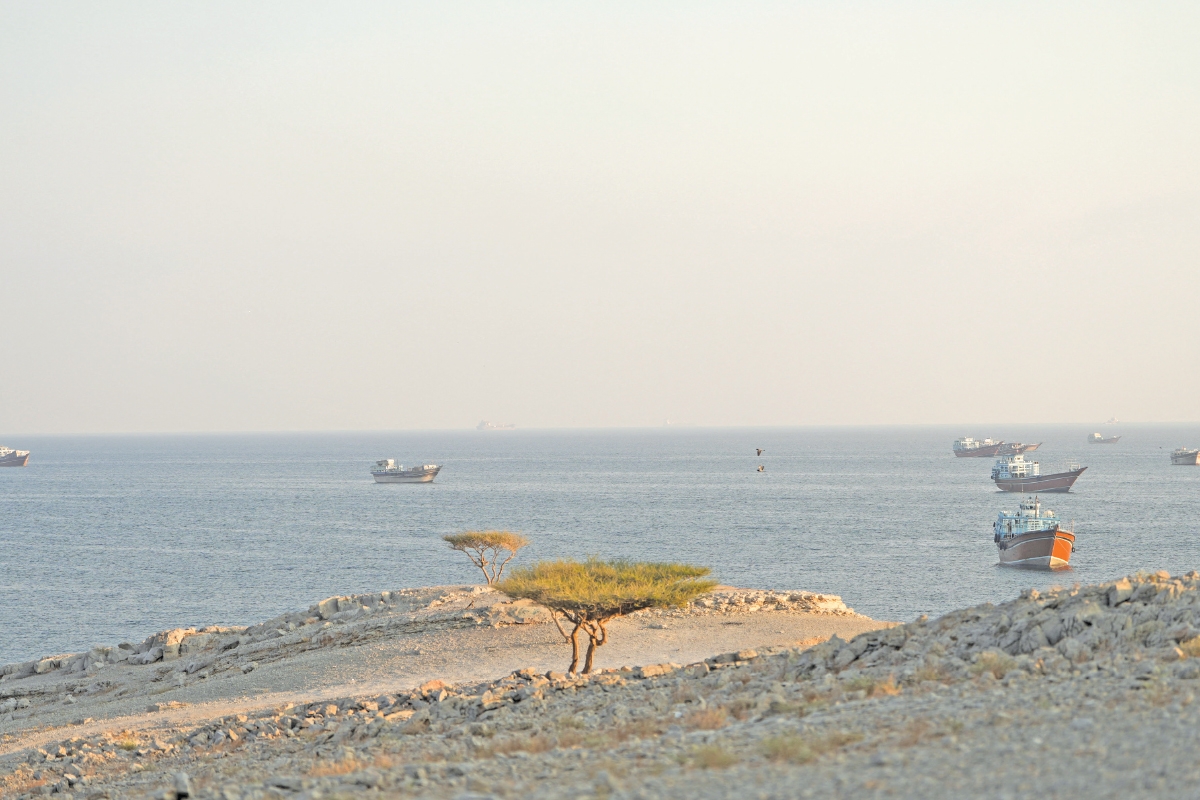
Sharp tension in the Strait of Hormuz between Iran and the US, with continued Qatari mediation and the implementation of new economic sanctions.
Translated by Alqyas from Al-Jarida — Original source
The day after US President Donald Trump warned that he might resume military operations against Tehran after the start of the new year if no agreement is reached, and amid escalating Iranian attacks targeting ships in the Strait of Hormuz, the United States, in a joint statement with Qatar, reaffirmed its commitment to the security of Doha and freedom of navigation in the strait.
A joint statement issued today, following the eighth Qatar-US Strategic Dialogue held in Washington between Qatari Prime Minister and Foreign Minister Mohammed bin Abdulrahman Al Thani and US Secretary of State Marco Rubio, reiterated the US commitment to Doha’s security. It emphasized the importance of the defense partnership between the two countries in enhancing joint capabilities and protecting mutual interests.
Rubio, after talks covering a number of issues of common interest, expressed his country’s appreciation for Qatar’s role in leading mediation efforts between Washington and Tehran, currently with Pakistani assistance. He praised Qatar’s leadership as a global mediator and close partner in efforts to promote peace, stability, and security worldwide.
Rubio stressed during his meeting with the Qatari Prime Minister on Monday night the importance of continued close coordination to deter threats and enhance stability and security in the Middle East.
The Qatari Prime Minister also held a separate meeting with US Vice President JD Vance, amid Qatar’s mediation to revive stalled Iranian negotiations and reach an agreement that would end the war in the region. The Associated Press cited a knowledgeable source as saying that Vance held talks at the White House with Al Thani.
In separate remarks, Al Thani noted that there is a wave of escalation in the region “that we hope will end.” The Qatari official said, “We seek to ensure that diplomacy remains the only option for resolution in the region.”
As Qatar intensifies its diplomatic activity between Washington and Tehran for weeks to reach an understanding that would allow a ceasefire to resume and return to negotiations on Iran’s nuclear program, thereby preventing a resumption of war, Qatari Foreign Ministry spokesperson Majid Al-Ansari stressed that his country would not accept any attacks against it, affirming that its sovereignty is the decisive factor in its positions.
Al-Ansari said that Doha is addressing the recall of the Qatari Chargé d’Affaires by the Iranian Foreign Ministry following a joint Qatari-German statement conveyed through diplomatic channels in Tehran.
He pointed out that keeping the region away from the brink of war requires addressing key issues, foremost among them the Palestinian issue, noting that communications and exchange of views continue until an agreement is reached. He reiterated Doha’s warning that any escalation in the region negatively affects mediation efforts and the possibility of reaching an understanding among the parties. He also warned that the region cannot tolerate further escalation, calling on all parties to exercise restraint and support diplomacy.
Tehran had summoned the Qatari Chargé d’Affaires to deliver an official protest against a joint statement issued by Doha and Berlin, and what it described as an “unexpected action” taken by the Qatari government, referring to the joint German-Qatari statement’s emphasis on the necessity of preventing Iran from developing or acquiring a nuclear weapon under any circumstances, and its condemnation of Iranian attacks and threats targeting commercial ships in the Gulf.
Tensions between Tehran and Doha escalated after Qatar mourned one of its naval personnel who died while performing his military duties, amid a rising frequency of attacks targeting ships in the Strait of Hormuz. The Islamic Revolutionary Guard Corps (IRGC) Navy claimed that four oil tankers caught fire after colliding with mines while attempting to cross the strait through “unauthorized routes.” Meanwhile, Army Commander Amir Hatami called for tightening the closure of the international waterway and strengthening its control, emphasizing that his country would not bear the pain of war alone and that “conditions will be made more difficult for enemies and the countries that supported them.” Hatami stated, “The Strait of Hormuz will not be opened; it will become increasingly closed day by day, in accordance with the directives of Supreme Leader Mojtaba Khamenei.”
Hatami further asserted that Iran had succeeded in conveying the “pain of war” to U.S. gas stations and shattering the image of America as an invincible power.
Meanwhile, Speaker of Parliament and chief negotiator Mohammad Bagher Qalibaf affirmed that “no measures will be taken and no negotiations will take place before the implementation of Iran’s seven conditions.” Qalibaf referred to recent statements by U.S. President and Treasury Secretary Scott Bessent, which included hints of resuming war and escalating economic strangulation, noting that his country is also prepared to deliver a decisive response to enemy moves and alter the geography of the conflict if any mistake is made.
When asked whether the new phase of deterrence meant building a nuclear bomb, Borujerdi said that “entering this stage enjoys considerable support in Iran.” He added, “We must certainly reach the stage of sustainable deterrence within our strategic and defensive policy framework.”
Nevertheless, Iranian Foreign Minister Abbas Araghchi stated that his country would keep the door to negotiations open to lift sanctions, while simultaneously enhancing its capacity to withstand U.S. and Israeli pressure, aiming to make sanctioning countries lose hope in continuing their pressure.
These contradictory Iranian stances on confrontation and diplomacy came as the U.S. Treasury Secretary claimed that Tehran’s leaders are panicked by the country’s economic problems. Meanwhile, the Iranian currency continued its sharp decline against major currencies a day after the U.S. imposed sanctions on eight individuals and 22 companies and entities linked to Iran, including the Iranian Gold and Currency Exchange Center and Milat Exchange, as part of Washington’s efforts to dismantle the shadow exchange network that sustains the Iranian regime.
While the U.S. dollar price in the free market surpassed 277,000 tomans following a notable jump today, the British newspaper The Telegraph published an illustrated report documenting a massive queue of trucks stretching 26 miles at one of Iran’s border crossings, comprising around 1,200 trucks loaded with goods and fuel. The report noted that the unprecedented congestion reflects the direct repercussions of the tightened U.S. naval blockade.
On another front, The Wall Street Journal reported that Washington is investigating the possibility of Tehran’s involvement in a series of cyberattacks targeting dozens of ships and energy tankers, amid concerns that the Iranian regime might expand the confrontation through electronic operations and security plots against U.S. targets outside the Middle East. Meanwhile, Israeli Energy Minister Eli Cohen stated that his country carried out attacks despite receiving U.S. requests not to act, commenting on reports suggesting that outgoing Prime Minister Benjamin Netanyahu might launch a unilateral attack on Iran if President Trump refuses to participate.
