Al-Zaidi's Campaign Against Oil Smuggling Threatens Crisis with Kurdistan
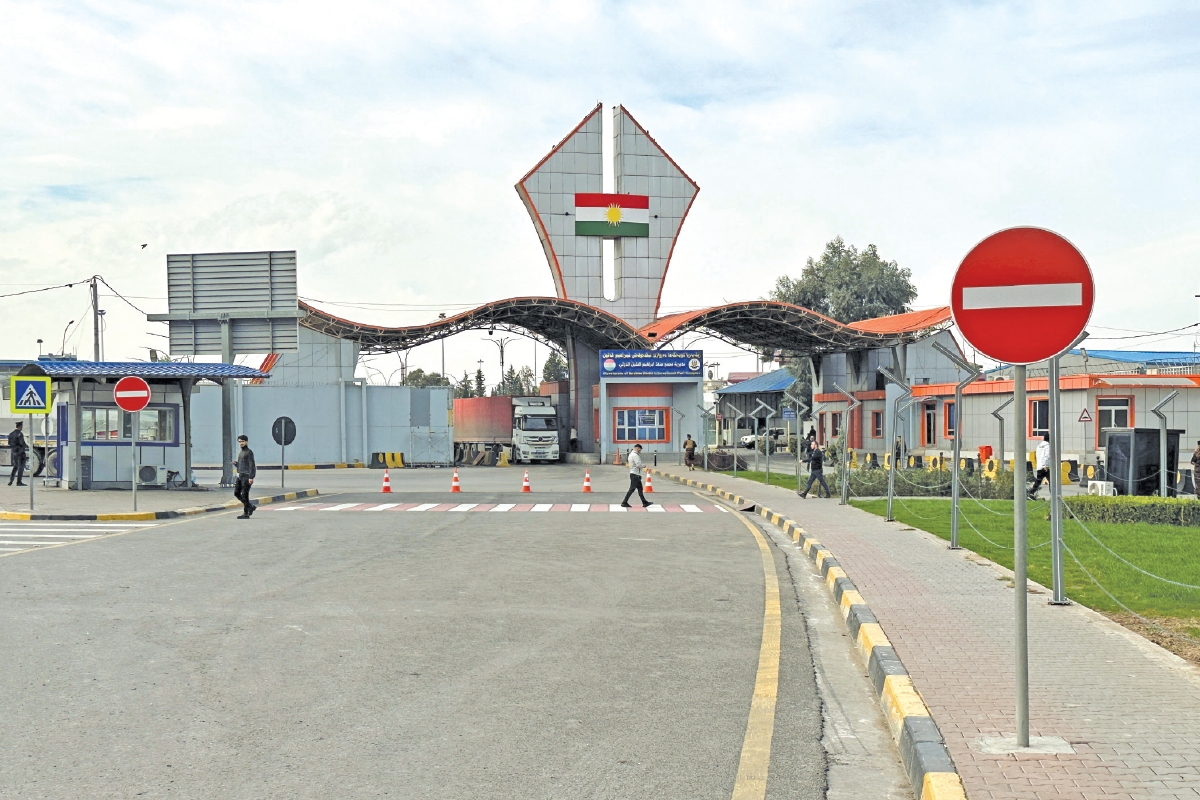
The Iraqi Prime Minister ordered the Ministry of Oil to manage Kurdistan's oil fields and monitor crossings in a campaign against smuggling, sparking anger from Masrour Barzani, along with the dismissal of security and oil officials.
Translated by Alqyas from Al-Jarida — Original source
In a move that could lead to a crisis between Baghdad and the Kurdistan Region of Iraq, Iraqi Prime Minister Ali al-Idi announced today that the federal Ministry of Oil will assume control of oil fields located in areas under Kurdish security control, as well as oversee the region’s border crossings. This decision extends the campaign against oil smuggling that began in Jurf al-Sakhr in Babil Governorate and sparked a crisis with the Kata’ib Hezbollah – Iraq faction, which is aligned with Tehran.
Al-Idi’s order covers oil fields in Diyala, Kirkuk, Salah al-Din, and Nineveh governorates. It follows an investigation into oil smuggling operations at the state-owned North Oil Company, which manages oil and gas fields in northern Iraq.
A statement issued from Al-Idi’s office stated that these directives were issued “based on the principle that national sovereignty is indivisible, and that protecting Iraq’s resources is an existential struggle in which the state draws a clear line against all forms of smuggling.”
Al-Idi also ordered the Border Crossings Authority to take over all crossings in the Kurdistan Region, which shares borders with Turkey, Iran, and Syria. This move directly challenges the Kurdish authorities’ long-standing efforts, spanning decades, to manage their own affairs. He directed the Kurdistan Regional Government to grant approval for the export of crude oil and petroleum products only through the federal Ministry of Oil.
Disputes over whether Kurdish authorities could sell oil without Baghdad’s approval previously caused a halt in oil shipments through the pipeline to Turkey for more than two years, before the two sides agreed in September 2025 to resume them.
At the same time, Al-Idi issued a series of exemptions and disciplinary measures. Saab al-Nu’man, spokesperson for the Commander-in-Chief of the Armed Forces, stated that “the decisions and administrative and disciplinary measures included the dismissal of the head of the Border Crossings Authority, the removal of both the Kirkuk Operations Command commander and the Kirkuk Police commander for failing to follow up on the file of petroleum derivatives smuggling, as well as the exemption of the commander of the First Energy Police Brigade, his deputy, the intelligence director of the First Energy Police Brigade, and the director of the Brigade’s checkpoints section.” He added that “a reprimand was issued to the National Security Director and the National Intelligence Director in Kirkuk Governorate,” according to the Iraqi News Agency (INA).
Al-Nu’man further stated that “the decisions and measures also included the removal from duty of the General Director of the North Oil Company and his deputies, pending the completion of an investigation by the Federal Integrity Commission, and referring the former director for investigation. Additionally, the director of the inspection department in Kirkuk under the General Company for Petroleum Products Distribution was dismissed for failing to perform his duties, along with the removal from duty of the General Director of Industrial Development and the General Director of Mining Industries at the Ministry of Industry and Minerals, pending the completion of the investigation by the Federal Integrity Commission.”
Kurdistan Regional Government Prime Minister Masrour Barzani expressed surprise at the decisions issued by the federal government regarding measures to prevent oil smuggling from the North Oil Company fields, describing what occurred as “unacceptable in any way.”
In media statements on the sidelines of the Global Youth Summit hosted by his son, Arin Masrour Barzani, Barzani said the statement issued by Baghdad had shocked the regional government, considering it inconsistent with the substance of previous talks he held with the federal government.
He added that the federal government delegation, which had previously visited the region, conveyed different messages pointing toward resolving issues based on the constitution, stating, “What happened today is, in fact, surprising and unacceptable in any way.”
On the 11th of this month, Al-Zaidi ordered the formation of a high-level investigative committee, which entered Jarf Al-Sakhr and confirmed the existence of organized smuggling operations and illegal refineries, colluding with the armed faction “Asa’ib Ahl al-Haq – Iraq,” which had controlled the area since the expulsion of the Daesh (ISIS) organization from it years ago.
On the 20th of this month, security forces re-deployed in Jarf Al-Sakhr, coinciding with the gradual withdrawal of three brigades from “Asa’ib Ahl al-Haq,” and the establishment of 12 security checkpoints to protect the pipelines. Concurrently, Al-Zaidi issued orders to dismiss nine security and oil officials in Babil, most notably the Babil Police Chief, the Director of the Oil Pipelines Company, and the Commander of the Sixth Brigade of the Energy Police, referring the case to the judiciary.
On the 21st of this month, the specialized investigating judge revealed that a perforated oil pipe was found inside a farm surrounded by a ditch in Najaf Governorate, belonging to a member of the Provincial Council and the head of its Energy Committee, along with his brother.
Arrest warrants were issued against Najaf Provincial Council member and head of its Energy Committee, Mohammed Ali Al-Hasnawi, and his brother Hussein Al-Hasnawi Al-Abasi, a prominent tribal figure, after it was established that they owned the land where the encroachment took place.
Security forces arrested the official’s brother and referred him to the competent authorities. The court decided to detain five officers and three personnel from the Energy Police pending investigation, after their testimonies contained information indicating their collusion and involvement in facilitating the operation.
