Nizahah benefits from expertise of the International Anti-Corruption Academy in developing its founding law
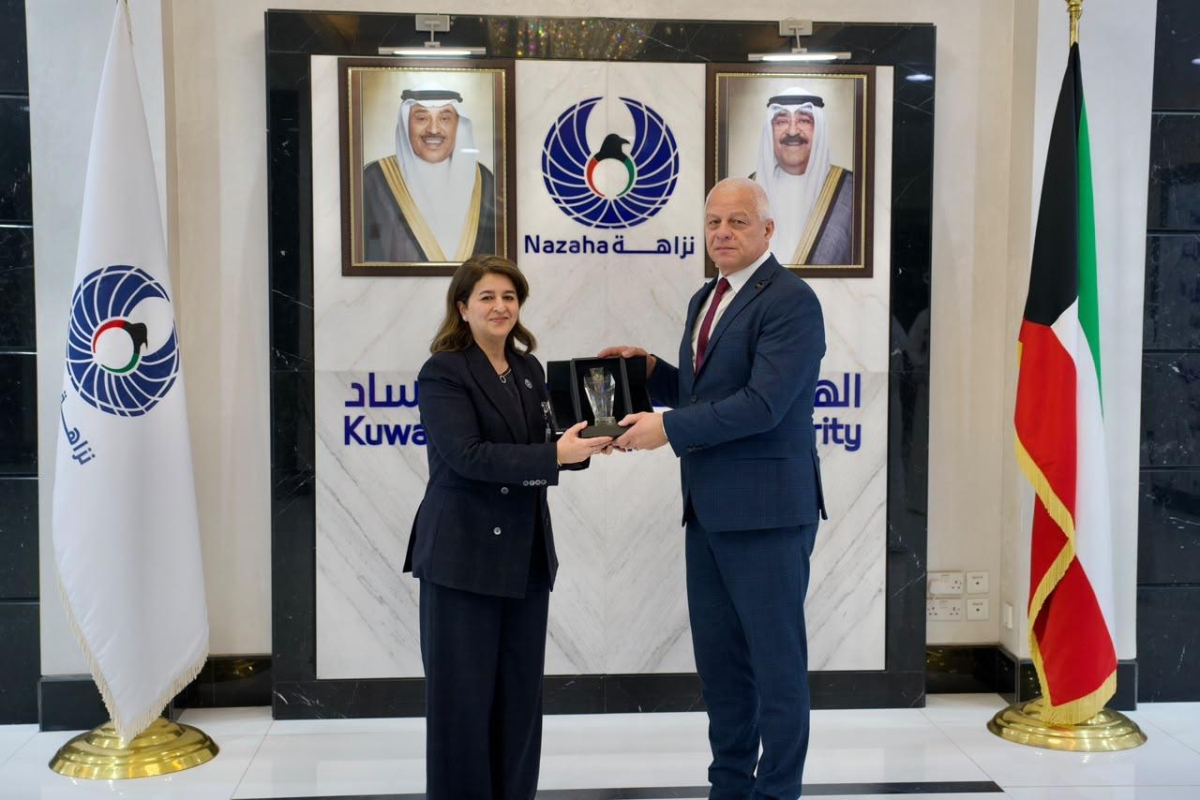
Chairwoman of the Authority receives Dean of the International Anti-Corruption Academy to review the founding law
Translated by Alqyas from Al-Jarida — Original source
As part of its ongoing efforts to develop the national integrity and anti-corruption system and enhance the efficiency of relevant legislative and institutional frameworks, the Public Authority for Combating Corruption (Nizaha), chaired by Dr. Rana Abdullah Al-Faris, received Mr. Dragos Kos, Dean of the International Anti-Corruption Academy (IACA), to discuss ways to leverage specialized international expertise and the technical and academic support provided by the Academy, particularly in reviewing and developing the law establishing the Authority, thereby enhancing the effectiveness of its competencies and institutional capacities in accordance with best international standards and practices.
Dr. Rana Abdullah Al-Faris, Chairperson of the Public Authority for Combating Corruption (Nizaha), emphasized that the Authority is working to review and amend its founding law, No. (2) of 2016 and its amendments, within a strategic direction aimed at strengthening the effectiveness of the national anti-corruption system and updating legislative and institutional frameworks to keep pace with new developments and challenges in this field.
Al-Faris noted that the Authority is keen to benefit from specialized international expertise and comparative legislative experiences of countries that have achieved tangible progress in combating corruption, contributing to the preparation of well-considered legislative proposals based on best international practices and standards, while respecting the provisions of the Constitution and the specificity of the legal and institutional system in the State of Kuwait.
Al-Faris stressed that “developing the law establishing the Authority is not merely about amending legislative texts, but rather comes within a broader vision to enhance Nizaha’s ability to perform its competencies efficiently, independently, and effectively, and to develop the necessary legal and procedural tools to prevent, detect, and combat corruption, keeping pace with the evolving methods and complexities of corruption, and contributing to the protection of public funds and the entrenchment of principles of integrity, transparency, and accountability.”
Al-Faris praised the support provided by the International Anti-Corruption Academy to the Authority, affirming that leveraging its technical and academic expertise represents a qualitative addition to national efforts aimed at developing the legislative and institutional anti-corruption system, reflecting the Authority’s commitment to openness toward specialized international institutions and to utilizing global knowledge and expertise to enhance its performance and competencies.
She added that “Nizaha” seeks to benefit from successful international experiences and adapt them to fit the Kuwaiti legislative environment, in alignment with the State of Kuwait’s obligations under the United Nations Convention against Corruption, emphasizing that legislative development constitutes a fundamental pillar for building a stronger and more effective national system to confront corruption and enhance trust in state institutions.
For his part, Dr. Majid Mohammed Al-Daihani, Vice Chairman of the Public Authority for Combating Corruption (Nizaha), affirmed that leveraging specialized international expertise constitutes one of the key pillars in the project to review and develop the law establishing the Authority, noting that international experiences provide advanced legislative and institutional models that can serve as references for enhancing the independence of anti-corruption bodies, developing their competencies, authorities, and operational mechanisms.
Al-Daihani clarified that the support provided by the International Anti-Corruption Academy to the Authority enables the utilization of its technical and academic expertise, and the review of comparative legislation and successful international practices, thereby supporting efforts to prepare comprehensive legislative proposals that enhance the Authority’s effectiveness in exercising its competencies.
He added that “reviewing the law establishing the Authority represents an important opportunity to assess the adequacy of current legal and procedural tools, and to explore ways to develop them in order to enhance the Authority’s capacity to address various forms of corruption, improve the efficiency of prevention and detection procedures, and support integration and coordination with relevant national entities.”
Al-Daihani emphasized that “leveraging international expertise does not mean copying legislation or transplanting experiences literally, but rather applying best practices and legal solutions that have proven successful internationally, and adapting them to align with constitutional provisions and the nature of Kuwait’s legal system, thereby achieving a more effective legislative framework capable of keeping pace with future challenges.”
The discussions covered several priority topics, including the exchange of international expertise and experiences in enhancing the effectiveness of anti-corruption bodies, developing competencies and legislative and institutional frameworks, and utilizing scientific methodologies to measure corruption and evaluate the effectiveness of policies and institutions involved in combating it.
The two sides also explored opportunities for cooperation in employing modern technologies and artificial intelligence tools for data analysis and monitoring corruption indicators and risks, strengthening digital oversight systems, and expanding the participation of national cadres in specialized training and academic programs offered by the Academy, as well as organizing training programs tailored to the Authority’s needs, thereby contributing to the preparation of qualified national cadres according to the highest international standards.
Mr. Drago Kos holds a distinguished international position in the field of anti-corruption and good governance. He previously chaired the Group of States against Corruption (GRECO) under the Council of Europe, the Working Party on Bribery in International Commercial Transactions under the Organisation for Economic Co-operation and Development (OECD), and the Commission for the Prevention of Corruption of the Republic of Slovenia.
This visit follows a trip made by an Authority delegation, led by Her Excellency Dr. Rana Abdullah Al-Faris, to the headquarters of the International Anti-Corruption Academy in Laxenburg, Austria, on the sidelines of Kuwait’s participation in the extraordinary session of the Conference of the States Parties to the United Nations Convention against Corruption, held in Vienna in November 2026. During the visit, the delegation reviewed the Academy’s activities in education, technical assistance, capacity building, and research, as well as its specialized academic and professional programs.
The visit by the Academy’s Dean extends the cooperative ties between Kuwait and the International Anti-Corruption Academy, which have existed for over a decade. Kuwait joined the agreement establishing the Academy as an international organization pursuant to Decree-Law No. (325) of 2014, and strives for active participation in the work of the Assembly of States Parties.
Previously, “Nizaha” (the National Authority for Combating Corruption) hosted the Academy’s third regional session for the Middle East region in December 2017, reflecting Kuwait’s support for regional and international cooperation in combating corruption, exchanging expertise, and building capacity.
The Authority affirmed that this visit represents an important step toward enhancing the utilization of international expertise and translating it into practical initiatives that support the development of Kuwait’s anti-corruption system. It stressed its continued efforts to update its legislative and institutional framework, enhance performance efficiency, and consolidate a culture of integrity, transparency, and the rule of law, thereby contributing to the protection of public funds and strengthening public trust in state institutions.
