Wajhat Watan: The Eighty Group... Who are you?
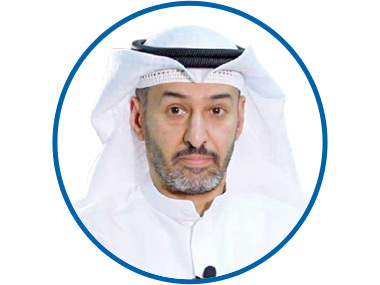
The article attacks the Eighty Group for their ignorance of Kuwait's history and its diverse identity
Translated by Alqyas from Al-Jarida — Original source
I do not know what title the group calling itself the “Eighty Group” bears that emboldens it to confront Kuwaiti society, divide it, and categorize it. However, I am absolutely certain that it does not understand Kuwait’s identity or culture, knows nothing about its history, and does not even care about its future.
In my view, the Eighty Group does not belong to Kuwait. This issue is not about origin or priority of arrival in the country, but rather because what this group promotes is inconsistent with Kuwait’s identity, which was shaped through migrations from different regions, at different times, with diverse sects and varied origins, and for multiple reasons.
This group is ignorant of or ignores Kuwait’s history and its key milestones; whether it is the military battles that shaped the country’s nature and borders between the late 19th and early 20th centuries, in which both urban and Bedouin Kuwaitis participated, or the cultural landscape that flourished as a natural result of a beautiful diversity that managed to blend many cultures and dialects into a new Kuwaiti identity.
If the Eighty Group were to review Kuwait’s old economy, the mixing of land and sea trade, the intermingling of professions in markets, the way activities shifted between winter and summer, and their circulation between the city and the desert, they would learn much about the nature of Kuwaiti society and its capacity to accommodate difference and diversity.
The Eighty Group’s deficiency stems not only from a mistaken understanding of Kuwait’s historical landscape, but also of its future. The fear expressed by some of them regarding hundreds of thousands of Kuwaitis is a justified fear, not from the perspective of forgery or naturalization, but rather from the reality that the public administration’s capacity to sustainably provide jobs for hundreds of thousands of younger Kuwaitis, as well as housing, education, and healthcare services for them, is limited, along with other future challenges that require awareness and expertise, not illusions or accumulated inferiority complexes.
The Eighty Group does not even deserve to be described as a political party or an ethnic group. For instance, when compared to right-wing parties in the West, we find that they—at least despite their racism—have programs and policies they present regarding immigration, unemployment, and the overall economy, which can be discussed, analyzed, and their flaws exposed. In contrast, the Eighty Group’s rhetoric is closer to gossip about this person and that person, with scenarios that are not even suitable for poor-quality TV series.
The good news is that the Eighty Group—whose actual number may be even smaller—is socially isolated. Most of them are those who consistently finished at the bottom in any electoral race, for many years. In fact, some of them had the sole role of acting as an “electoral spoiler” to scatter votes, nothing more.
This group does not understand Kuwait, its identity, its history, the sacrifices of its people, or its martyrs. Most importantly, it contradicts everything the country needs for its future.
